


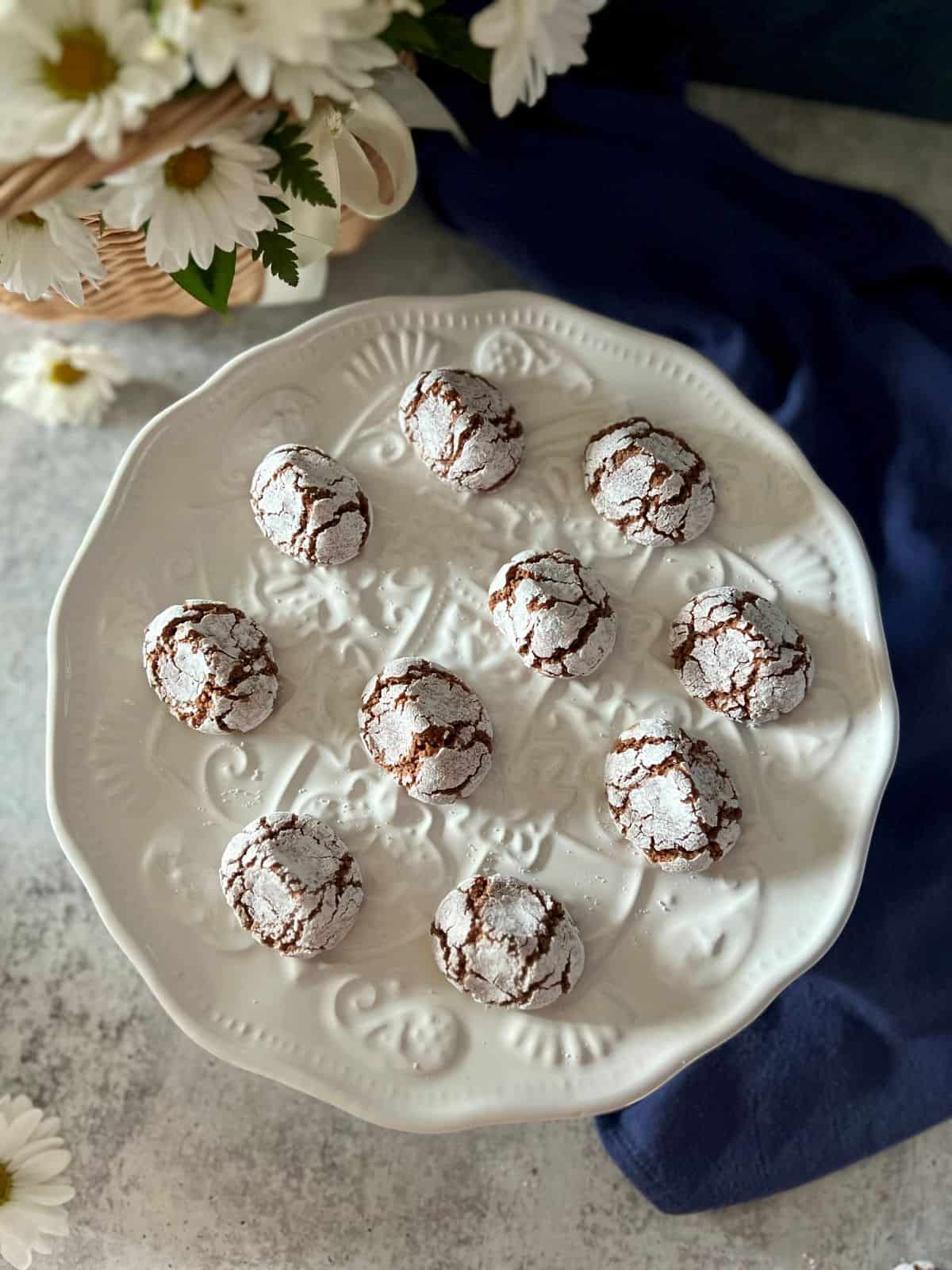
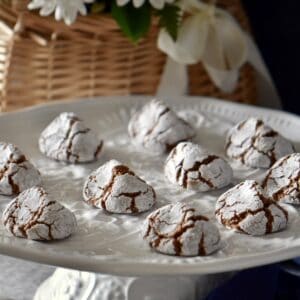
These chocolate amaretti cookies have a rich cocoa flavor and a classic crackled top. Made with almond flour, they are naturally gluten-free.
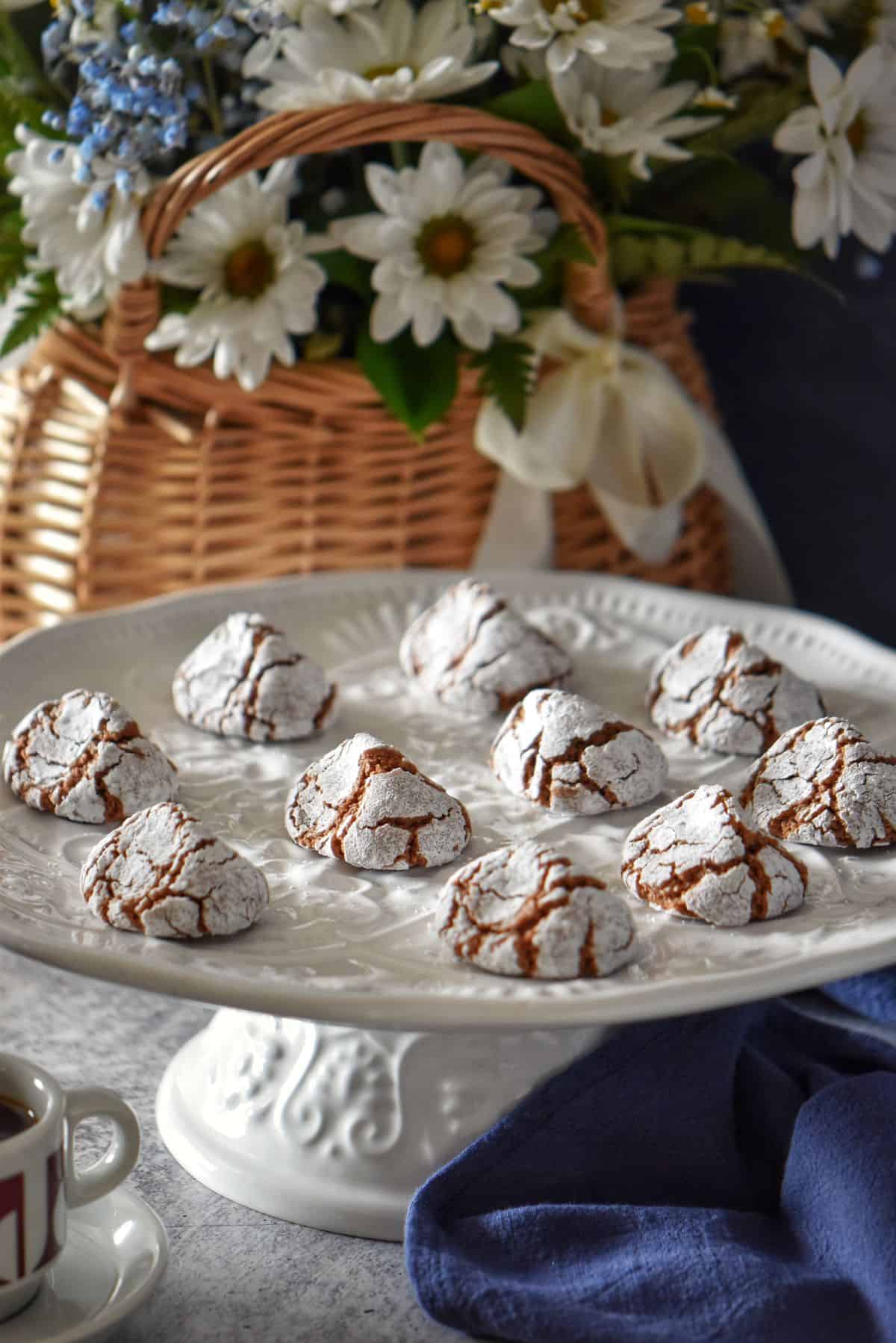
Chocolate amaretti cookies have been on my to-do list for a while, ever since a reader asked if I had a chocolate version of my amaretti recipe.
I finally do!
These amaretti are rolled, not piped, and coated in powdered sugar for that classic crackled top. Adding cocoa powder and a hint of espresso makes for a deeper, more chocolate-forward cookie.
They’re a real treat, especially at Christmas or any special occasion. Family and friends who have tasted these just love them!
As a retired dietitian, I appreciate that these cookies, like all my amaretti, are naturally gluten-free.
A few friends and family members avoid gluten, while others simply enjoy a good chocolate cookie with their espresso. This amaretti cookie makes everyone at the dessert table happy.
Jump to:
Quick Overview
- Prep Time: 30 minutes (plus 20 minutes resting)
- Cook Time: 15-18 minutes per batch
- Yield: About 36 cookies
- Method: Scooped and rolled in a sugar coating, then pinched before baking
- Special Touch: Rolling the dough first in granulated sugar, then powdered sugar, is what produces the crackled top as the cookies bake.
- Dietary Note: Naturally gluten-free (almond flour-based). Contains egg. Alcohol-free.
- Serving Suggestions: Serve alongside espresso, or add to an Italian cookie tray for the holidays.
What You’ll Need
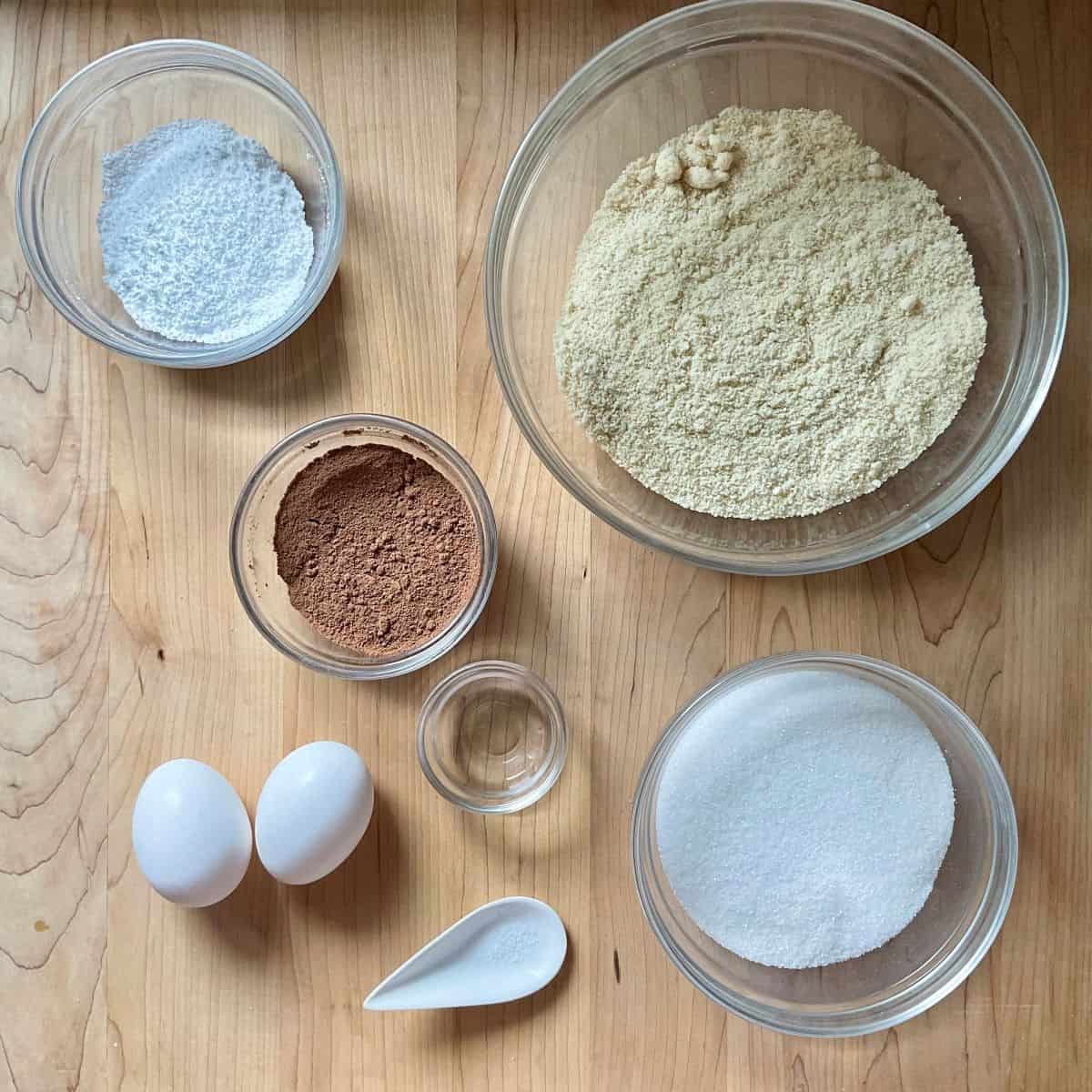
- Almond flour. The base of the dough and what keeps these cookies naturally gluten-free. Finely ground almond flour gives the smoothest, most tender crumb.
- Granulated sugar. Sweetens the dough and balances the cocoa’s bitterness.
- Eggs. Bind the dough and give the cookies their structure and chew.
- Cocoa powder. Unsweetened, Dutch-processed cocoa gives these cookies their deep chocolate flavor and dark color. Dutch-processed cocoa is milder and less acidic than natural cocoa, which suits the delicate almond base.
- Almond extract. Reinforces the almond flavor alongside the almond flour itself.
- Espresso powder. Optional, but it deepens the chocolate flavor without adding a coffee taste.
- Salt. Rounds out the sweetness and sharpens the chocolate flavor.
- Granulated sugar, for rolling. The first coat, applied before the powdered sugar, which helps the powdered sugar cling and prevents it from dissolving into the dough.
- Powdered sugar, for rolling. Gives the cookies their traditional crackled, snow-dusted top once baked.
How to Make Chocolate Amaretti
This recipe comes together quickly, and the technique for rolling and shaping is really the only part that takes a bit of practice.
Let’s begin by preheating the oven to 325°F (160°C). Line 2 baking sheets with parchment paper.
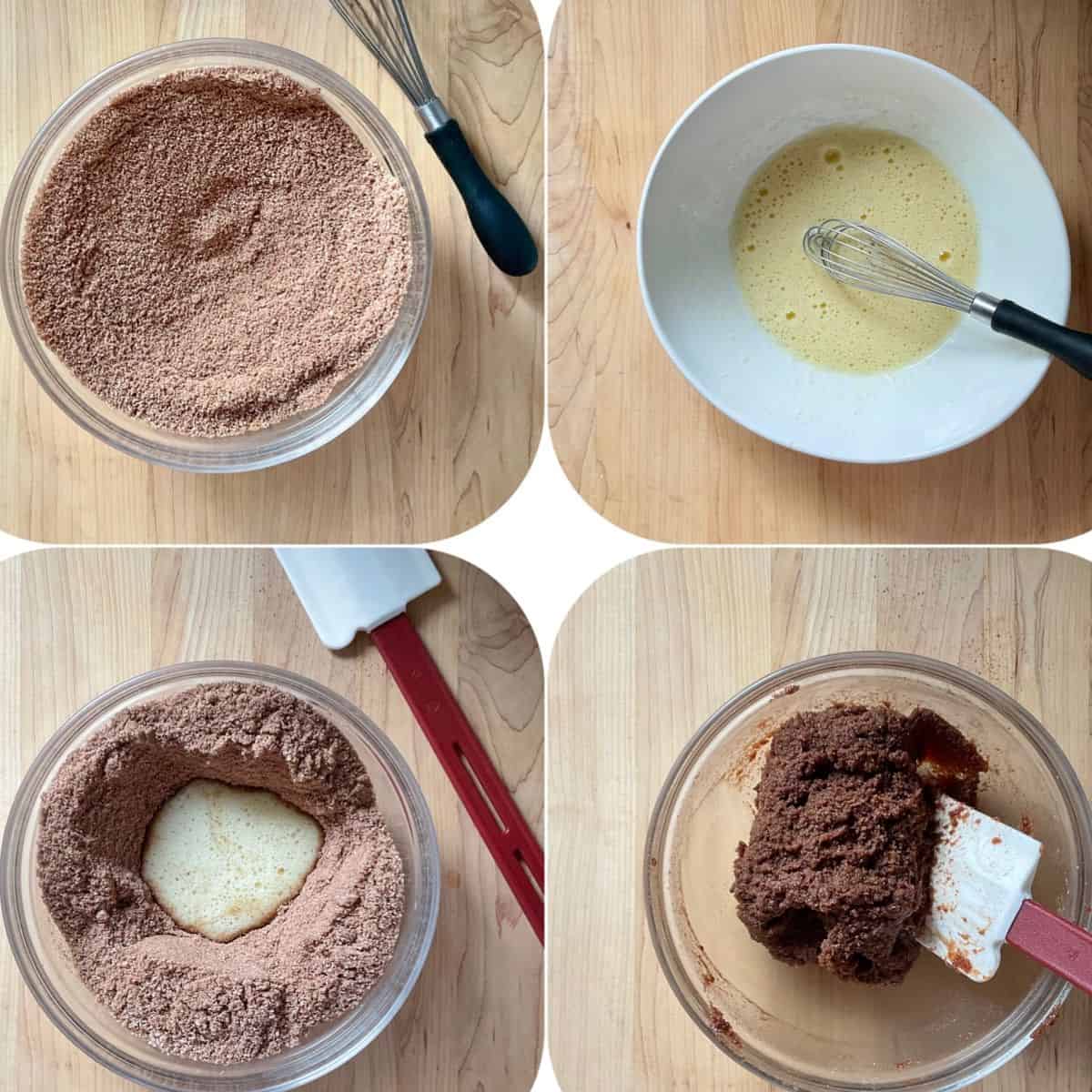
- In a large mixing bowl, whisk together 200 grams (2 cups) of almond flour, 200 grams (1 cup) of granulated sugar, 18 grams (3½ tablespoons) of unsweetened Dutch-processed cocoa powder, ½ teaspoon of espresso powder (if using), and ⅛ teaspoon of salt.
- In a separate, medium bowl, whisk 2 room-temperature eggs. Whisk in ½ teaspoon of pure almond extract.
- Add the wet mixture to the dry mixture.
- Combine with a rubber spatula until no dry streaks remain and the dough comes together.
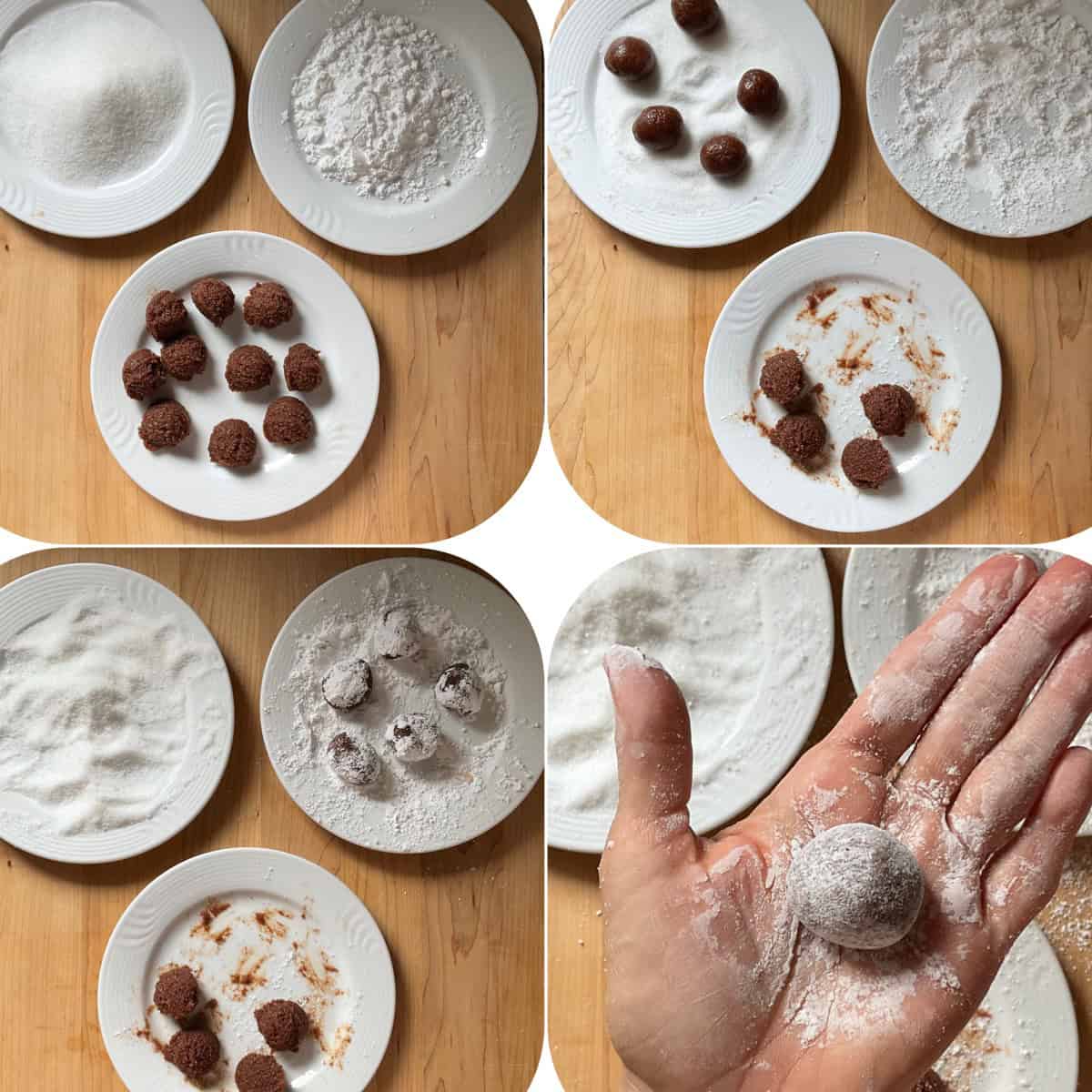
- Spread ⅓ cup of granulated sugar on one plate, and sift ½ cup of powdered sugar onto a separate plate.
- Scoop the dough with a small ice cream scooper. With slightly damp hands, press your palms into the granulated sugar on the plate, then roll a ball of dough between your sugar-coated palms.
- Roll the ball in the powdered sugar on the plate, then roll again between your palms. Repeat with the rest of the dough balls.
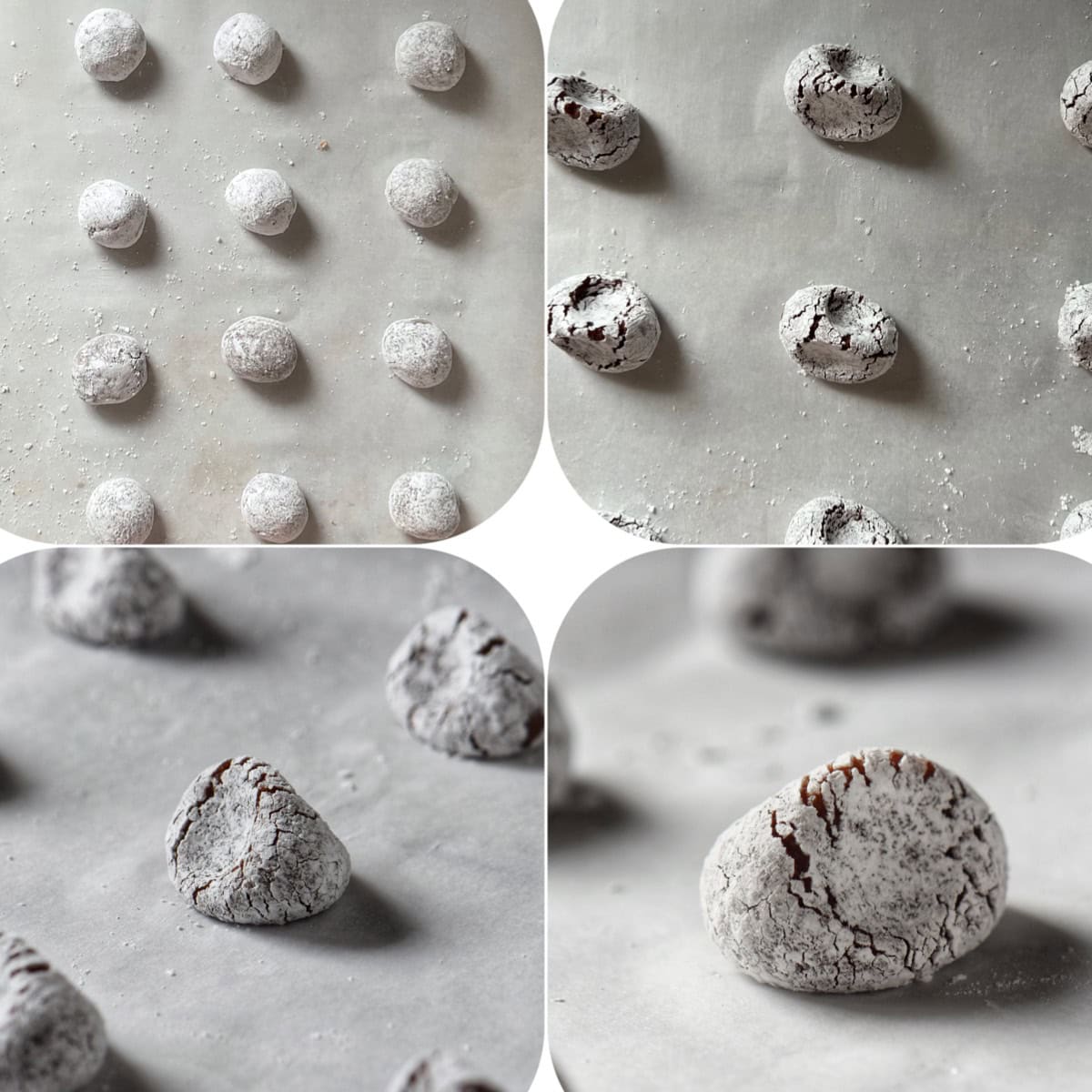
- Place the balls 2 inches apart on the parchment-lined baking sheet. Let rest for 20 minutes.
- Using your thumb and index finger, gently pinch the sides of each cookie.
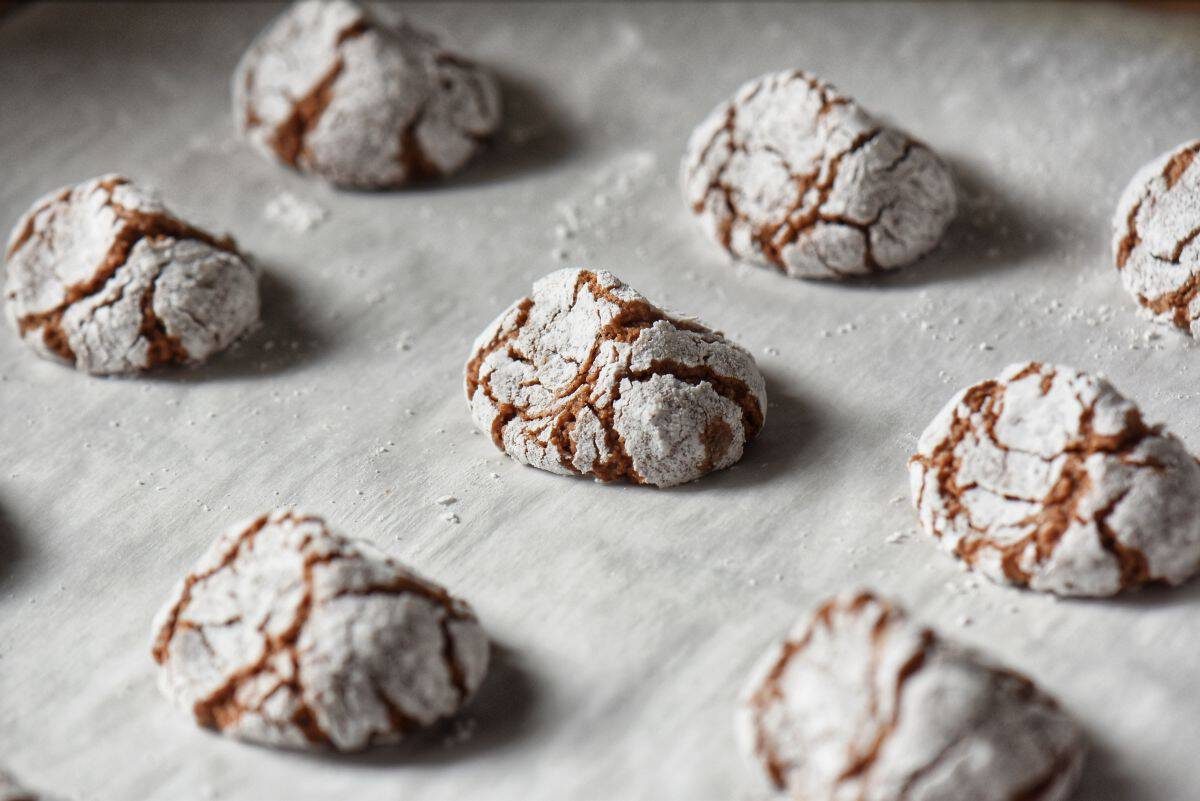
- Bake for 15-18 minutes, until the bottoms are lightly golden.
- Allow the cookies to rest on the baking sheet briefly, then transfer to a wire rack to cool completely.
Tips
- Scoop a few at a time. Rather than scooping and rolling one cookie at a time, scoop out several balls of dough first, then roll them all through the sugar coatings in sequence. It makes the rolling process much more efficient.
- Check the dough consistency before rolling. It should feel sticky but firm enough to hold its shape as a ball. If it feels loose or slack, mix in an extra 1-2 tablespoons of almond flour, or chill the dough for 10-15 minutes before scooping.
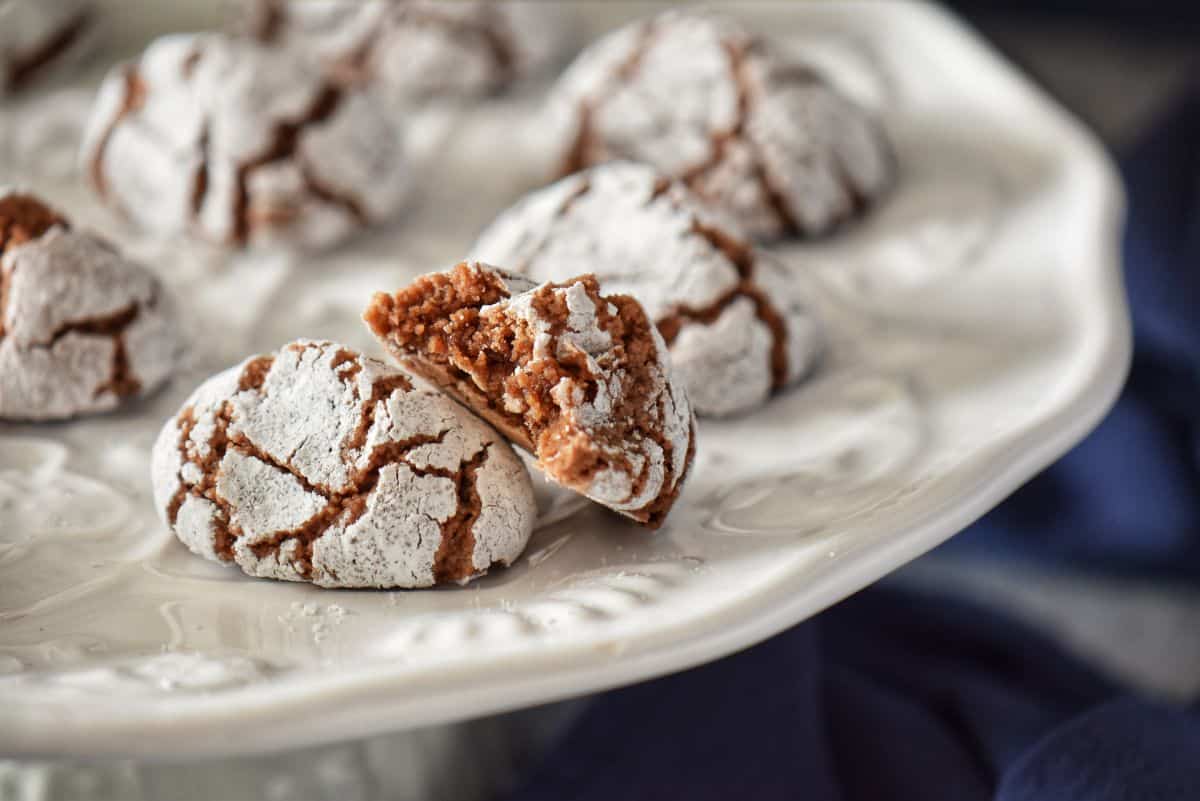
- Why two sugar coats. The granulated sugar adds a bit of crisp chew to the outside and keeps the powdered sugar from melting into the dough as it bakes, which is what gives the crackled look its contrast.
- Don’t skip the rest before baking. The 20-minute rest lets the sugar coating set slightly, which is part of what produces the cracks as the cookies bake and expand.
- Watch for doneness by the bottom, not the top. The tops stay pale and crackled even when fully baked, so golden bottoms are the real doneness cue, not color on top.
FAQ
Yes. Almond flour replaces wheat flour entirely, making these naturally gluten-free.
No, it’s optional. It deepens the chocolate flavor but doesn’t add a coffee taste, so the cookies work fine without it.
No. These chocolate amaretti cookies are alcohol-free.
Rolling in granulated sugar first, then powdered sugar, produces the crackled top: the granulated sugar adds crisp chew and keeps the powdered sugar from melting into the dough.
Yes. Almond flour gives the smoothest texture, but almond meal works too, with a slightly coarser crumb.
This can happen if your almond flour brand absorbs less liquid, leaving your dough looser than expected. A simple fix is to mix in an extra 1-2 tablespoons of almond flour, or chill the dough for 10-15 minutes before scooping.
Check the bottoms. The crackled tops stay pale even when fully baked, so golden brown bottoms are the doneness cue.
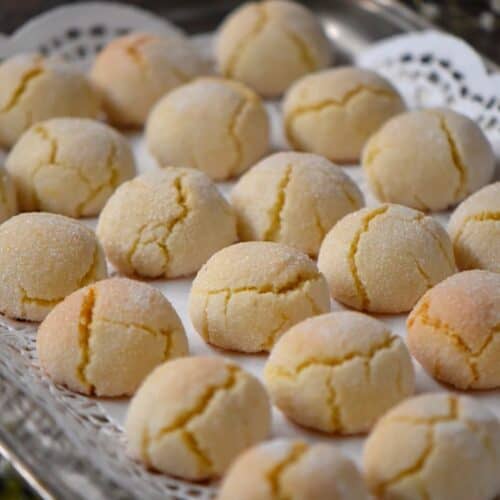
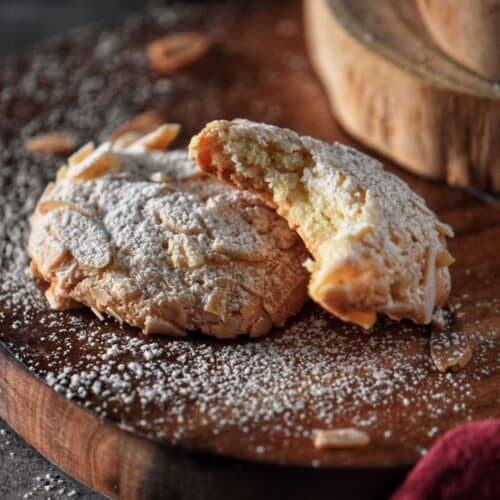
More Almond Flour Cookie Recipes
Loved these? Here are a few more almond flour cookies worth adding to your baking list.


Recipe Inspiration
A reader wrote in asking if I had a chocolate version of my amaretti, and that request is really what motivated me to create this recipe.
This version draws on both of my existing amaretti recipes: the technique and rolling style come from my soft, rolled amaretti, while including the whole egg in the recipe was from my piped amaretti recipe.
The method of pinching the top of each cookie came from a dear colleague of mine, Vittoria, who shared it with me more than a decade ago. She’s the same friend who shared her creamy limoncello recipe with me. She is truly missed.
As with most of my recipes, this one went through several rounds of testing before the texture and crackle were right. I wanted a cookie that held its shape through the double sugar roll without the powdered sugar melting into the dough, and that took some back and forth with the ratios.
The result is a cookie with a crackled shell and a dense chewy center.
If you’ve made either of my other amaretti recipes, you’ll recognize the inspiration.
If this is your first, welcome, and I hope it becomes a regular on your cookie tray.
THANKS SO MUCH for following and being part of the She Loves Biscotti community, where you will find Simple & Tasty Family-Friendly Recipes with an Italian Twist.
Ciao for now,
Maria
★★★★★ If you have made these chocolate amaretti cookies, I would love to hear about it in the comments below and be sure to rate the recipe!
Recipe
Chocolate Amaretti Cookies (Soft, Chewy Italian Cookies)
WANT TO SAVE THIS RECIPE?
Ingredients
- 200 grams almond flour 2 cups
- 200 grams granulated sugar 1 cup
- 18 grams cocoa powder 3½ tablespoons, unsweetened Dutch processed
- ½ teaspoon espresso powder optional
- ⅛ teaspoon salt
- 2 eggs room temperature
- ½ teaspoon almond extract pure
- extra granulated sugar for rolling sprinkle ⅓ cup in a large dinner plate, set aside
- powdered sugar for rolling sift ½ cup in a large dinner plate, set aside
Instructions
- Preheat oven to 325° F (160℃). Position the rack in the center. Line the baking sheets with parchment paper.
- In a large bowl, whisk together the almond flour, granulated sugar, cocoa powder, espresso powder (if using), and salt.
- In a separate bowl, whisk the eggs. Whisk in the almond extract.
- Add the wet mixture to the dry mixture and combine with a rubber spatula until no dry streaks remain.
- Spread granulated sugar on one plate and sifted powdered sugar on another.
- Scoop the dough with a small ice cream scooper.
- With slightly damp hands, press your palms into the granulated sugar on the plate, then roll a ball of dough between your sugar-coated palms.
- Roll the ball in the powdered sugar on the plate, then roll again between your palms.
- Repeat with the rest of the dough balls.
- Place the balls 2 inches apart on the parchment-lined baking sheet.
- Let rest for 20 minutes.
- Pinch the sides of each cookie with your thumb and index finger.
- Bake for 15-18 minutes, until bottoms are lightly golden.
- Rest on the baking sheet briefly, then transfer to a wire rack to cool completely.
Video
Notes
• Why two sugar coats. The granulated sugar adds a bit of crisp chew to the outside and keeps the powdered sugar from melting into the dough as it bakes, which is what gives the crackled look its contrast.
• Don’t skip the rest before baking. The 20-minute rest lets the sugar coating set slightly, which is part of what produces the cracks as the cookies bake and expand.
• Watch for doneness by the bottom, not the top. The tops stay pale and crackled even when fully baked, so golden bottoms are the real doneness cue, not color on top.
Leave a Reply