

Learn how to make almond paste using blanched almonds. Quick, reliable, and ideal for Italian cookies and festive desserts.
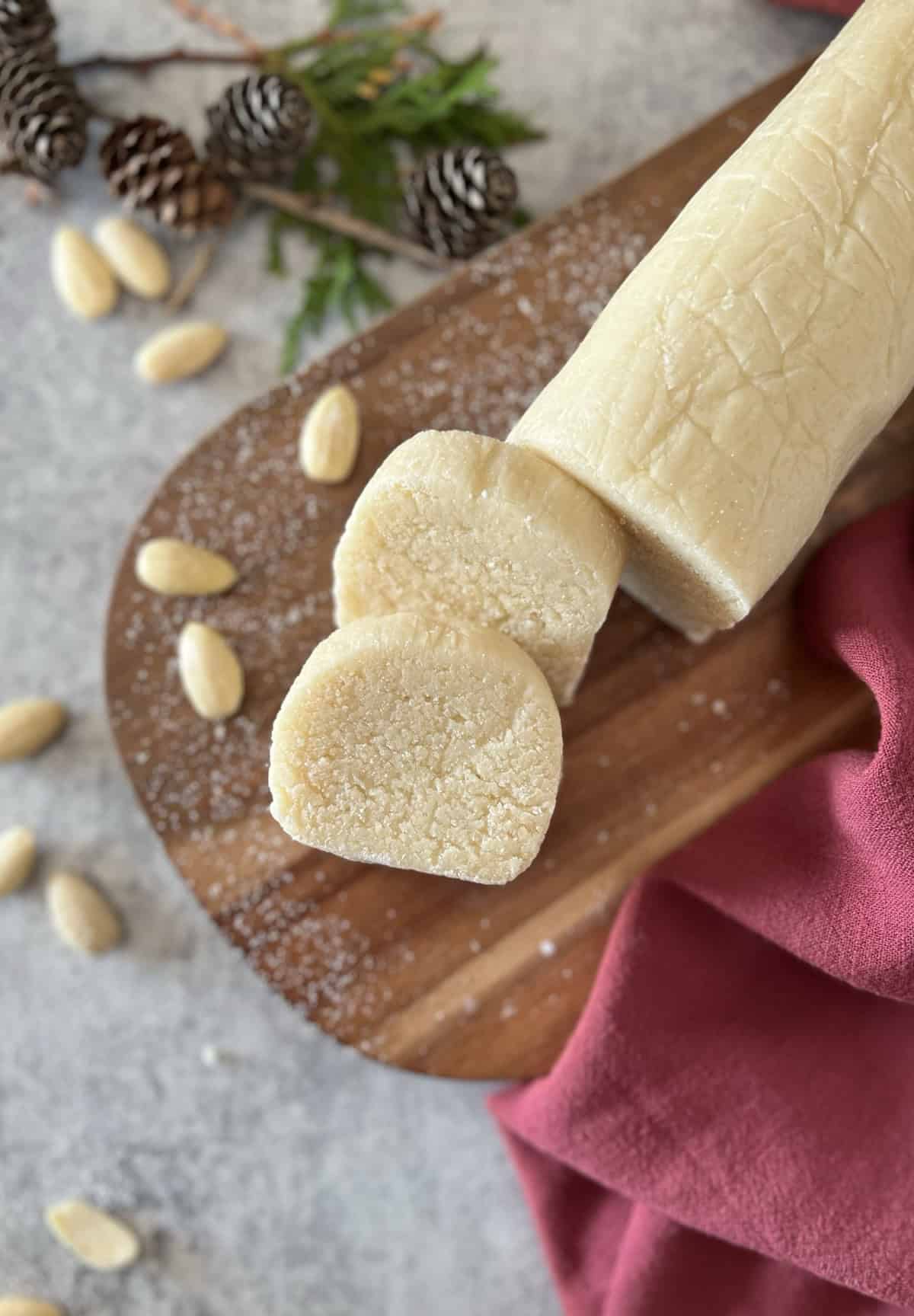
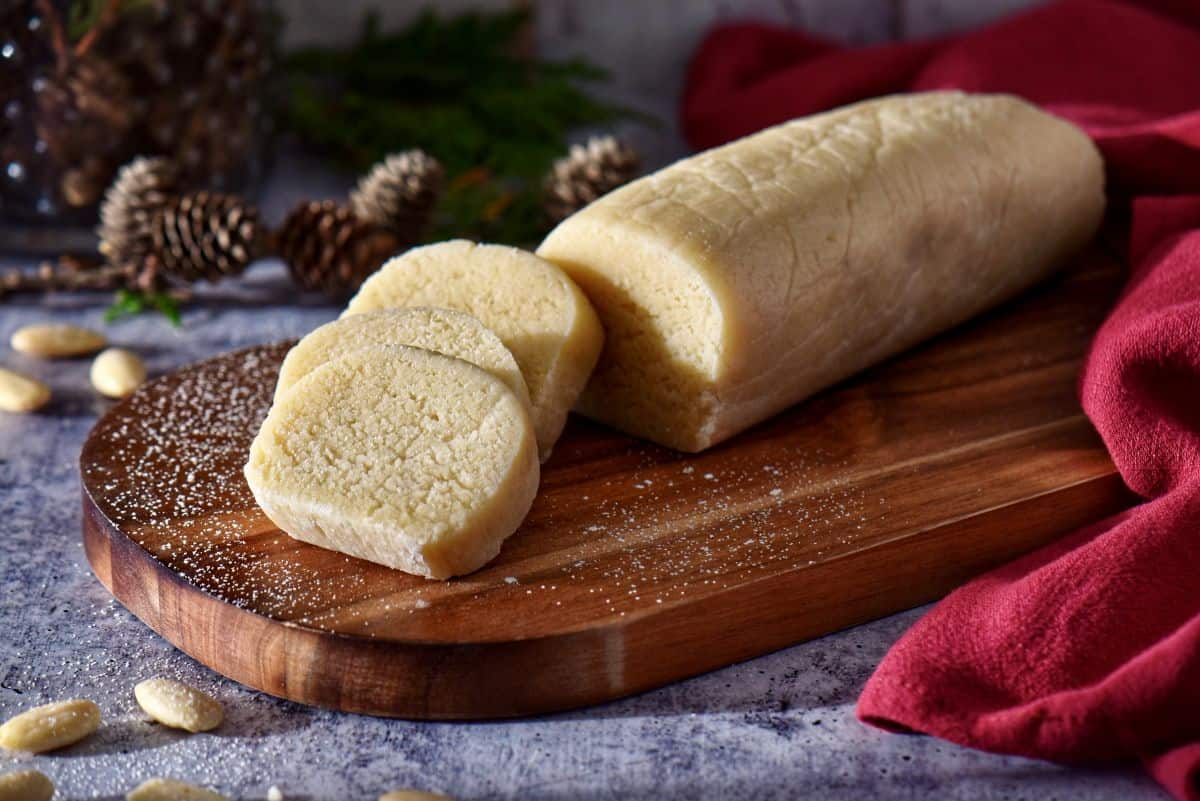
Homemade almond paste is easier than you might think - and there's something incredibly satisfying about making it yourself, starting with a bowl of blanched almonds you've prepared by hand.
I've been doing this for years, ever since I realized how simple it is to turn those soft, skinless almonds into a smooth, fragrant paste that's perfect for cookies, cakes, and pastries.
If you've ever wondered how to make almond paste from scratch, you'll see that it comes together in just a few minutes with a food processor and a handful of basic ingredients. And if you already blanch your own almonds, you're halfway there.
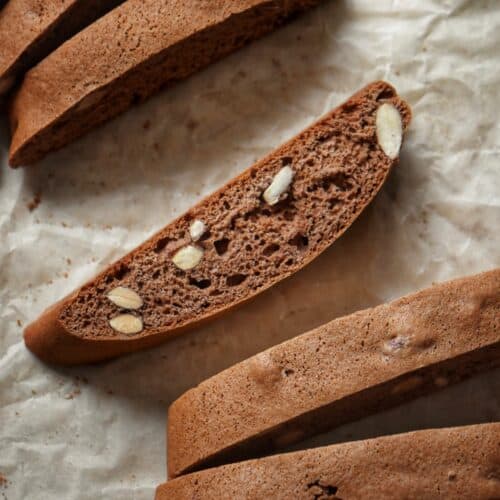
Below, I'll share my go-to method - quick, reliable, and ideal for recipes like rainbow cookies and one of my favorites, almond paste cookies.
Jump to:
Quick Overview
- Prep Time: 15 minutes
- Cook Time: 5 minutes
- Total Time: 20 minutes
- Yield: About 2 cups of almond paste (1½ pounds/680 grams)
- Equipment Needed: Food processor
- Serving Suggestions: Use this homemade almond paste in Italian treats like rainbow cookies, pignoli, or almond paste cookies. It also makes a wonderful filling for sweet breads and festive pastries.
Ingredients
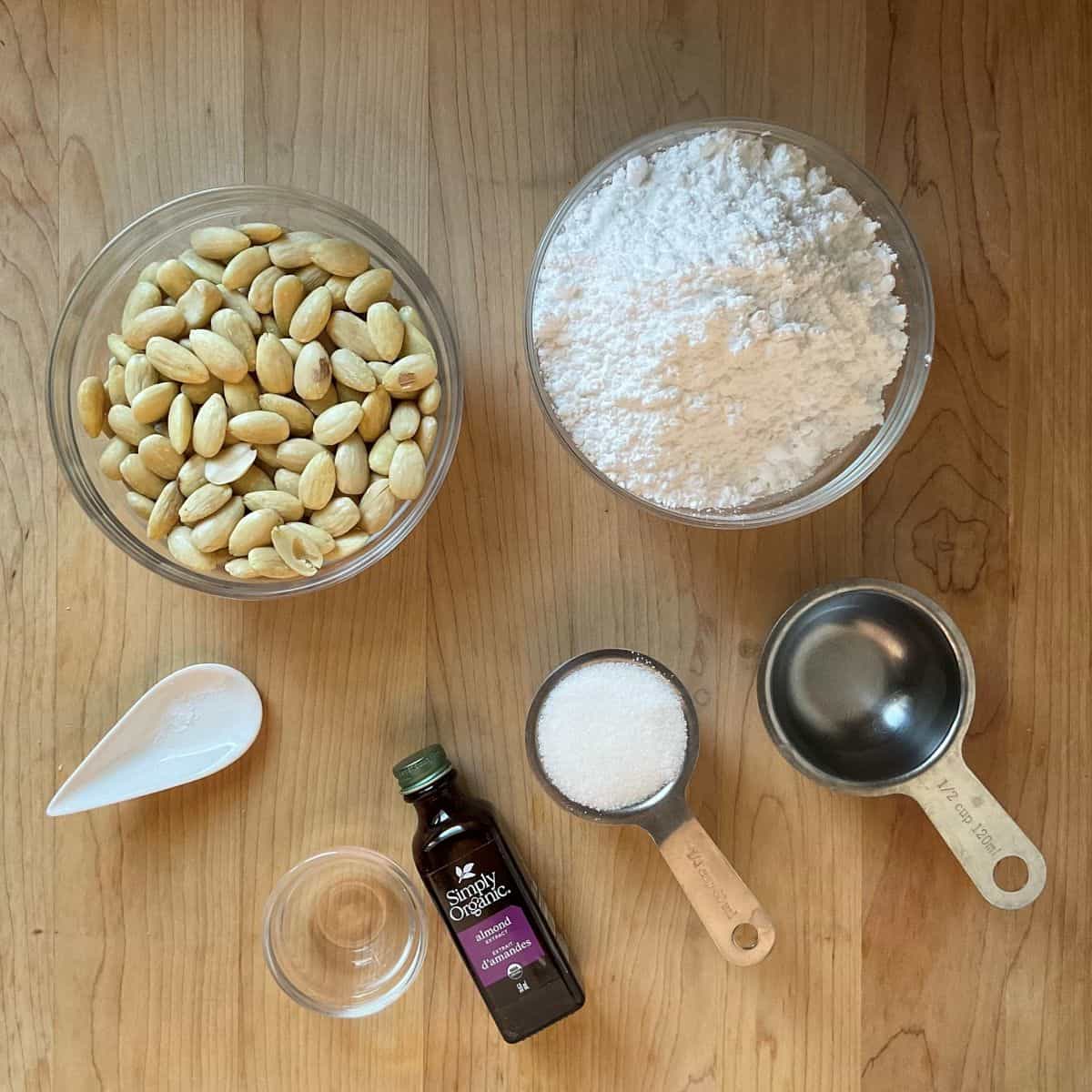
- Blanched almonds: These give the almond paste its smooth texture and mild flavor.
- Powdered sugar: Helps create a soft, smooth paste that blends easily into doughs and batters. It dissolves quickly and keeps the mixture from becoming gritty.
- Granulated sugar: A small amount adds structure and prevents the paste from turning too soft.
- Water: Acts as the binder, bringing everything together. Using water instead of egg whites keeps the paste neutral in flavor, shelf-stable, and vegan-friendly.
- Almond extract: Adds a gentle boost of almond aroma.
- Salt: Just a pinch balances the sweetness and enhances the almond flavor.
Step-by-Step Instructions

- Make the sugar syrup: In a small saucepan, combine ¼ cup granulated sugar and ½ cup water. Warm over low heat, stirring, just until the sugar fully dissolves. Do not boil. Remove from the heat and let the syrup cool completely before using - adding it warm can change the texture of the paste.
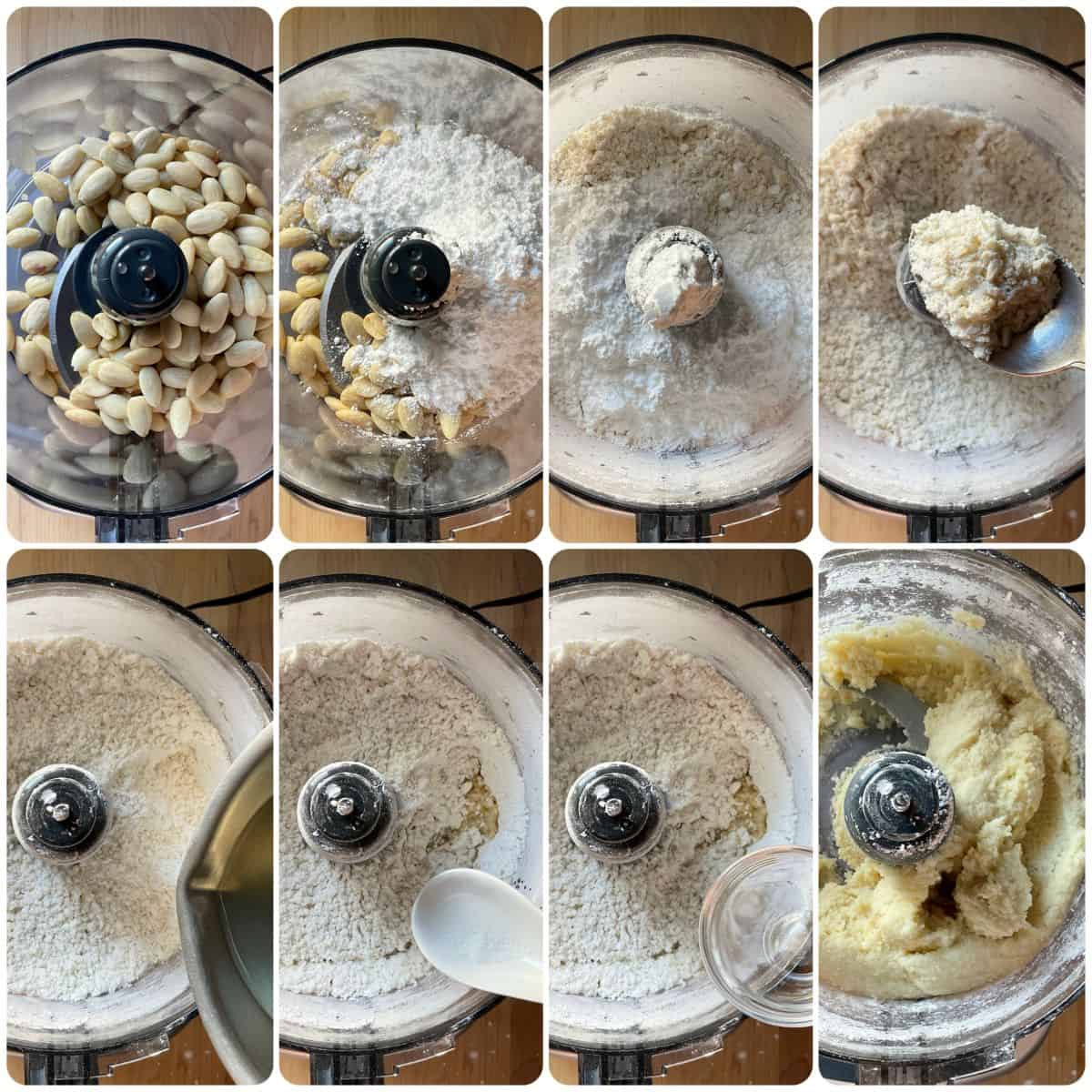
- Pulse the almonds with half the powdered sugar: Place 2 cups blanched almonds and 1 cup powdered sugar in the bowl of a food processor. Pulse in short bursts until the almonds are finely ground and the mixture looks sandy. Avoid overheating the motor.
- Add the remaining powdered sugar: Add the second cup of powdered sugar and pulse a few times to combine.
- Add the remaining ingredients: Drizzle in most of the cooled sugar syrup along with a pinch of salt and ½ teaspoon almond extract.
- Process to a cohesive paste: Pulse until the mixture begins to clump and hold together. It will look crumbly at first, then start to come together into a smooth paste. If it seems dry, add the remaining syrup a little at a time. If it becomes too soft, pulse in a bit more powdered sugar. Stop once it forms a soft, pliable paste that holds together when pressed.
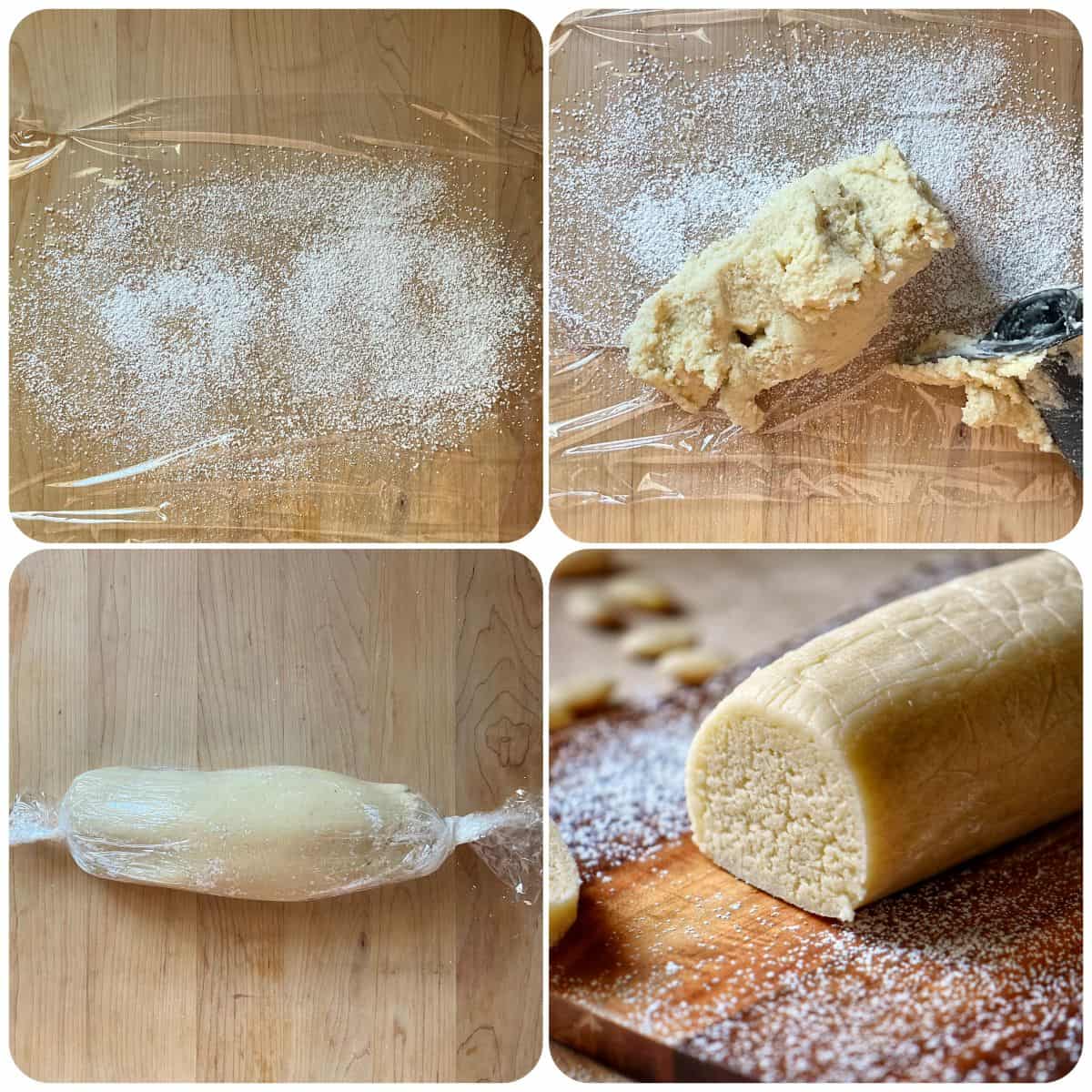
- Shape and chill: Turn the paste onto plastic wrap. Shape into a log or a flat disk, wrap tightly, and refrigerate for at least 30 minutes to firm up.
- Use or store: Double-wrap tightly in plastic wrap and refrigerate for up to 2 weeks. For longer storage, freeze in portions for up to 3 months.
Helpful Tips
- Use fresh almonds for the best flavor. Almonds can go rancid over time.
- Cool the sugar syrup completely. If it's warm when added, the paste can become too soft and sticky.
- Don't over-process. Pulse the almonds rather than running the processor continuously. This prevents releasing too much oil, which can make the paste greasy.
- Add most of the cooled syrup gradually. The mixture will start crumbly, then come together. If it's still too dry, drizzle in a little more syrup or water. If it becomes too soft, pulse in extra powdered sugar until the texture feels right.
- Refrigerating helps improve the texture. Resting the paste for at least 30 minutes firms it slightly and makes it easier to handle, especially for cookies and fillings.
- A rubber spatula is your friend. It helps scrape the food processor bowl clean and bring the paste together without overmixing.
- Divide before storing. Shape into smaller logs and freeze individually-much easier to grab just what you need for a recipe later.
- Use almond extract sparingly. A little enhances flavor beautifully, but too much can overpower the natural almond taste.

FAQ
Yes! Almond flour works well if you don't want to blanch your own almonds. The paste will be a little finer in texture, so you may need to adjust the water slightly-add a little more or less until it comes together smoothly.
It usually means a bit too much liquid was added. Pulse in a little more powdered sugar until the paste firms up again.
Every batch of almonds absorbs liquid differently. Add water ½-1 teaspoon at a time, pulsing until it holds together smoothly.
Wrapped well and stored in the refrigerator, it lasts for up to 2 weeks. It also freezes for up to 3 months.
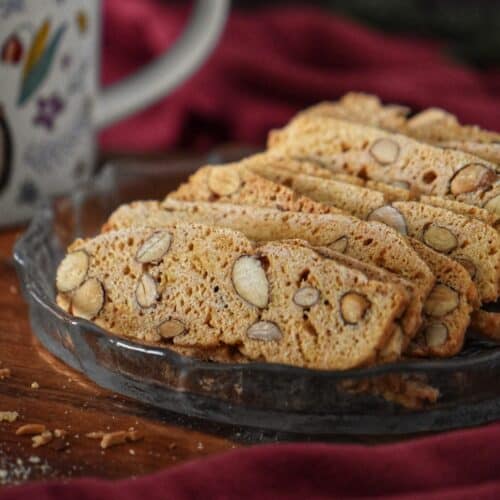
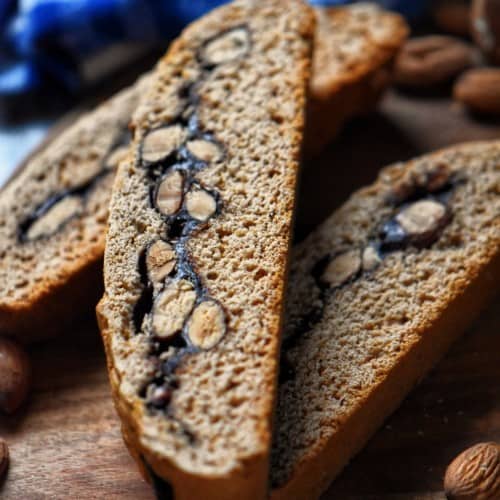
Italian Almond Cookie Recipes to Try
If you love baking with almonds, here are some classic Italian cookie recipes you can make next. They're simple, delicious, and perfect for holidays, coffee breaks, or gifting.

Recipe Origins
My love for Italian cookies goes right back to childhood, baking in the kitchen with my mom and my nonna. They taught me the Southern Italian classics I grew up with-and still love to bake today. Those kitchen moments are some of my favorite memories.
As I got older, I became curious about the many different cookies across Italy. Each region with its own traditions. Naturally, I wanted to try them all! Almond paste cookies were one of them. We didn't make them at home, so as a young adult, I decided to experiment.
I quickly learned that these Sicilian-inspired cookies were a little more challenging than I expected. Using store-bought almond paste never gave me that soft, chewy texture I was hoping for. I tried making my own, and those early attempts were… let's just say, not my greatest baking moments.
Everything changed about ten years ago when I discovered the cookbook “A Jewish Baker's Pastry Secrets“. This recipe finally worked for me. I made a couple of small tweaks-a splash of almond extract and a pinch of salt-and that was it.
I've been using this to make all of my almond paste cookies and baked goods, and I can’t wait to share these recipes with you!
Just for you! A printable baking checklist to help you keep track of all your baking needs.
If you love to bake, this is for you! Simply subscribe to my weekly newsletter and receive this FREE BAKING CHECKLIST PRINTABLE!
This way, you won't miss any of my new recipes, and it's FREE!
THANKS SO MUCH for following and being part of the She Loves Biscotti community, where you will find Simple & Tasty Family-Friendly Recipes with an Italian Twist.
Ciao for now,
Maria
Recipe
How to Make Almond Paste at Home
Equipment
- food processor
WANT TO SAVE THIS RECIPE?
Ingredients
- ¼ cup granulated sugar 50 grams
- ½ cup water 120 mL
- 2 cups blanched almonds 280 grams
- 2 cups powdered sugar 280 grams, divided
- ½ teaspoon almond extract
- pinch of salt
Instructions
- Make the sugar syrup: In a small saucepan, heat the water and granulated sugar over low heat just until the sugar dissolves. Do not boil. Set the syrup aside to cool completely before using.
- Grind the almonds: Add the blanched almonds and half of the powdered sugar to a food processor. Pulse until the almonds are finely ground and the mixture looks like coarse sand.
- Add the remaining sugar: Add the rest of the powdered sugar and pulse again to combine evenly.
- Bring it together: Add most of the cooled sugar syrup, along with the salt and almond extract. Pulse until the mixture starts to clump and hold together. If it still looks dry, add a little more syrup at a time and pulse again. Stop as soon as it forms a soft, pliable paste that holds together when pressed.
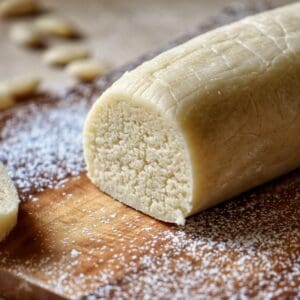
- Shape the almond paste: Transfer the paste to a clean work surface and shape it into a log. If it feels sticky, dust lightly with powdered sugar.
- Refrigerate before using: Double-wrap tightly in plastic wrap and refrigerate for at least 30 minutes before using.
- Store for later. Double-wrap the almond paste tightly in plastic wrap. Refrigerate for up to 2 weeks or freeze for up to 3 months.
Video
Notes
- Use fresh almonds for the best flavor. Almonds can go rancid over time.
- Cool the sugar syrup completely. If it's warm when added, the paste can become too soft and sticky.
- Don't over-process. Pulse the almonds rather than running the processor continuously. This prevents releasing too much oil, which can make the paste greasy.
- Add most of the cooled syrup gradually. The mixture will start crumbly, then come together. If it's still too dry, drizzle in a little more syrup or water. If it becomes too soft, pulse in extra powdered sugar until the texture feels right.
- Refrigerating helps improve the texture. Resting the paste for at least 30 minutes firms it slightly and makes it easier to handle, especially for cookies and fillings.
- A rubber spatula is your friend. It helps scrape the food processor bowl clean and bring the paste together without overmixing.
- Divide before storing. Shape into smaller logs and freeze individually-much easier to grab just what you need for a recipe later.
- Use almond extract sparingly. A little enhances flavor beautifully, but too much can overpower the natural almond taste.
- Air-dry method: Spread almonds on a tray and leave overnight.
- Quick oven method: Preheat oven to 225-250°F (107-121°C), spread almonds on a cookie sheet, and bake for 3-5 minutes. Let cool completely before grinding.
Val
This is such an easy recipe to make at home. I can’t wait to start using it! Thanks Maria!
Maria
How wonderful! Thanks for stopping by Val!
Jean
I’m sorry but I have a question. can you use almond flour instead of the almonds? If so would you use the same amount?
Thank you so much!
Maria
Great question Jean! Yes! Almond flour works well if you don’t want to blanch your own almonds. The paste will be a little finer in texture, so you may need to adjust the water slightly—add a little more or less until it comes together smoothly.
One small thing to note: almond flour is usually a bit more expensive since it’s already processed, so starting with whole blanched almonds (especially if you blanch them yourself) can be a more budget-friendly option. But both methods work beautifully — it’s just a matter of what you prefer or have on hand!