


This Italian Anise Taralli recipe uses yeast for a light, crisp texture and incredible flavor-perfect for snacking or pairing with wine!
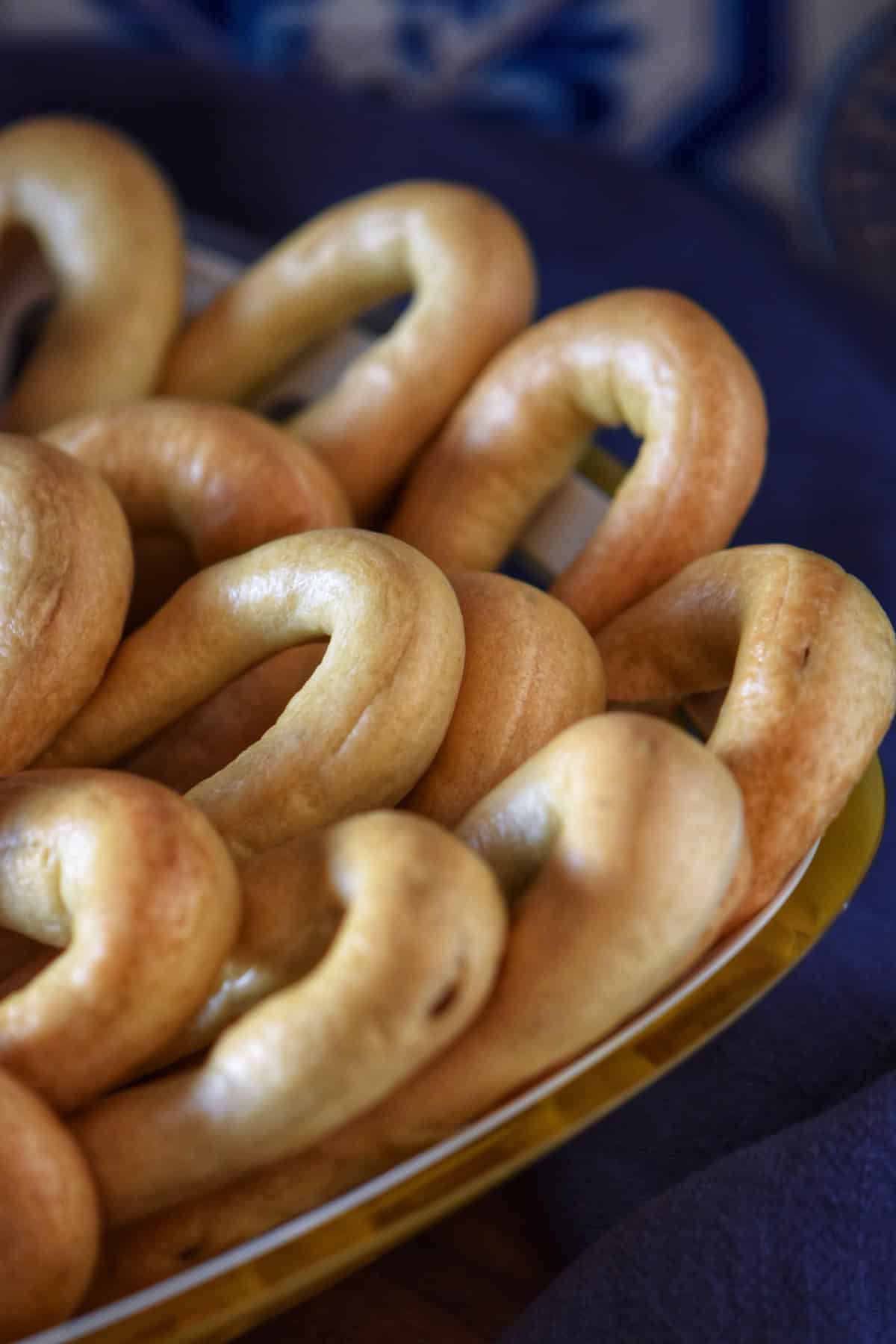
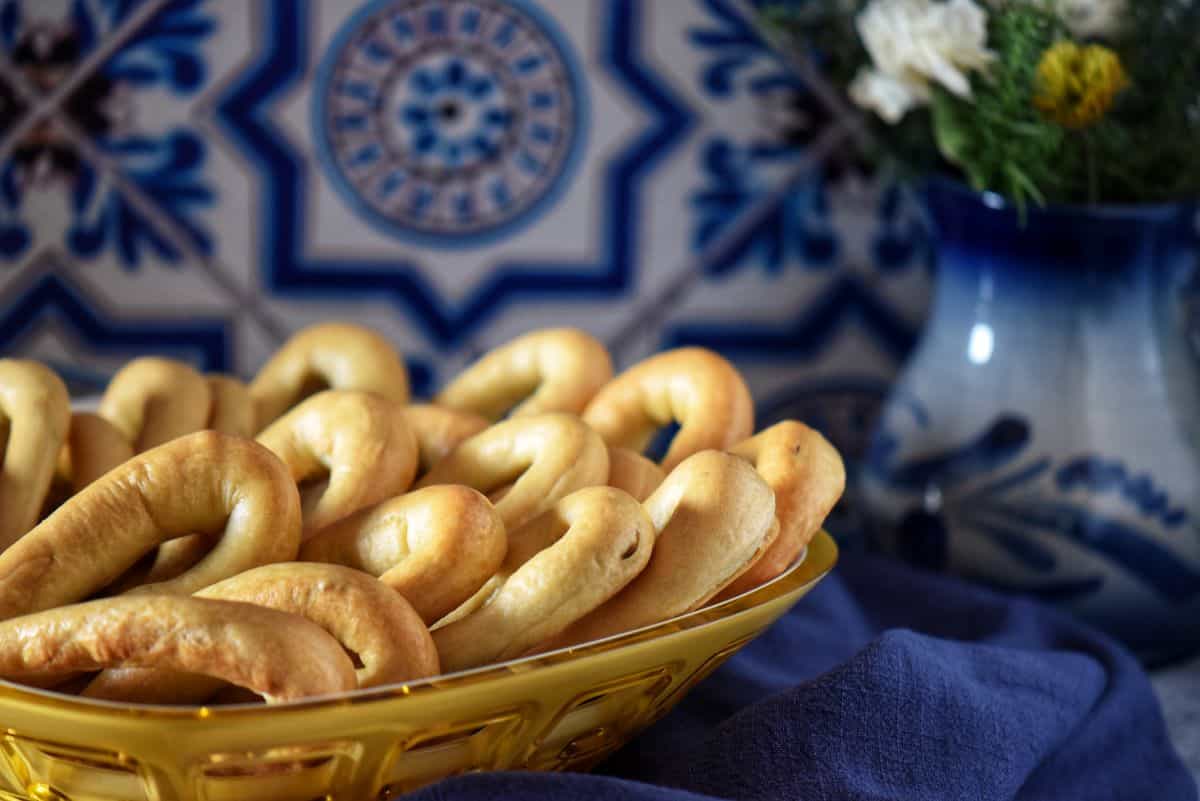
These crunchy Italian anise taralli are, in my humble opinion, the ultimate snack food.
While traditional Italian taralli making might seem time-consuming, the recipes are often simpler than they appear-and far superior to anything you'll find in a store.
Taralli have been a part of my life for as long as I can remember. Growing up in an Italian home, I watched my nonna and mom make them weekly. A family favorite was this fennel taralli recipe.
My fascination with these “Italian crackers” led me on a quest to explore different takes on this classic treat.
It's fascinating how taralli recipes vary across Italy-each region has its version, from Bari (taralli Baresi), to Puglia (taralli Pugliese), Calabria (taralli Calabrese) to Naples (taralli napoletani).
This particular recipe uses yeast to give the taralli their light, airy texture. The process starts by activating the yeast with water and sugar. Once it's ready, mix it with the rest of the ingredients and let your stand mixer do the work.
Be sure to watch the video in the recipe card to see how easily this all comes together.
Before I share the step-by-step photos of taralli making, here's a quick look at the prep and cook time. While the process requires a bit of patience, you will love the final product!
Let's break it down!
Jump to:
Prep and Bake Time
The times to prepare and bake these yeast-based taralli recipe can be estimated as follows:
- Prep Time: 20 minutes (proofing, mixing and kneading dough)
- Resting Time: 1 hour (for dough to rise)
- Shaping & Boiling Time: 25-30 minutes (rolling, shaping, and boiling in batches)
- Baking Time: 20-25 minutes (375°F for 10 minutes, then 350°F for 10-15 minutes)
- Total Time: ~2 hours 15 minutes (including resting time)
Making anise taralli is a rewarding process that involves mixing, shaping, boiling, and baking to achieve their signature crisp texture. And with just a few easy steps, you’ll have a fresh batch ready to enjoy.
Let’s make them together!
Ingredients
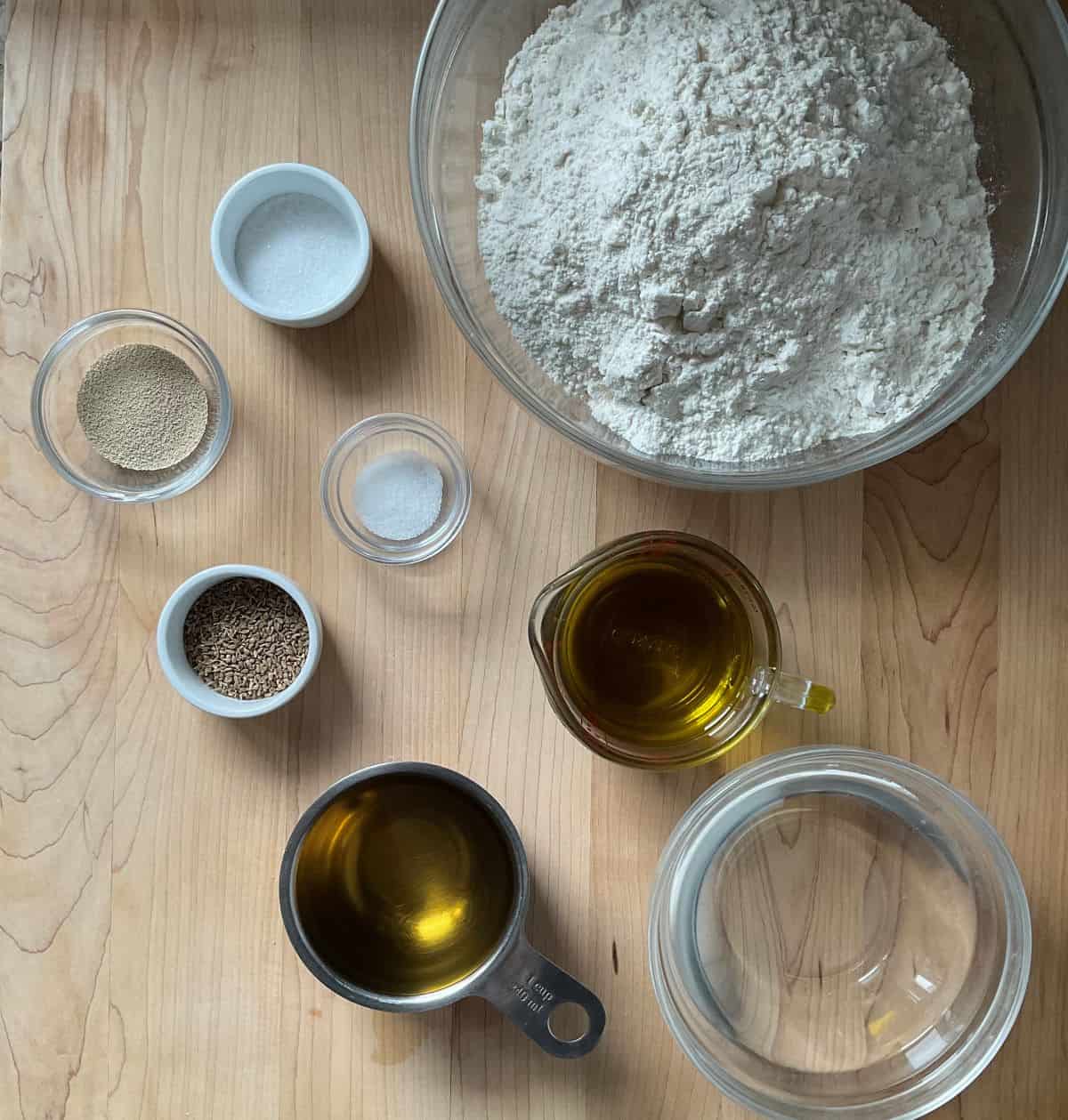
To make these crunchy, flavorful taralli, you'll need a handful of simple pantry staples:
- Active Dry Yeast & Sugar: The yeast helps give the taralli a light, crisp texture, while the sugar activates it and aids in fermentation.
- Water: Lukewarm water ensures the yeast activates properly, allowing the dough to rise slightly.
- All-Purpose Flour: Provides structure and the perfect balance of crispness and crunch.
- Salt: Enhances the flavors and gives the taralli that savory touch.
- Anise Seeds: The star of this recipe! Anise adds a warm, slightly sweet, and aromatic flavor that makes these taralli so unique. I like to toast the seeds lightly before adding them to the dough to enhance their natural sweetness and deepen their flavor.
- Olive Oil: Adds richness and helps create a tender yet crisp texture.
- White Wine: A traditional ingredient that enhances the flavor and contributes to the crispiness of the taralli after baking.
Substitutions and Variations
- Anise Seeds: If you're not a fan of anise seeds or prefer a milder licorice flavor, fennel seeds can be used instead of anise seeds.
- White Wine: Dry vermouth can be used as an alternative to white wine, offering a similar depth of flavor. For a non-alcoholic version, simply use water.
- Olive Oil: While olive oil imparts a rich, fruity flavor, you can substitute it with vegetable oil for a more neutral taste.
- Bread Flour: You can substitute bread flour for all-purpose flour for a slightly chewier texture. Bread flour has more protein, resulting in a denser, chewier dough. Note: You might need to adjust the quantity as I find that bread flour tends to absorb more liquid than all-purpose flour.
Step-by-Step Instructions
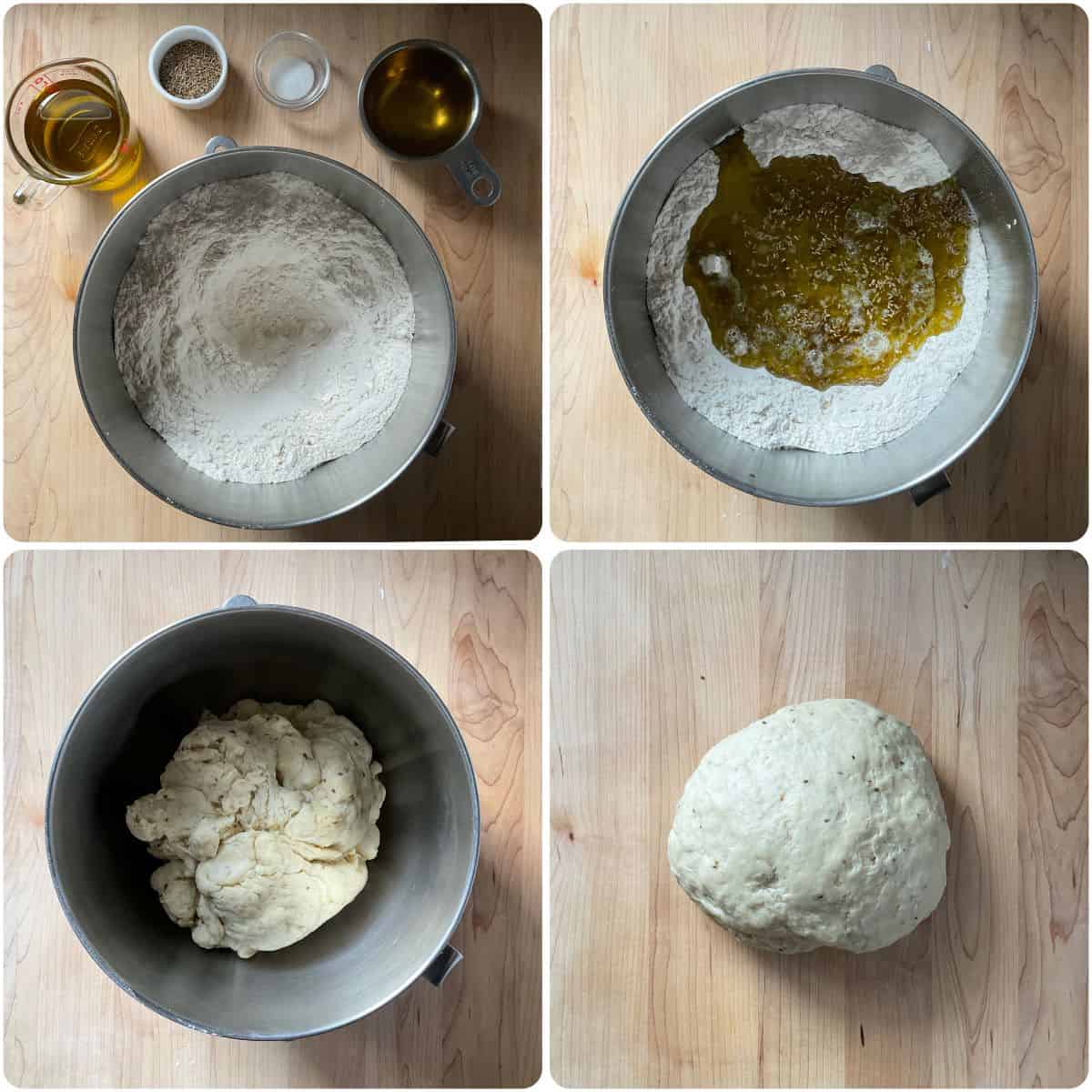
- In a small bowl, combine 2¼ teaspoons active dry yeast (8 grams), 1 teaspoon of granulated sugar, and 1 cup of lukewarm water (approximately 100°F / 38°C). Stir and let it sit for about 10 minutes, until the mixture becomes foamy.
- In the bowl of your stand mixer, combine the 1 kg all-purpose flour (approximately 7 cups), 1½ teaspoons salt (or to taste), and 1 heaping tablespoon of toasted anise seeds (or to taste). Whisk together to ensure they're evenly distributed.
- Make a well in the center of the dry ingredients. Add ¾ cup olive oil and 1 cup white wine. Add the foamy yeast mixture.
- Using the dough hook attachment on your stand mixer, knead the dough on a low setting for about 10 minutes, or until it becomes smooth and elastic. If you prefer to knead by hand, simply do so on a lightly floured surface for the same amount of time.
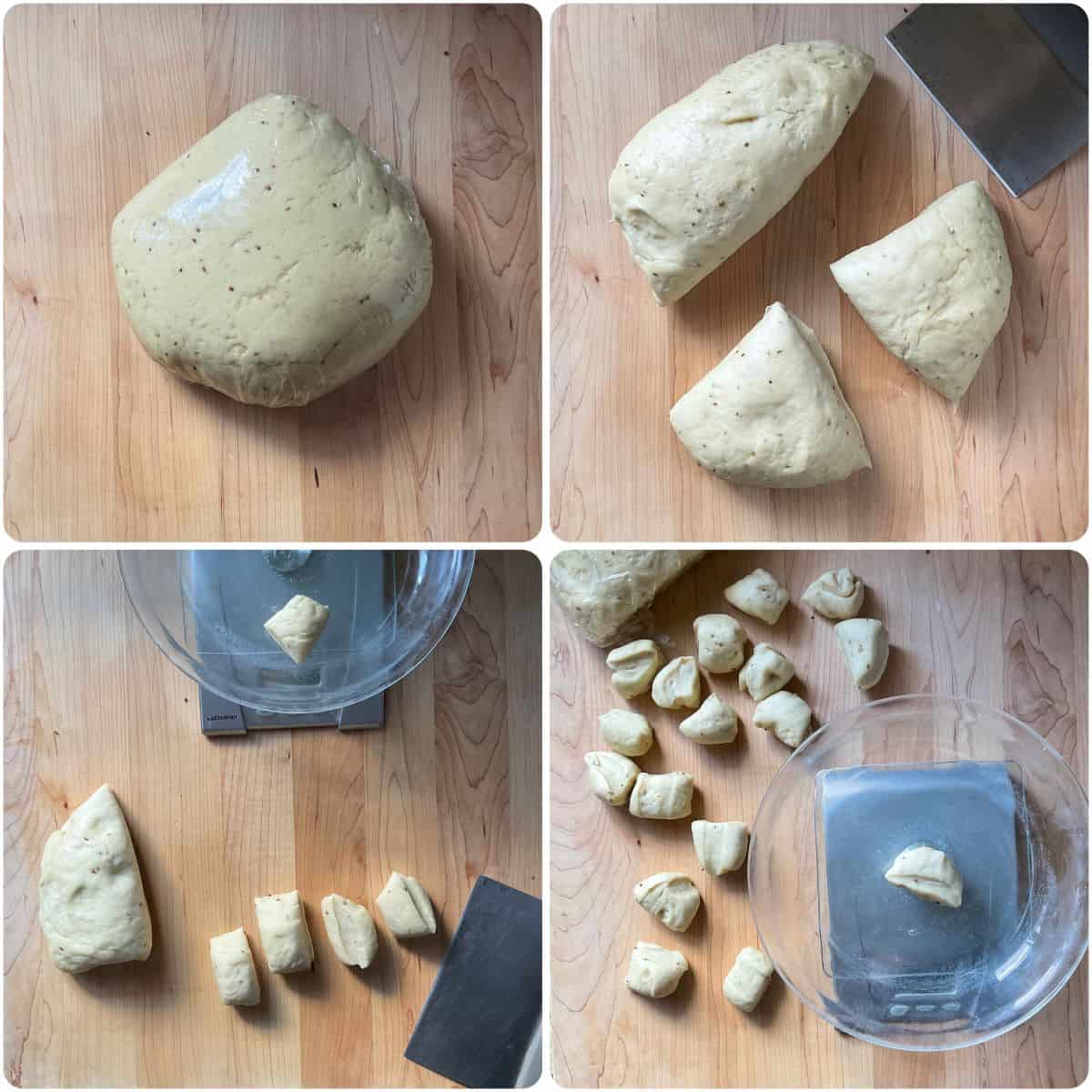
- Cover the dough with plastic wrap. Let it rest for at least 1 hour or until it has risen and doubled in size. During this rest period, the gluten structure relaxes and the “rested” dough will be a lot easier to roll out.
- After the dough has rested, I then place the dough ball on an un-floured wooden board and knead it a few times before separating the dough into quarters. Cover the sections you’re not working with to keep them from drying out.
- Cut each quarter into 16 pieces. I like to use a food scale to ensure that each piece of dough weighs approximately 25 grams.
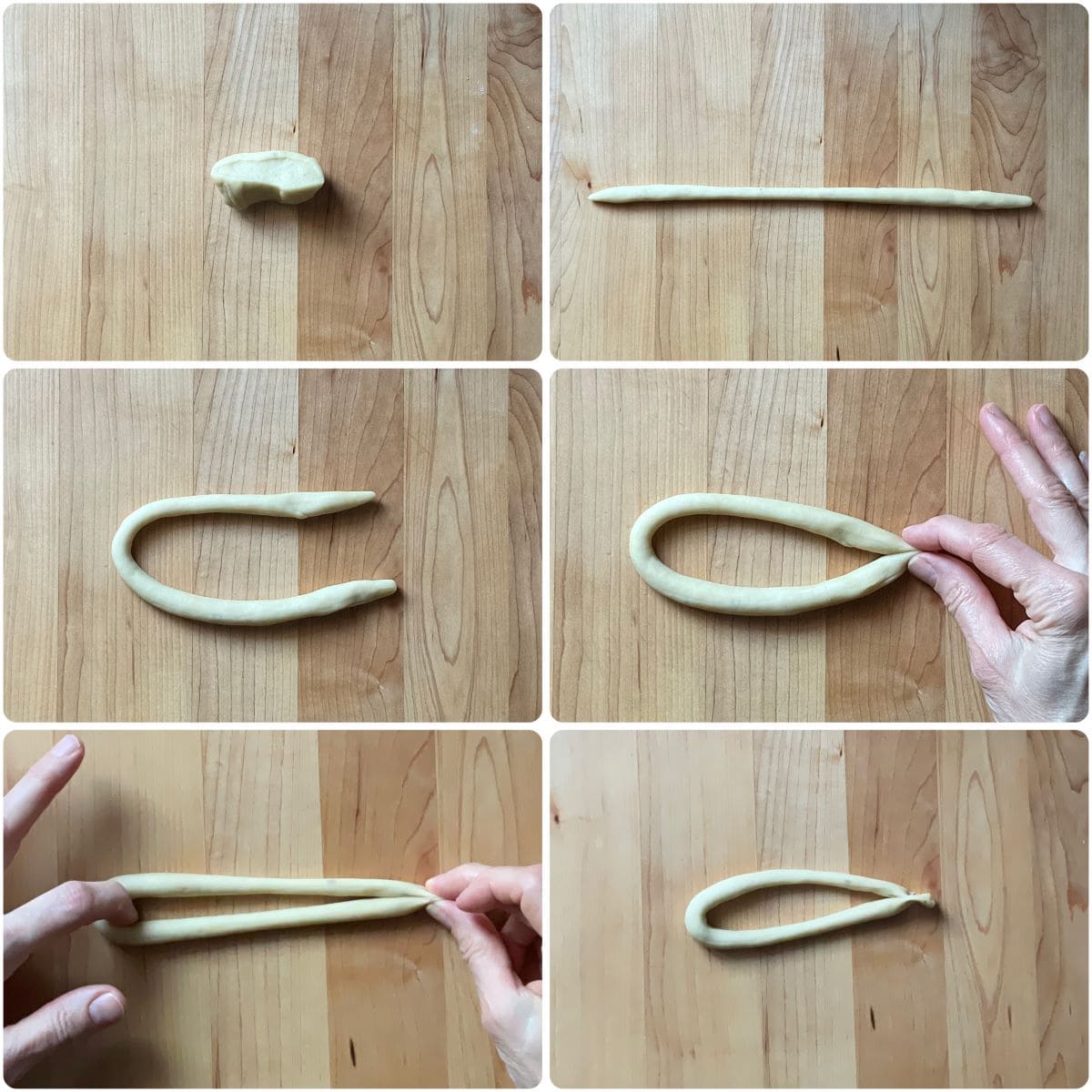
- Roll each piece into a rope 8-10 inches (20-25 cm) long and about ½ inch (1 cm) in diameter. Shape each rope into a ring, pressing the ends together firmly to form the tarallo shape.
- Once I have shaped about half of the dough into taralli, I bring a large pot of water to a boil.
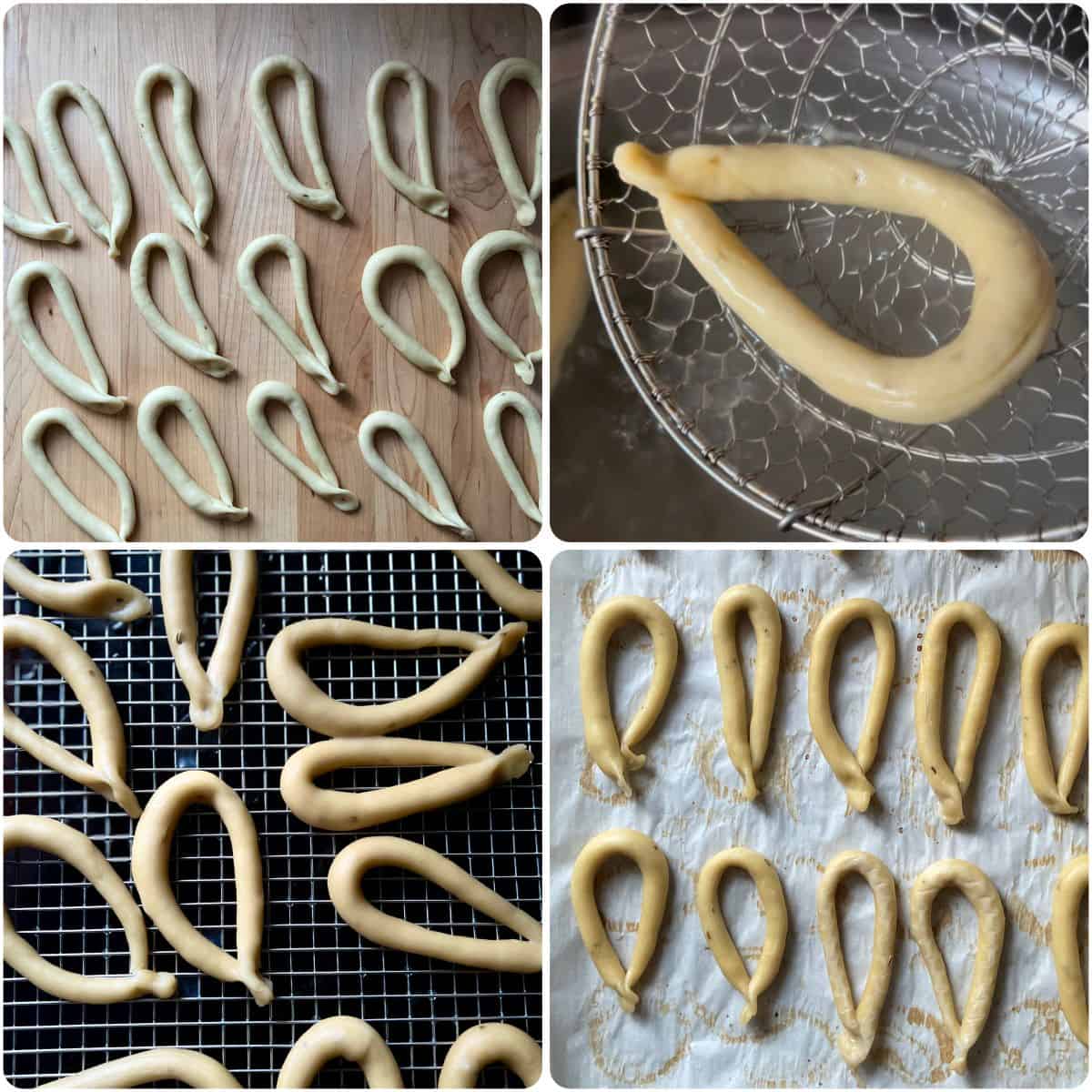
- Working in batches of 3-4, carefully drop the taralli into the water. Once they float to the surface (this should take about 15 seconds), remove them with a slotted spoon and place them on a cooling rack to drain.
- Preheat your oven to 375°F (190°C). Arrange the boiled taralli on a parchment-lined baking sheet or directly on oven grates. Bake for 10 minutes at 375°F (190°C), then lower the temperature to 350°F (175°C) and bake for another 10-15 minutes, until they are golden brown and crispy.
- While one batch of taralli is baking, continue shaping and boiling the remaining dough.
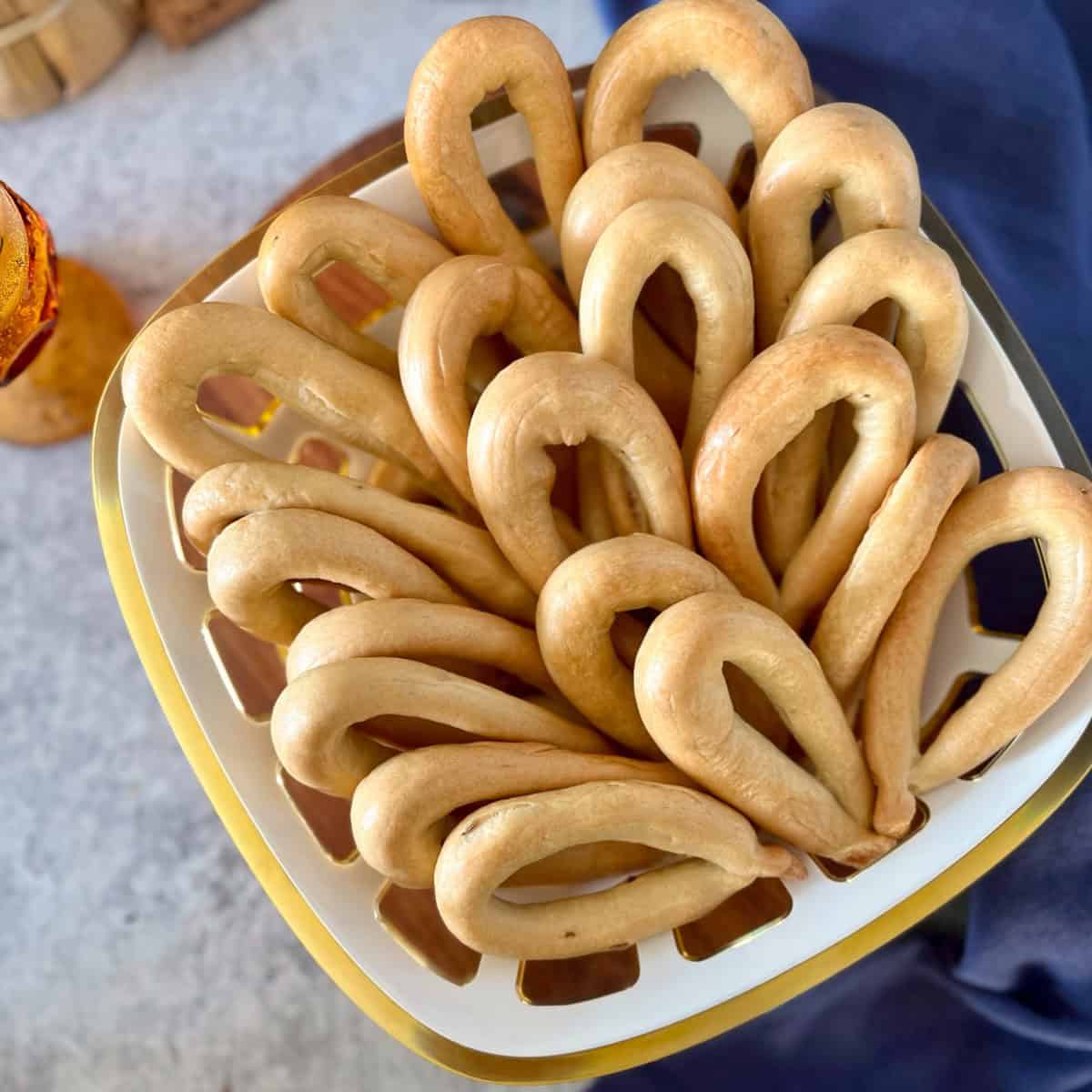
- Let the taralli cool on a wire rack before serving. Enjoy them as a snack or paired with your favorite wine!
Tips
- Ensure the water is lukewarm and not too hot (about 100-110°F). If it's too hot, it can kill the yeast. Also, wait for the yeast to foam up after 10 minutes. If it doesn’t, the yeast may be expired, and it's best to start with fresh yeast.
- For best results, be sure to use a kitchen scale to weigh the flour for precise measurements. This is my point of reference: 1 cup of all-purpose flour=5 ounces =142 grams. Source
- Lightly toast the anise seeds in a dry skillet over medium heat for a minute or two, just until fragrant. This simple step intensifies their flavor and adds an extra layer of flavor to your taralli.
- There's no need to flour the wooden board when rolling out the taralli. The olive oil in the dough prevents sticking, making it easy to shape. Not using flour also helps the ends pinch together securely, preventing them from separating during boiling.
- Feel free to adapt any sized ring shape when making these taralli; there is no right or wrong shape. It's all about personal preference.
- If you prefer your taralli to have less of a crunch, check the texture after 20 minutes (of total baking time) and pull them out when you want.
- Taralli continue to crisp up as they cool to room temperature, so keep this in mind when determining doneness.
FAQ
A dry white wine is best for making taralli. Classic choices include Pinot Grigio, Trebbiano, or Verdicchio. These wines have a mild flavor that enhances the dough without overpowering the anise flavor. Avoid sweet wines, as they can alter the taste and texture. If you prefer a slightly richer flavor, a dry Marsala can also work well.
Yes, you can easily halve the recipe if you want to make a smaller batch. Just divide all ingredients in half, and follow the same instructions. Keep in mind that the resting, boiling, and baking times should stay the same.
More Italian Anise Recipes
Anise's distinctive aroma and flavor make it a perfect addition to delicious cookies. Here are some of my favorite Italian cookie recipes that feature this remarkable spice.
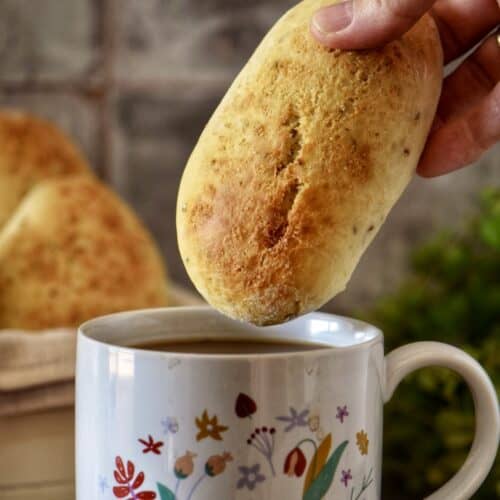
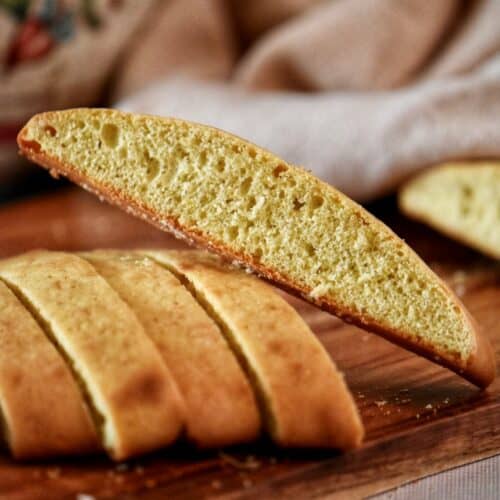
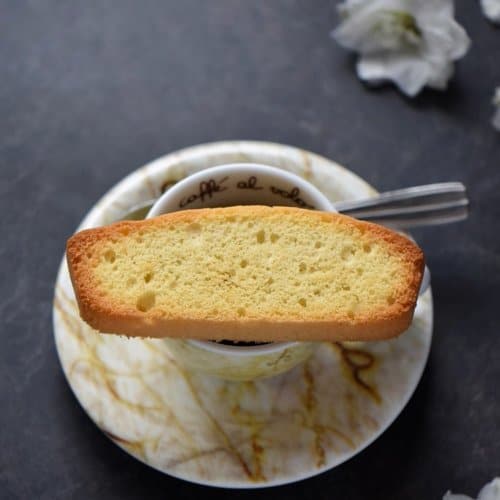
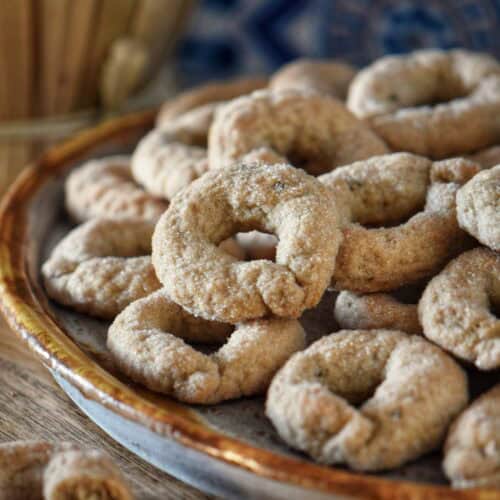
Recipe Origin
It was almost ten years ago that a colleague of mine shared his mom's recipe for these addictive, crunchy taralli made with yeast.
She was born in the beautiful city of Cosenza in Calabria, Southern Italy, and like so many immigrants, she made her way to North America.
As part of a fundraiser for their local church, she and her friends bake thousands of these savory treats-using a sausage attachment to press the dough into long coils, which are then cut and shaped into rings. Such a brilliant and efficient way to keep an old tradition alive!
When my colleague learned of my taralli obsession, he graciously shared his mom’s recipe with me, and I will forever be grateful.
There are countless variations of this simple Italian snack. Some recipes include yeast, eggs, and/or wine, while others use varying herbs like fennel, anise, or spices like black pepper or chili flakes. The best part? You can mix and match flavors to make them your own.
Whether you’re making taralli for snacking or enjoying them with a glass of wine, they will surely bring a taste of tradition to your table.
I hope you give this recipe a try!
Enjoy!
THANKS SO MUCH for following and being part of the She Loves Biscotti community, where you will find Simple & Tasty Family-Friendly Recipes with an Italian Twist.
Ciao for now,
Maria
★★★★★ If you have made this taralli recipe, I would love to hear about it in the comments below and be sure to rate the recipe!
Recipe

Crunchy Italian Anise Taralli with Yeast
WANT TO SAVE THIS RECIPE?
Ingredients
- 2¼ teaspoons active dry yeast 8 grams
- 1 teaspoon granulated sugar
- 1 cup water lukewarm
- 1 kg all-purpose flour approximately 7 cups
- 1½ teaspoons salt or to taste
- 1 tablespoon anise seed heaping, or to taste, toasted
- ¾ cup olive oil
- 1 cup white wine
Instructions
- In a small bowl, combine yeast, sugar and water.
- Stir and let stand for 10 minutes (will get foamy).
- In the bowl of a stand mixer, combine the rest of the ingredients.
- Add the yeast mixture.
- With dough hook attachment knead for approximately 10 minutes until you have a soft, smooth elastic dough. Alternately, you can knead by hand.
- Cover loosely with plastic wrap and tea towel and allow dough to rest for at least 1 hour.
- Place the ball of dough on an un-floured wooden board.
- Knead the dough for about 1 minute.
- Separate the dough into quarters (cover the dough you are not using).
- Cut each quarter into 16 pieces. (each piece should weigh about 25 grams-almost 1 oz).
- Roll each piece into a rope 8-10 inches (20-25 cm) long and about ½ inch (1 cm) in diameter. Shape each rope into a ring, pressing the ends together firmly to form the tarallo shape. DO NOT FLOUR YOUR BOARD.
- Bring a large pot of water to boil, then reduce heat so that the water simmers.
- Plunge the taralli in boiling water; 3-4 at a time. Once they surface to the top, remove with slotted spoon. The boiling process (per batch) should take less than 15 seconds.
- Place on cooling rack to drain.
- Repeat process until all the taralli have been boiled.
- Place boiled taralli directly on oven grates or on a parchment lined cookie sheet.
- Bake in a preheated oven at 375° F for 10 minutes, then lower heat to 350° F for another 10-15 minutes until golden brown and crisp. (Set oven rack in the center).
- WATCH THE VIDEO ON THE RECIPE CARD TO SEE HOW EASY THIS RECIPE IS TO MAKE.
Video
Notes
- Ensure the water is lukewarm and not too hot (about 100-110°F). If it's too hot, it can kill the yeast. Also, wait for the yeast to foam up after 10 minutes. If it doesn’t, the yeast may be expired, and it's best to start with fresh yeast.
- For best results, be sure to use a kitchen scale to weigh the flour for precise measurements. 1 cup=142 grams
- Lightly toast the anise seeds in a dry skillet over medium heat for a minute or two, just until fragrant. This simple step intensifies their flavor and adds an extra layer of flavor to your taralli.
- There's no need to flour the wooden board when rolling out the taralli. The olive oil in the dough prevents sticking, making it easy to shape. Not using flour also helps the ends pinch together securely, preventing them from separating during boiling.
- Feel free to adapt any sized ring shape when making these taralli; there is no right or wrong shape. It's all about personal preference.
- If you prefer your taralli to have less of a crunch, check the texture after 20 minutes (of total baking time) and pull them out when you want.
- Taralli continue to crisp up as they cool to room temperature, so keep this in mind when determining doneness.
Nutrition
I originally published this post on January 23, 2016, and republished it on January 31, 2025, with updated content, photos and a video. Thanks for sharing!
Marianne hartnack
when cooking do you keep bringing the temperature up and down for each batch?
Maria
Good question Marianne. I only boil a few at a time so this is not really an issue. The whole process of boiling is very quick. Thanks so much for your interest.
Rose
Hi,Maria
Just found your recipe and would like to try it. Since i don’t have a stand mixer ,do you think putting the dough in the bread maker would work?
Thanks for the great recipes and stories behind them
Maria
Hi Rose, I’m so sorry Rose but I don’t have a bread machine. I’m not much help but perhaps a reader can help out.
Anna
I was thinking the same thing but because there’s a lot of dough even let’s say you use half of the batter ..it’s still too much force on the bread machine to kneed it. I asked my hubby to kneed it for me!!! Haa. Next time I’ll try it ! This recipe is the best TARALLI ever !!!
Thank you Maria
Maria
Great idea as there really is a lot of dough. Thrilled to hear you are enjoying the taralli, thanks Anna.
Joanne
I live in the US I can’t find the black anise seeds. Any advice?
Maria
Are you able to find the light brown colored one? Otherwise, you can replace it with fennel seeds, a little milder but still good. Caraway seeds are another option… I like them in my soda bread, but I think they would work well in this recipe. Hope that helps Joanne. Thanks for stopping by.
Gordon
Hi Maria. I bought some several months ago and I knew I would be making some. This week I found your recipe and tried it. BTW I was pleased to see the inclusion of white wine in the recipe.
They turned out great! My wonderful wife boiled them for me. Oh they’re so good.
One thought though, we have a good stand mixer and even with a bread hook I nearly cooked the motor. Next time I will do the kneading by hand.
But thanks for the recipe.
Maria
Oh my, I’m glad the motor was okay.
I am thrilled to hear you enjoyed the taralli. Thanks so much for sharing Gordon.
Gary
They have been making these in my Mom’s family (Mastroianni’s) since they can remember and our recipe dates back to the late 1800’s. No wine just flour, fennel, salt, olive oil and water. (a bit more water than oil if you want them to be hard and crisp). They would boil in large vats and had 3 very large (seemed that way to me in the 50’s & 60s) Andes Ovens in the basement. They would make the dough and then use a macaroni machine roll it out into strips (many of my grandmother sisters – great aunts worked at the local macaroni factory in central NY – P&R Macaroni [Procino & Rossi]). A few of the great nieces and nephews still make them today around the holidays and special events but always for Christmas. 6 batches (each batch is 3lbs of flour, 2 Cups of Filippo Berio Olive Oil, 2 Cups of water [a little more for consistency if needed], 3 tablespoons of fennel seeds and 3 tablespoons of salt) can take 8 – 10 hours from start to finish with double wall ovens and several large vats for boiling. We have always shaped them like the shape of the cancer ribbon – where the ends cross each other.
Maria
Thank you so much for sharing Gary. I just love to hear about the family history of recipes. I worked as a food service manager for over 30 years… it sounds to me like that basement was a small production center. I can only imagine the delicious food that was made in your family. I am sure you have so many wonderful memories. Thanks again for sharing Gary.
Buon Natale to you and your loved ones.
kag
Easy recipe and made just as written. DELICIOUS RESULTS!!!!!!!!!!!!
Maria
Fantastic Kag! Thanks so much for sharing, appreciate it!
Rina
Thank you for the recipe Maria, l also have Italian background, l keep asking my mum for the recipe, but as most Italians do they “cook by occhio”. A bit of this and a bit of that depends what you have in the pantry so this recipe is exactly the way l like them. They came out perfect my first attempt, actually l bring them home from my mums after work when she makes them but by the time l get home there aren’t many left and the rest of the family complains. So now l can make my own batch 😂
Maria
Thanks so much Rina! I am thrilled to hear you enjoyed these anise taralli. They really are so addictive… I can understand why you need to have a secret stash 🙂 Thanks again for taking the time to comment, appreciate it!
Wendy
I think perhaps I am doing something wrong? I had these in Italy last fall and have run out of the stash I brought back with me. Mine have gotten kind of hard and chewy…not the crispy that I wanted. I do live in a very humid environment (Houston). Should I bake longer at a lower temperature? HELP! I haven’t given up quite yet. 🙂 I also noticed that mine take a bit longer than a few seconds to float to the top. Could it be the humidity?
Maria
Thanks for stopping by Wendy. Let’s see if I can help.
You are describing the taralli as hard and not crispy… this is what I would do: First, check to make sure your oven is properly calibrated. Next, I would make a trial run and bake them for a shorter period. Perhaps this simple modification will give you the desired texture.
The amount of flour used can also be a factor… Are you weighing the flour or measuring? If measuring, make sure to fluff and scoop lightly…
Humidity can play a factor, but once you get the “right” dough and the “right”oven temperature you will be a taralli pro! Let me know how it goes!
Gretchen
What kind of white wine do you use? Dry? Sweet? Semi?
Maria
To be honest Gretchen, I use whatever wine I have available to make these taralli… end result is always great. Thanks for stopping by 🙂
Debra Moran
For some reason tadals popped into my head earlier. My childhood friend’s mom used to make them at Easter time. I loved them and looked forward to them every year. Hers were anise flavored and made with black pepper. They were spicy hot but oh so good. They were very hard but we didn’t care because they were so delicious! Glad I found this site after googling. I haven’t had them in years.
Maria
I love how certain foods can trigger childhood memories. My family would also refer to them as “tadals”.
One of the wonderful things about taralli is that you can make them as peppery as you want!
I am also glad you found my site Debra ♥ Thanks so much for sharing!