


This Italian Anise Taralli recipe uses yeast for a light, crisp texture and incredible flavor-perfect for snacking or pairing with wine!
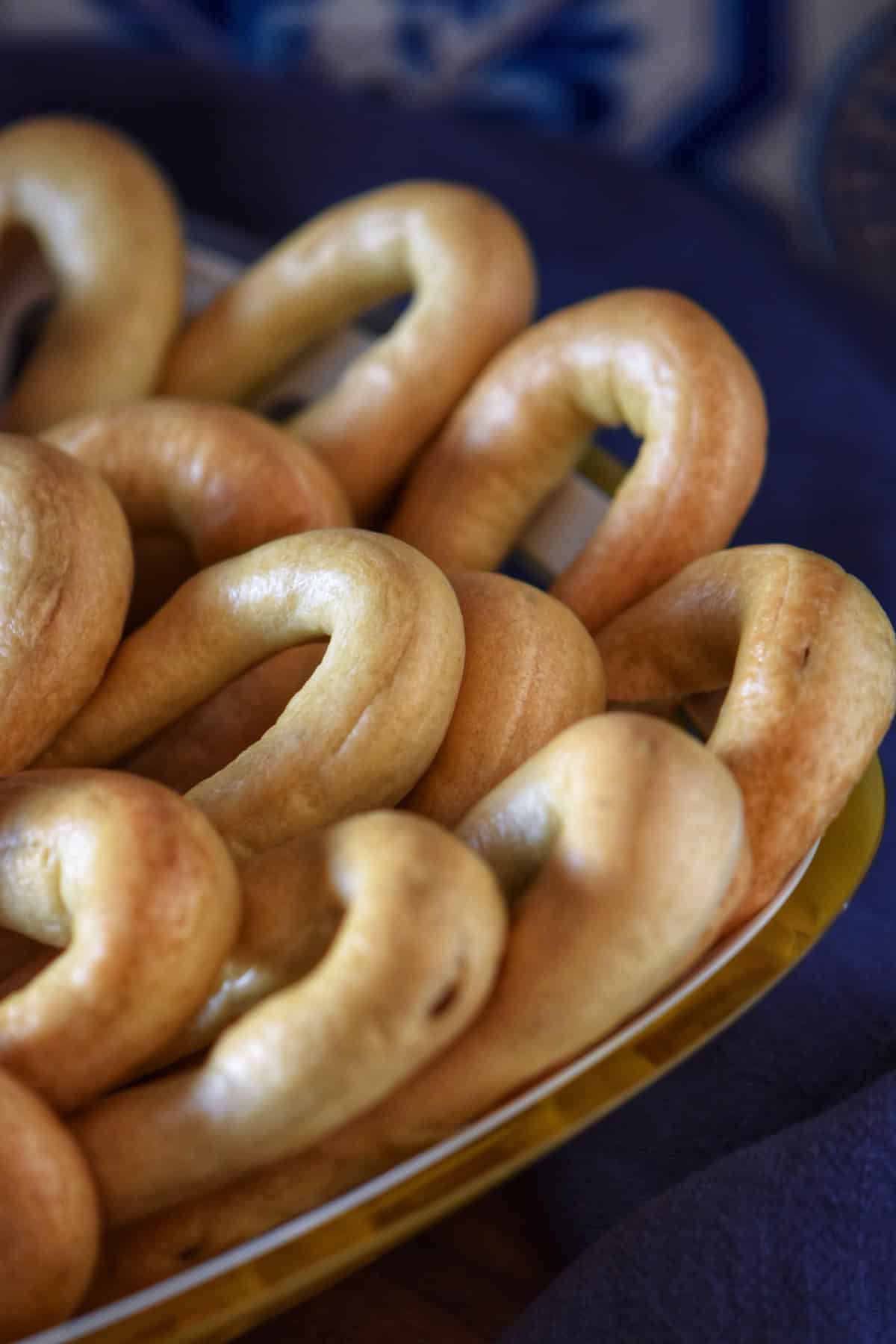
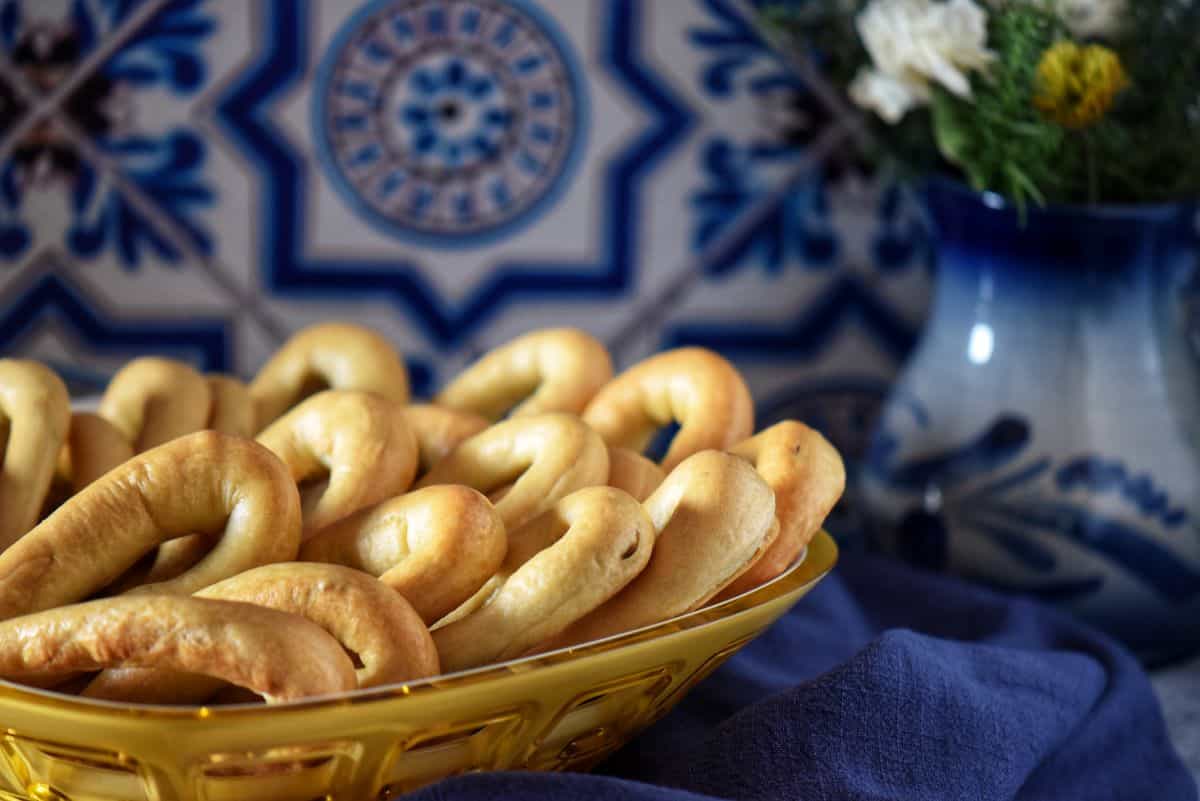
These crunchy Italian anise taralli are, in my humble opinion, the ultimate snack food.
While traditional Italian taralli making might seem time-consuming, the recipes are often simpler than they appear-and far superior to anything you'll find in a store.
Taralli have been a part of my life for as long as I can remember. Growing up in an Italian home, I watched my nonna and mom make them weekly. A family favorite was this fennel taralli recipe.
My fascination with these “Italian crackers” led me on a quest to explore different takes on this classic treat.
It's fascinating how taralli recipes vary across Italy-each region has its version, from Bari (taralli Baresi), to Puglia (taralli Pugliese), Calabria (taralli Calabrese) to Naples (taralli napoletani).
This particular recipe uses yeast to give the taralli their light, airy texture. The process starts by activating the yeast with water and sugar. Once it's ready, mix it with the rest of the ingredients and let your stand mixer do the work.
Be sure to watch the video in the recipe card to see how easily this all comes together.
Before I share the step-by-step photos of taralli making, here's a quick look at the prep and cook time. While the process requires a bit of patience, you will love the final product!
Let's break it down!
Jump to:
Prep and Bake Time
The times to prepare and bake these yeast-based taralli recipe can be estimated as follows:
- Prep Time: 20 minutes (proofing, mixing and kneading dough)
- Resting Time: 1 hour (for dough to rise)
- Shaping & Boiling Time: 25-30 minutes (rolling, shaping, and boiling in batches)
- Baking Time: 20-25 minutes (375°F for 10 minutes, then 350°F for 10-15 minutes)
- Total Time: ~2 hours 15 minutes (including resting time)
Making anise taralli is a rewarding process that involves mixing, shaping, boiling, and baking to achieve their signature crisp texture. And with just a few easy steps, you’ll have a fresh batch ready to enjoy.
Let’s make them together!
Ingredients
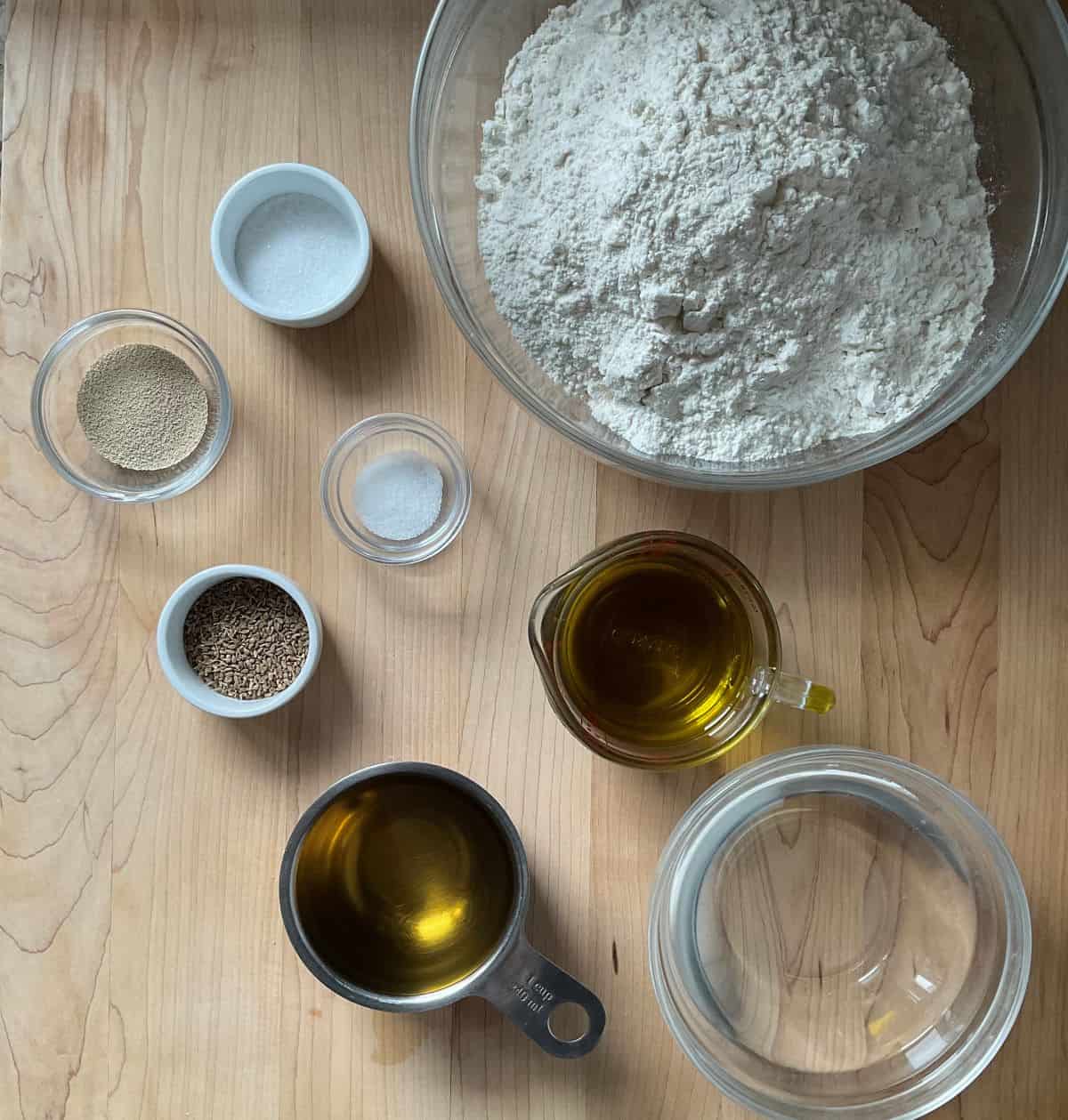
To make these crunchy, flavorful taralli, you'll need a handful of simple pantry staples:
- Active Dry Yeast & Sugar: The yeast helps give the taralli a light, crisp texture, while the sugar activates it and aids in fermentation.
- Water: Lukewarm water ensures the yeast activates properly, allowing the dough to rise slightly.
- All-Purpose Flour: Provides structure and the perfect balance of crispness and crunch.
- Salt: Enhances the flavors and gives the taralli that savory touch.
- Anise Seeds: The star of this recipe! Anise adds a warm, slightly sweet, and aromatic flavor that makes these taralli so unique. I like to toast the seeds lightly before adding them to the dough to enhance their natural sweetness and deepen their flavor.
- Olive Oil: Adds richness and helps create a tender yet crisp texture.
- White Wine: A traditional ingredient that enhances the flavor and contributes to the crispiness of the taralli after baking.
Substitutions and Variations
- Anise Seeds: If you're not a fan of anise seeds or prefer a milder licorice flavor, fennel seeds can be used instead of anise seeds.
- White Wine: Dry vermouth can be used as an alternative to white wine, offering a similar depth of flavor. For a non-alcoholic version, simply use water.
- Olive Oil: While olive oil imparts a rich, fruity flavor, you can substitute it with vegetable oil for a more neutral taste.
- Bread Flour: You can substitute bread flour for all-purpose flour for a slightly chewier texture. Bread flour has more protein, resulting in a denser, chewier dough. Note: You might need to adjust the quantity as I find that bread flour tends to absorb more liquid than all-purpose flour.
Step-by-Step Instructions
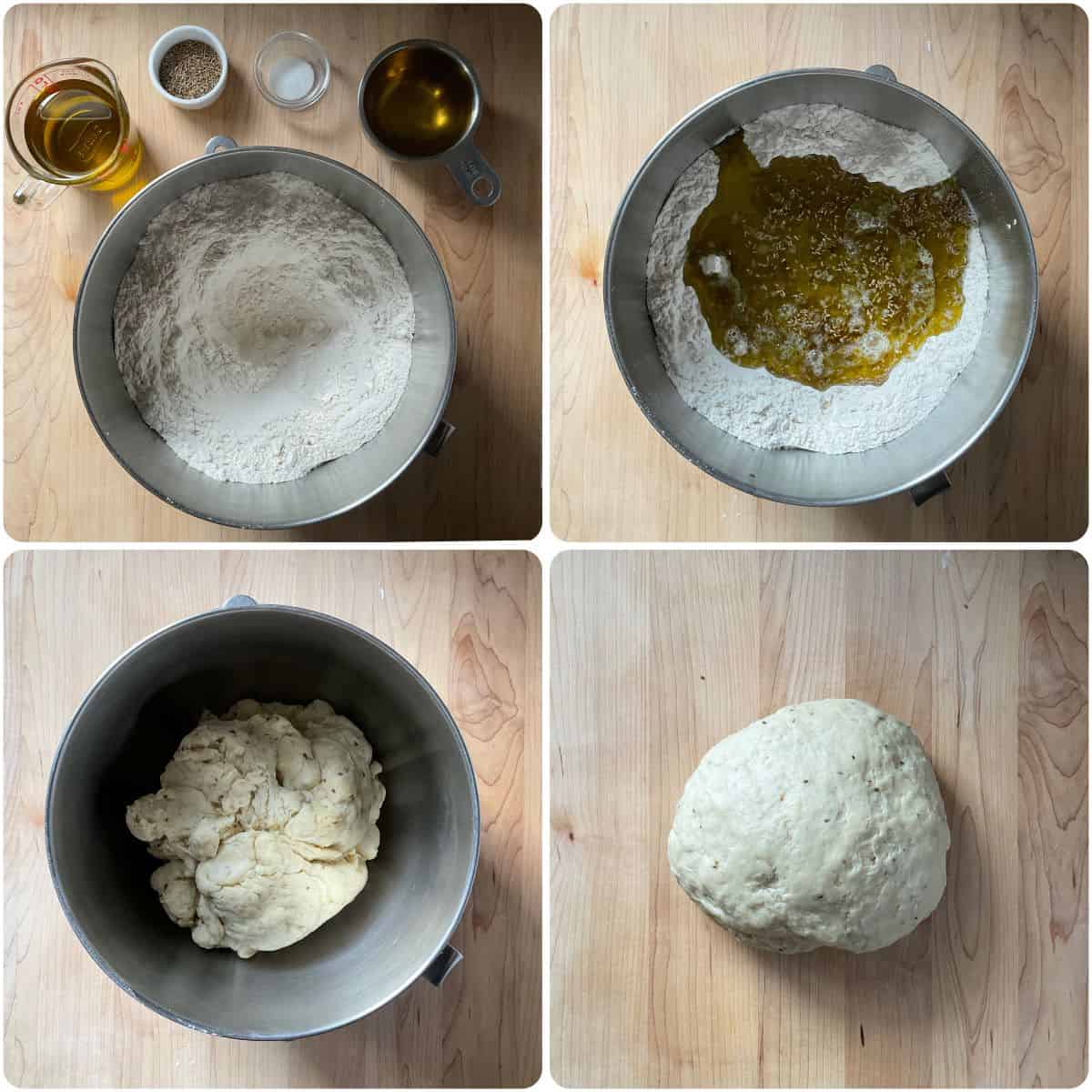
- In a small bowl, combine 2¼ teaspoons active dry yeast (8 grams), 1 teaspoon of granulated sugar, and 1 cup of lukewarm water (approximately 100°F / 38°C). Stir and let it sit for about 10 minutes, until the mixture becomes foamy.
- In the bowl of your stand mixer, combine the 1 kg all-purpose flour (approximately 7 cups), 1½ teaspoons salt (or to taste), and 1 heaping tablespoon of toasted anise seeds (or to taste). Whisk together to ensure they're evenly distributed.
- Make a well in the center of the dry ingredients. Add ¾ cup olive oil and 1 cup white wine. Add the foamy yeast mixture.
- Using the dough hook attachment on your stand mixer, knead the dough on a low setting for about 10 minutes, or until it becomes smooth and elastic. If you prefer to knead by hand, simply do so on a lightly floured surface for the same amount of time.
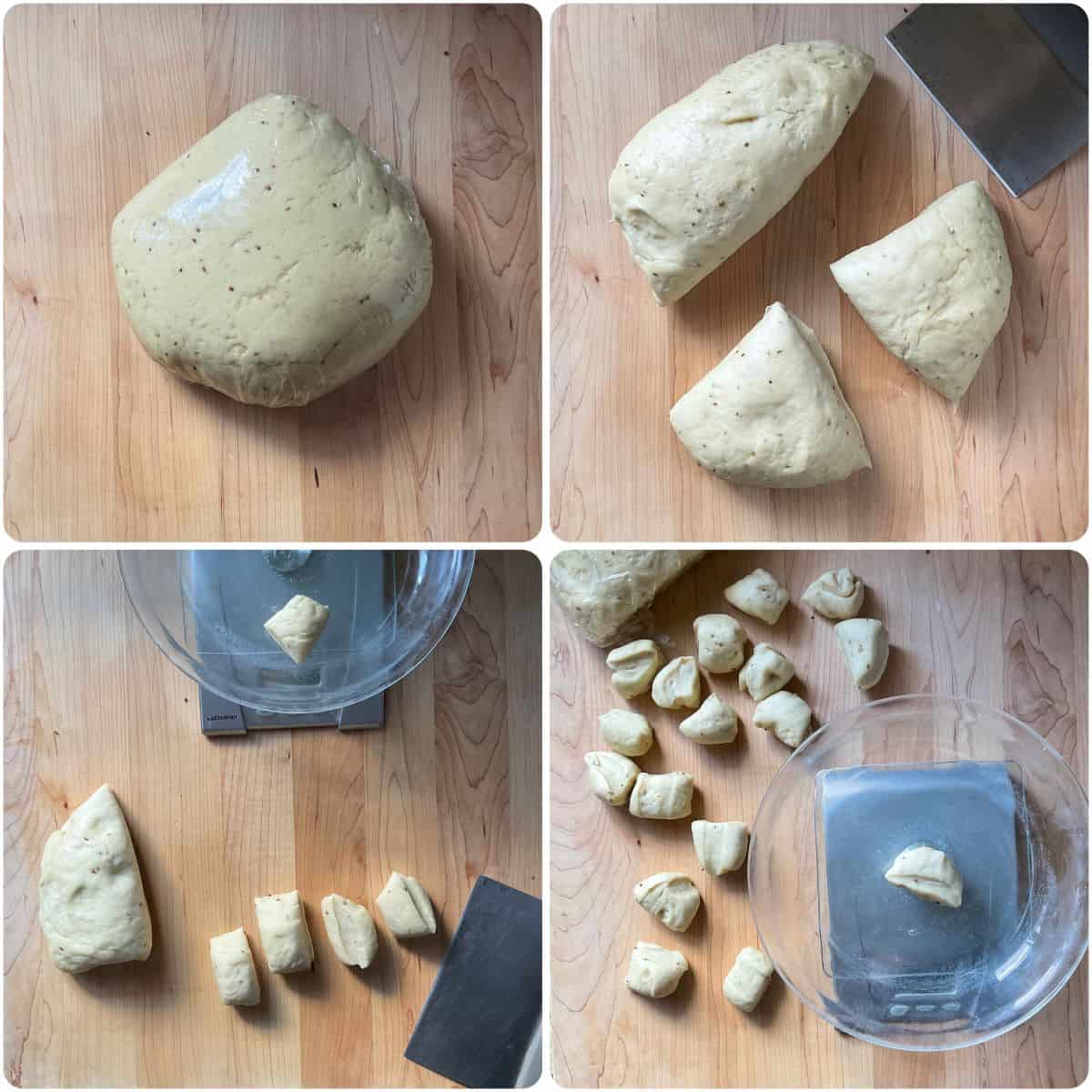
- Cover the dough with plastic wrap. Let it rest for at least 1 hour or until it has risen and doubled in size. During this rest period, the gluten structure relaxes and the “rested” dough will be a lot easier to roll out.
- After the dough has rested, I then place the dough ball on an un-floured wooden board and knead it a few times before separating the dough into quarters. Cover the sections you’re not working with to keep them from drying out.
- Cut each quarter into 16 pieces. I like to use a food scale to ensure that each piece of dough weighs approximately 25 grams.
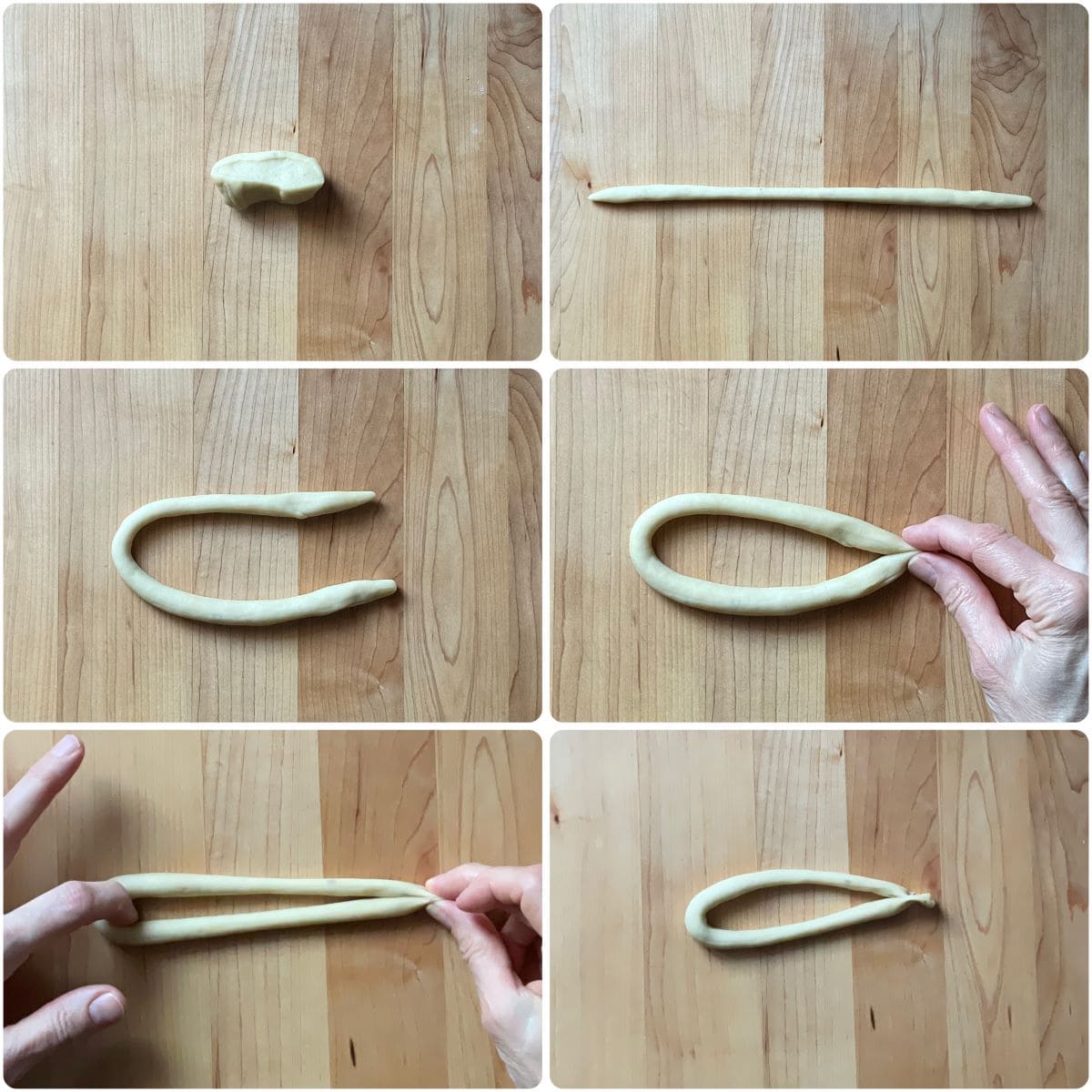
- Roll each piece into a rope 8-10 inches (20-25 cm) long and about ½ inch (1 cm) in diameter. Shape each rope into a ring, pressing the ends together firmly to form the tarallo shape.
- Once I have shaped about half of the dough into taralli, I bring a large pot of water to a boil.
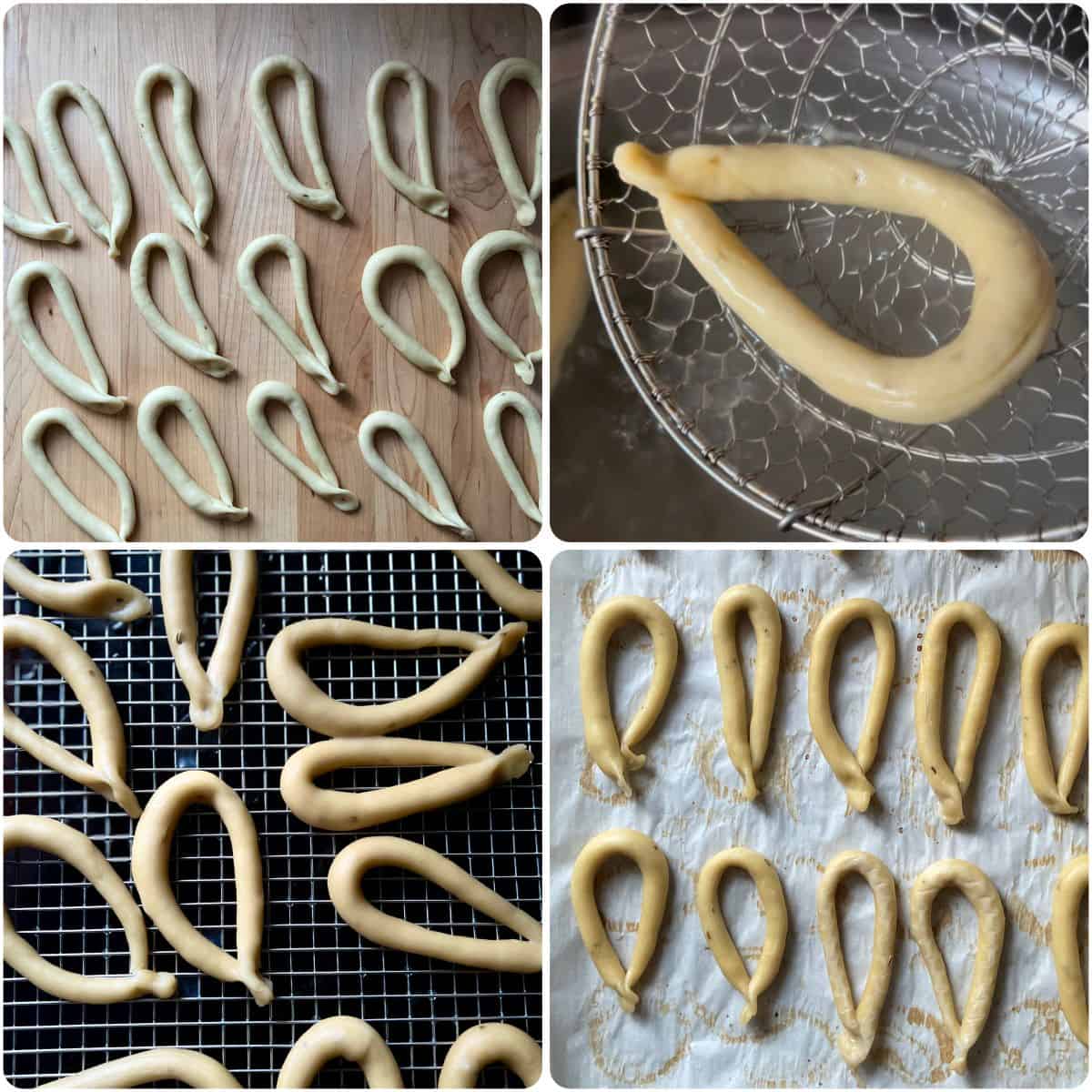
- Working in batches of 3-4, carefully drop the taralli into the water. Once they float to the surface (this should take about 15 seconds), remove them with a slotted spoon and place them on a cooling rack to drain.
- Preheat your oven to 375°F (190°C). Arrange the boiled taralli on a parchment-lined baking sheet or directly on oven grates. Bake for 10 minutes at 375°F (190°C), then lower the temperature to 350°F (175°C) and bake for another 10-15 minutes, until they are golden brown and crispy.
- While one batch of taralli is baking, continue shaping and boiling the remaining dough.
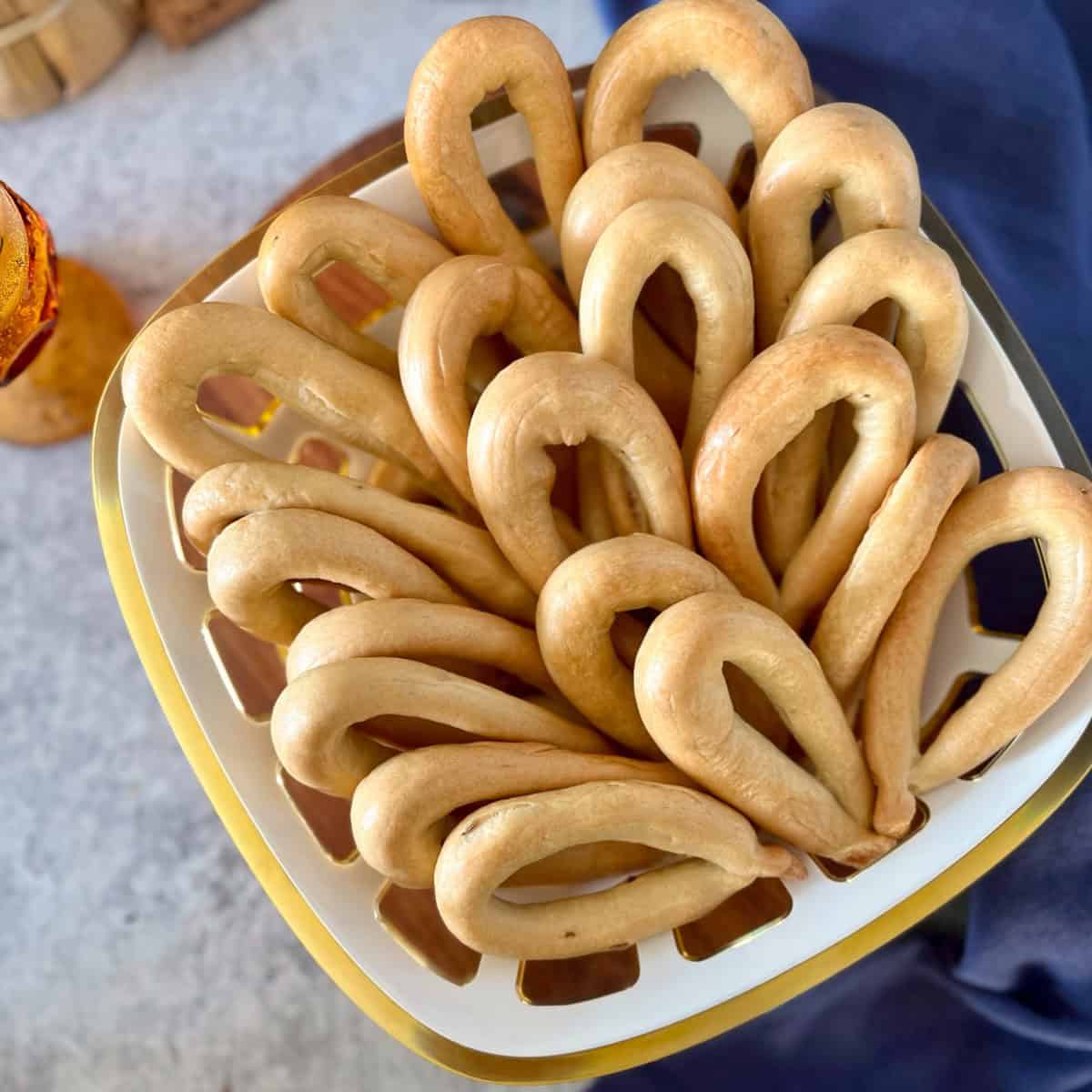
- Let the taralli cool on a wire rack before serving. Enjoy them as a snack or paired with your favorite wine!
Tips
- Ensure the water is lukewarm and not too hot (about 100-110°F). If it's too hot, it can kill the yeast. Also, wait for the yeast to foam up after 10 minutes. If it doesn’t, the yeast may be expired, and it's best to start with fresh yeast.
- For best results, be sure to use a kitchen scale to weigh the flour for precise measurements. This is my point of reference: 1 cup of all-purpose flour=5 ounces =142 grams. Source
- Lightly toast the anise seeds in a dry skillet over medium heat for a minute or two, just until fragrant. This simple step intensifies their flavor and adds an extra layer of flavor to your taralli.
- There's no need to flour the wooden board when rolling out the taralli. The olive oil in the dough prevents sticking, making it easy to shape. Not using flour also helps the ends pinch together securely, preventing them from separating during boiling.
- Feel free to adapt any sized ring shape when making these taralli; there is no right or wrong shape. It's all about personal preference.
- If you prefer your taralli to have less of a crunch, check the texture after 20 minutes (of total baking time) and pull them out when you want.
- Taralli continue to crisp up as they cool to room temperature, so keep this in mind when determining doneness.
FAQ
A dry white wine is best for making taralli. Classic choices include Pinot Grigio, Trebbiano, or Verdicchio. These wines have a mild flavor that enhances the dough without overpowering the anise flavor. Avoid sweet wines, as they can alter the taste and texture. If you prefer a slightly richer flavor, a dry Marsala can also work well.
Yes, you can easily halve the recipe if you want to make a smaller batch. Just divide all ingredients in half, and follow the same instructions. Keep in mind that the resting, boiling, and baking times should stay the same.
More Italian Anise Recipes
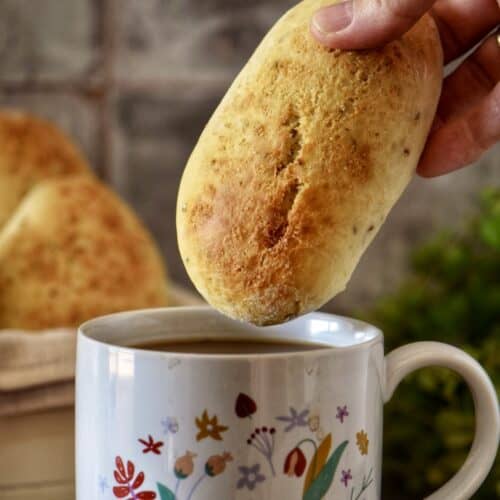
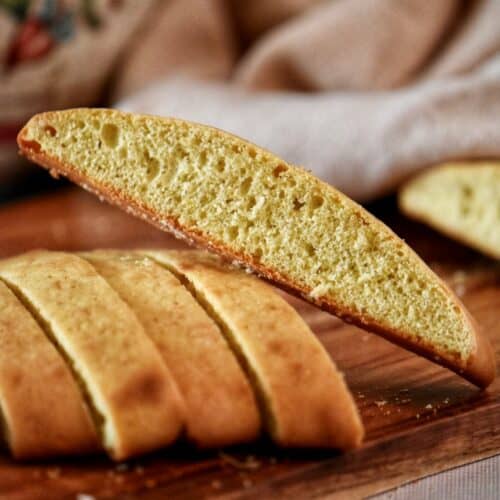
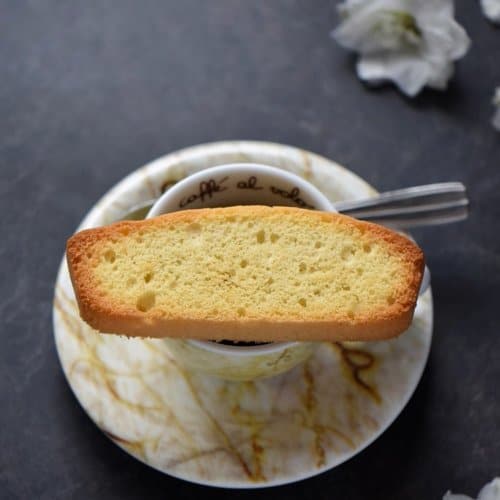
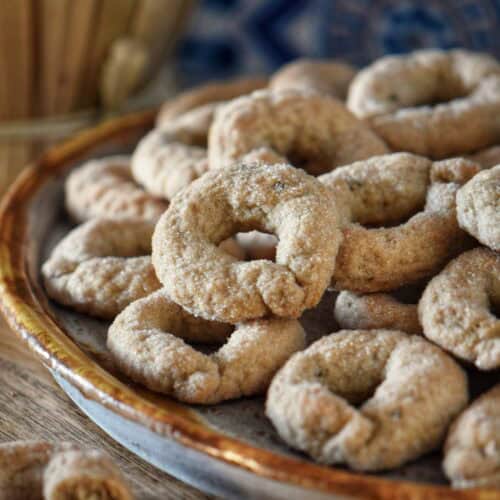
Anise's distinctive aroma and flavor make it a perfect addition to delicious cookies. Here are some of my favorite Italian cookie recipes that feature this remarkable spice.
Recipe Origin
It was almost ten years ago that a colleague of mine shared his mom's recipe for these addictive, crunchy taralli made with yeast.
She was born in the beautiful city of Cosenza in Calabria, Southern Italy, and like so many immigrants, she made her way to North America.
As part of a fundraiser for their local church, she and her friends bake thousands of these savory treats-using a sausage attachment to press the dough into long coils, which are then cut and shaped into rings. Such a brilliant and efficient way to keep an old tradition alive!
When my colleague learned of my taralli obsession, he graciously shared his mom’s recipe with me, and I will forever be grateful.
There are countless variations of this simple Italian snack. Some recipes include yeast, eggs, and/or wine, while others use varying herbs like fennel, anise, or spices like black pepper or chili flakes. The best part? You can mix and match flavors to make them your own.
Whether you’re making taralli for snacking or enjoying them with a glass of wine, they will surely bring a taste of tradition to your table.
I hope you give this recipe a try!
Enjoy!
THANKS SO MUCH for following and being part of the She Loves Biscotti community, where you will find Simple & Tasty Family-Friendly Recipes with an Italian Twist.
Ciao for now,
Maria
★★★★★ If you have made this taralli recipe, I would love to hear about it in the comments below and be sure to rate the recipe!
Recipe

Crunchy Italian Anise Taralli with Yeast
WANT TO SAVE THIS RECIPE?
Ingredients
- 2¼ teaspoons active dry yeast 8 grams
- 1 teaspoon granulated sugar
- 1 cup water lukewarm
- 1 kg all-purpose flour approximately 7 cups
- 1½ teaspoons salt or to taste
- 1 tablespoon anise seed heaping, or to taste, toasted
- ¾ cup olive oil
- 1 cup white wine
Instructions
- In a small bowl, combine yeast, sugar and water.
- Stir and let stand for 10 minutes (will get foamy).
- In the bowl of a stand mixer, combine the rest of the ingredients.
- Add the yeast mixture.
- With dough hook attachment knead for approximately 10 minutes until you have a soft, smooth elastic dough. Alternately, you can knead by hand.
- Cover loosely with plastic wrap and tea towel and allow dough to rest for at least 1 hour.
- Place the ball of dough on an un-floured wooden board.
- Knead the dough for about 1 minute.
- Separate the dough into quarters (cover the dough you are not using).
- Cut each quarter into 16 pieces. (each piece should weigh about 25 grams-almost 1 oz).
- Roll each piece into a rope 8-10 inches (20-25 cm) long and about ½ inch (1 cm) in diameter. Shape each rope into a ring, pressing the ends together firmly to form the tarallo shape. DO NOT FLOUR YOUR BOARD.
- Bring a large pot of water to boil, then reduce heat so that the water simmers.
- Plunge the taralli in boiling water; 3-4 at a time. Once they surface to the top, remove with slotted spoon. The boiling process (per batch) should take less than 15 seconds.
- Place on cooling rack to drain.
- Repeat process until all the taralli have been boiled.
- Place boiled taralli directly on oven grates or on a parchment lined cookie sheet.
- Bake in a preheated oven at 375° F for 10 minutes, then lower heat to 350° F for another 10-15 minutes until golden brown and crisp. (Set oven rack in the center).
- WATCH THE VIDEO ON THE RECIPE CARD TO SEE HOW EASY THIS RECIPE IS TO MAKE.
Video
Notes
- Ensure the water is lukewarm and not too hot (about 100-110°F). If it's too hot, it can kill the yeast. Also, wait for the yeast to foam up after 10 minutes. If it doesn’t, the yeast may be expired, and it's best to start with fresh yeast.
- For best results, be sure to use a kitchen scale to weigh the flour for precise measurements. 1 cup=142 grams
- Lightly toast the anise seeds in a dry skillet over medium heat for a minute or two, just until fragrant. This simple step intensifies their flavor and adds an extra layer of flavor to your taralli.
- There's no need to flour the wooden board when rolling out the taralli. The olive oil in the dough prevents sticking, making it easy to shape. Not using flour also helps the ends pinch together securely, preventing them from separating during boiling.
- Feel free to adapt any sized ring shape when making these taralli; there is no right or wrong shape. It's all about personal preference.
- If you prefer your taralli to have less of a crunch, check the texture after 20 minutes (of total baking time) and pull them out when you want.
- Taralli continue to crisp up as they cool to room temperature, so keep this in mind when determining doneness.
Nutrition
I originally published this post on January 23, 2016, and republished it on January 31, 2025, with updated content, photos and a video. Thanks for sharing!
Ruben
My family heritage is also Calabria, and we have a slightly different recipe, with the lard and no wine, and the most important part is to find “fresh” anise seeds, which are hard to come by. In any case they are delicious either way.
Maria
Thanks Ruben. Great comment. There are so many wonderful variations for taralli, but nothing can compare to family recipes.
Sharon
What a great recipe! I made these this morning and the are delicious! Reminds me of when I was a child and my mom made them. Like your colleague, my family is also from the little town of Cosenza in southern Italy. I hope to go some day.
Maria
How wonderful Sharon! Thanks so much for sharing.
I hope you get the chance to visit ♥
Serena
Followed your recipe for the first time today and the whole family LOVES them! I used fennel instead of anise, and added dried chili flakes to half of the dough for my spicy lovin’ family. Thank you so much. This recipe is a keeper. A true labour of love.
Maria
How wonderful Serena! Thanks so much for sharing!
Judith
Hi Maria,
I love this recipe!
The last few batches I made with 00 flour. The results are phenomenal if you like and extreme crunch effect.
Some who’ve tasted both versions like the all purpose flour better.
I like both. I vary the olive oil and wine flavors depending on which one I want to drink while baking! : )
Thank you for so many great recipes! (I’m also a biscotti recipe fan!)
Maria
Hello fellow biscotti fan! SO nice to virtually meet you! Thank you so much for sharing your variations with all of us Judith! They sound wonderful!
judith
Maria,
I’m thinking of starting a taralli anonymous chapter! This recipe is too much to resist!
One question. When I use the all purpose flour some of the taralli collapse after boiling water bath. Any suggestions? I love the all purpose flour recipe, they come out light, crispy and shiny.
:)))
Judith
Maria
Count me in Judith!
Let me see if I can help… I will “think out loud”… perhaps something will resonate with you…
Did you notice if it happens always at the same time… say at the beginning, or at the end? Perhaps the level of water varies too much from start to finish… can you use a larger pot so that there is less of a variation? Is the water at a rolling boil? If it is perhaps try a slow simmer.. conversely if it is barely simmering try increasing the heat. Hope this helps 🙂
Randie Inman
I have made several different recipes and my taralli alwcome out wrinkled. They do not turn out smooth and shiny. Any ideas as what I am doing wrong. Thanks
Anna Maria Helewka
Hi Maria
I am going to make these today. My last attempt at making taralli (the bigger ones which you slice through the middle after boiling)were a disaster. I have one question, some of the recipes out there indicate that ‘true’ italian taralli do not have yeast? Any thoughts as to why ? My italian mom has passed and I am trying to recreate her recipe that was never written down?!!
Anna
Maria
Hope you like them Anna! Thanks for reaching out!
Ada Muccillo
Love taralli. Finally was able to make them today. Thank you for sharing this recipe.
Maria
How wonderful Ada! Thank you!
Jo
My mother, first generation Italian American, would slice the tarelli after boiling them as you would a bagel but not all of the way through leaving them intact . Then bake them on the oven racks. They were always a challenge to get them to rise to about 2” high. She would make a thin lemon flavored icing. I thought they were the best.
Maria
Thanks for sharing Jo. Nothing can compare to family recipes, I absolutely agree.
I was once told by my friend’s mom that the secret to getting taralli to rise is controlling the temperature of the oven. I guess that is why it is so important to know your oven and make slight adjustments to the recipe to get the best possible results.
Thomas roggio
Just made a batch and the flavor was spot on but the texture was a little more soft and chewy then I remember how can I get a little more crunchiness
Maria
Thanks for your interest Thomas. As every oven heats up a little differently, perhaps you can leave them in the oven to bake a little longer… they will definitely get crispier. You might have to lower the heat a little so that they don’t overbake.
Maria
This recipe is spot on for the Calabrian Tarrali that my grandmother would make. She used either anise, fennel or black pepper and always boiled first for that glossy finish! My grandmother Maria was from Bisignano, a small mountain village just outside of Consenza! Not surprising that this recipe is so similar to hers. She shaped them in a circle and tied them in a knot before boiling.
Maria
Thanks so much for taking the time to share Maria!
Diane
I have made taralli since I was a young girl with my aunt and mom. My aunt’s recipe was a little of this and that, a handful of fennel or anise and once around with oil. It was always hit or miss, because it was not exact. This recipe is the best I have tried. I think I am on the fifth trial of different recipes. They came out delicious, light, perfectly browned and they have that nice shine. Thank you! Comfort food at it’s finest!
Maria
I am so thrilled to read this! I agree Diane, pure comfort food. Thanks so much for sharing.