


Learn how to freeze strawberries at home without ending up with mushy, flavorless berries. Six simple steps, no sugar needed, and tips from a retired dietitian on getting the best results every time.
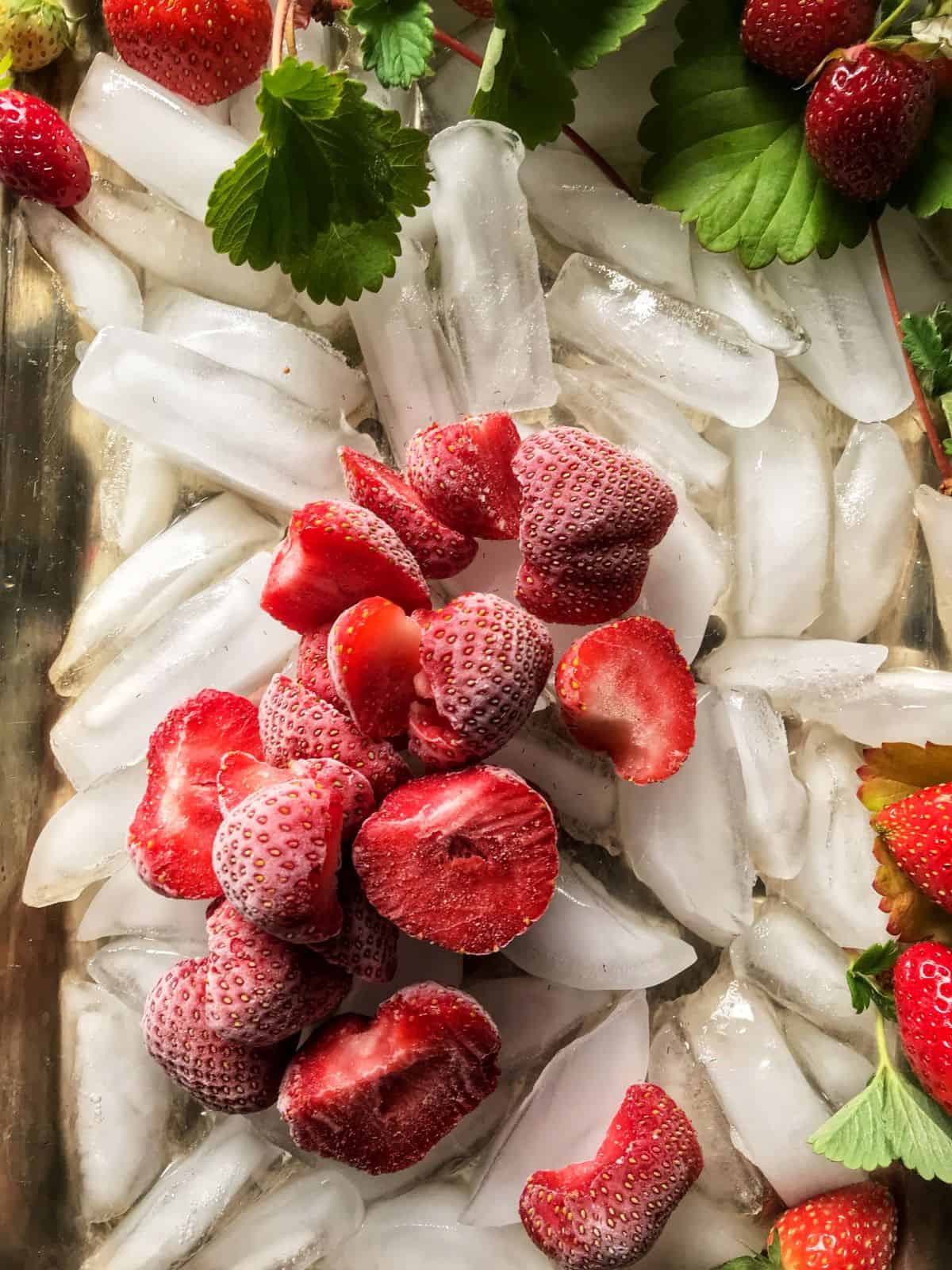
How to freeze strawberries properly is something every home cook should know, especially when strawberry season peaks.
Properly frozen berries stay vibrant and nutritious for up to a year, making them the perfect addition to your winter smoothies, baking, and sauces.
The key is following the right steps in the right order, especially the drying and single-layer freezing stages that most people skip (and then wonder why their berries come out mushy).
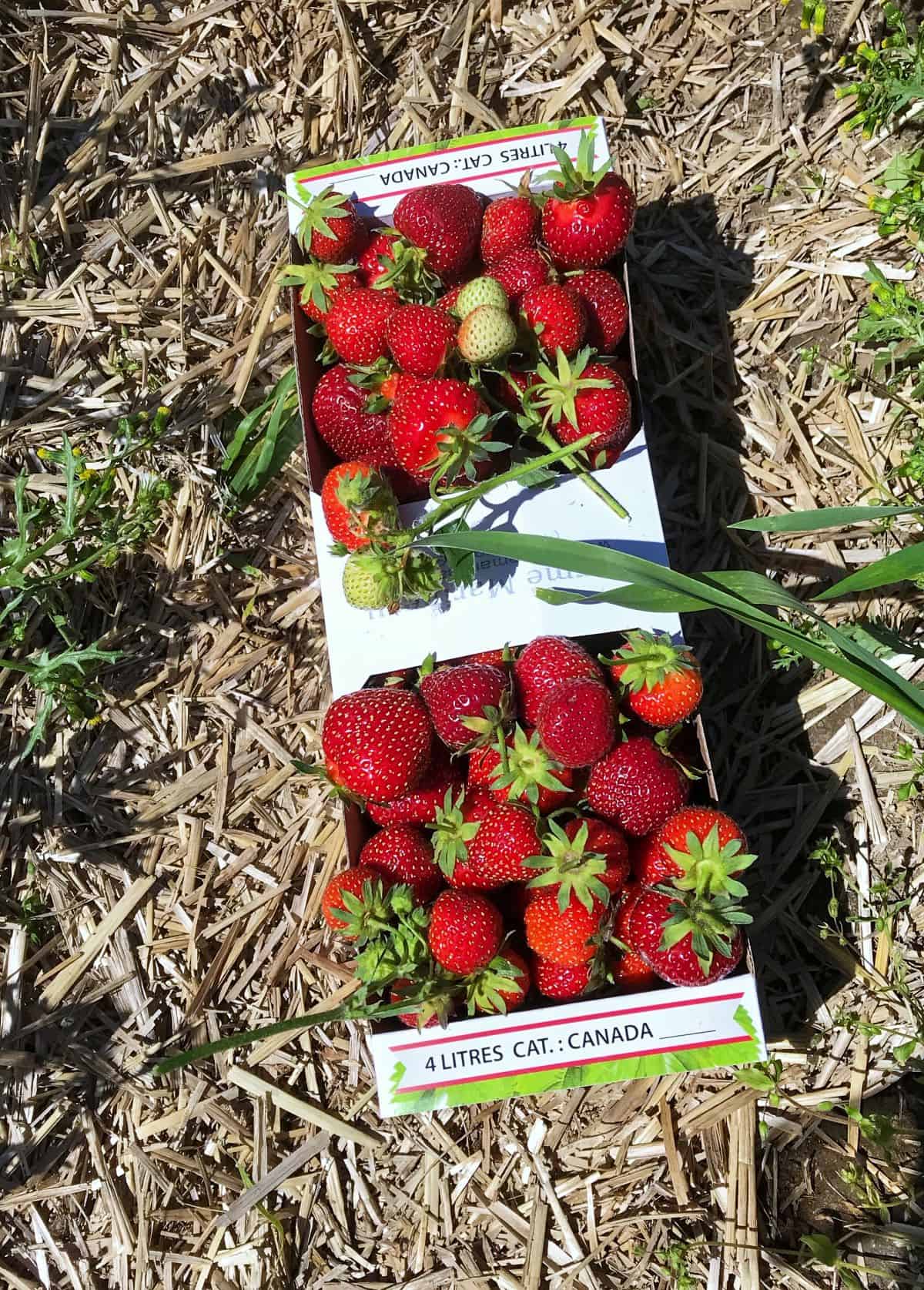
As a retired dietitian, I have frozen more strawberries than I can count, including the year I came home from picking with 16 liters of berries.
This is the method I trust completely, and once you try it, you will never go back to buying frozen berries from the store.
Jump to:
Quick Overview
- Prep Time: 15 minutes (plus 30 to 60 minutes air drying)
- Freeze Time: 2 to 3 hours on the baking sheet
- Total Active Time: 15 minutes
- Yield: Freezes any quantity, scales perfectly
- Method: Single-layer tray freezing (no sugar needed)
- Special Touch: Air drying the berries completely before freezing is the step most people skip. It is the difference between firm, individual frozen berries and one big icy clump.
- Dietary Note: No sugar, no additives. Just pure strawberries.
- Serving Suggestions: Use straight from frozen in smoothies, strawberry rhubarb compote, or thaw and spoon over ricotta pancakes.
What You’ll Need
- Fresh, ripe strawberries. The most important rule: only freeze strawberries at peak ripeness. Berries that are entirely bright red with no green or white streaks will taste sweet and vibrant when frozen. Berries that are underripe or overripe will taste flat. Local, seasonal strawberries from a farmers’ market or pick-your-own farm are always the best choice.
- A colander. For rinsing under cold running water. Never soak strawberries, as they absorb water quickly and become soggy before they even reach the freezer.
- Two clean tea towels. For gently patting the berries dry. Thorough drying is the single most important step for avoiding mushy frozen strawberries. Paper towels work too, but tea towels are gentler on delicate berries.
- A paring knife or strawberry huller. For removing the green stems and white centers (hulling). Either tool works. Use whichever feels comfortable in your hand.
- A baking sheet lined with parchment paper. This is what makes individual freezing possible. The berries need to be spread in a single layer without touching so they freeze separately rather than in a clump.
- Resealable freezer bags or airtight containers. Once frozen solid, the berries transfer into bags for long-term storage. Remove as much air as possible before sealing to prevent freezer burn. Label with the date.
- A permanent marker. Always label your bags. Frozen strawberries keep for up to one year, and you will thank yourself in February when you cannot remember what is in that bag.
Why Freeze Strawberries?
Freezing strawberries is a simple way to preserve their flavor and nutritional value while extending their usability.
Fresh strawberries have a short shelf life, but freezing them enables you to enjoy their deliciousness in various dishes, including smoothies, baking, desserts, and sauces.
You can enjoy their convenience and delightful taste year-round by keeping frozen strawberries on hand. Imagine reaching into your freezer and using just the right amount to make delicious treats.
In the long run, it's much cheaper to freeze your locally picked strawberries rather than buy them in the middle of winter from the frozen section of your big-box store.
Although there are several effective methods, let me show you my preferred method to freeze fresh strawberries.
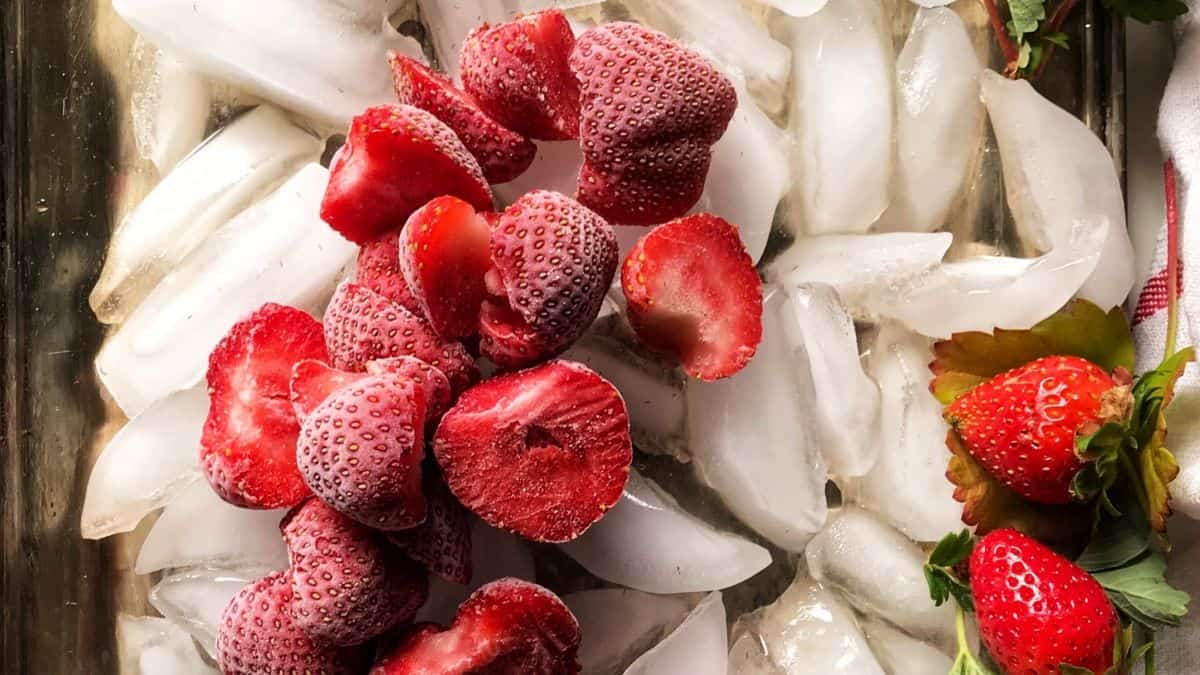
Join me as I guide you and provide more details about preserving fresh strawberries in your freezer.
Detailed Step-by-Step Instructions
Freezing strawberries is a simple process that helps preserve their freshness for later use. Here are six easy steps to help you preserve them:
Step 1: Selecting Strawberries
Choose the best strawberries for freezing to ensure maximum flavor and texture:
- Opt for strawberries in peak season, available at your local farmer’s market or freshly picked.
- Look for fresh, ripe berries that are firm, plump, and bright red.
- Avoid strawberries with any signs of mold, soft spots, or overripeness.
- For the best results, freeze strawberries within 24 hours of picking or purchasing. The fresher the berry going in, the better it will taste coming out.
Step 2: Washing and Drying
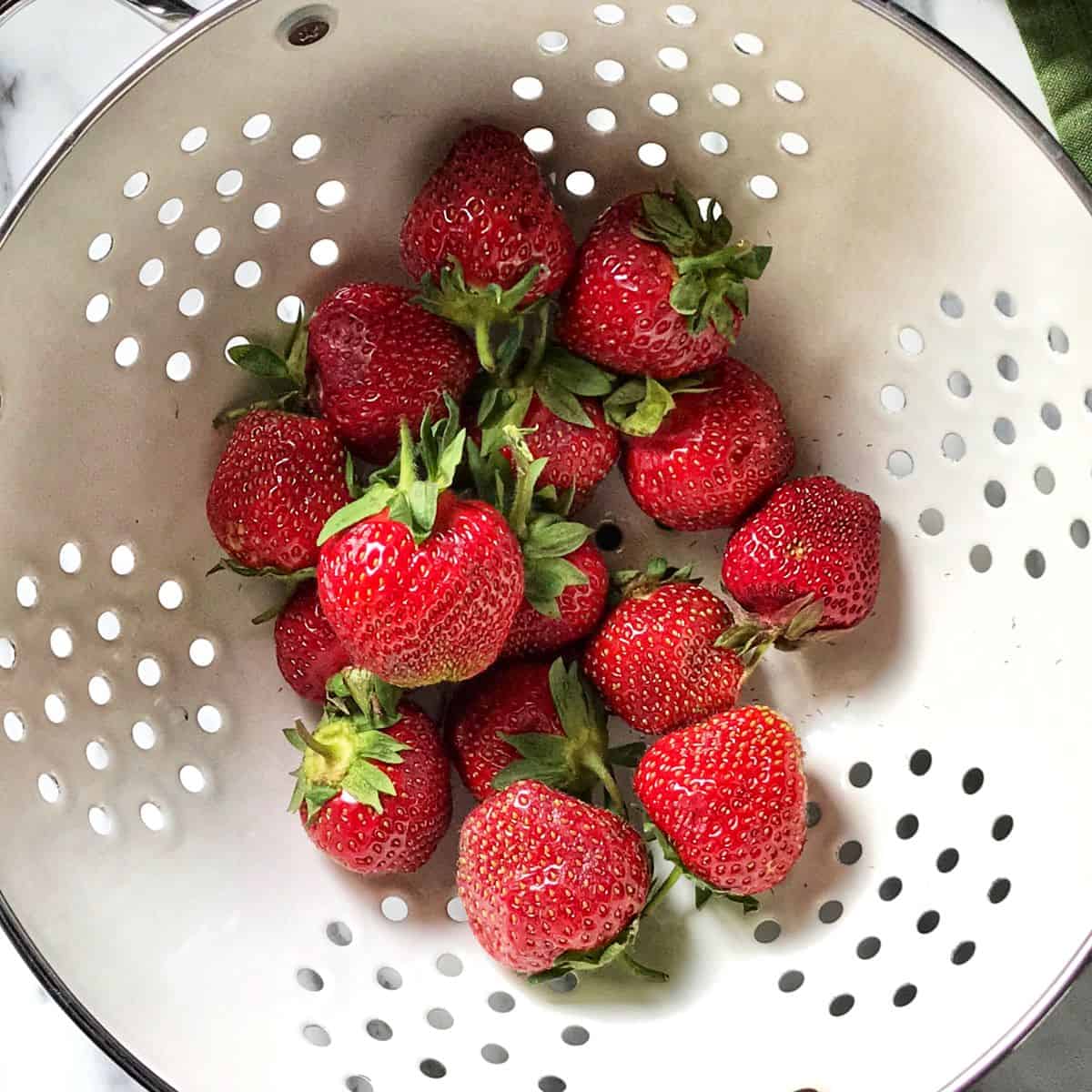
- Place the strawberries in a colander and rinse under cold running water.
- Allow the water to drain.
- Gently transfer the strawberries to a tea towel and spread them out.
- Pat them down with another tea towel to remove the excess moisture. Never soak these delicate berries as they quickly begin to lose their quality… they become soggy and lose their flavor.
- Allow to air dry for 30-60 minutes.
- Soaking even for a few minutes causes the berries to absorb water, which expands during freezing and ruptures the cell walls. This is the main cause of mushy texture when thawed.
Step 3: Hulling the Berries
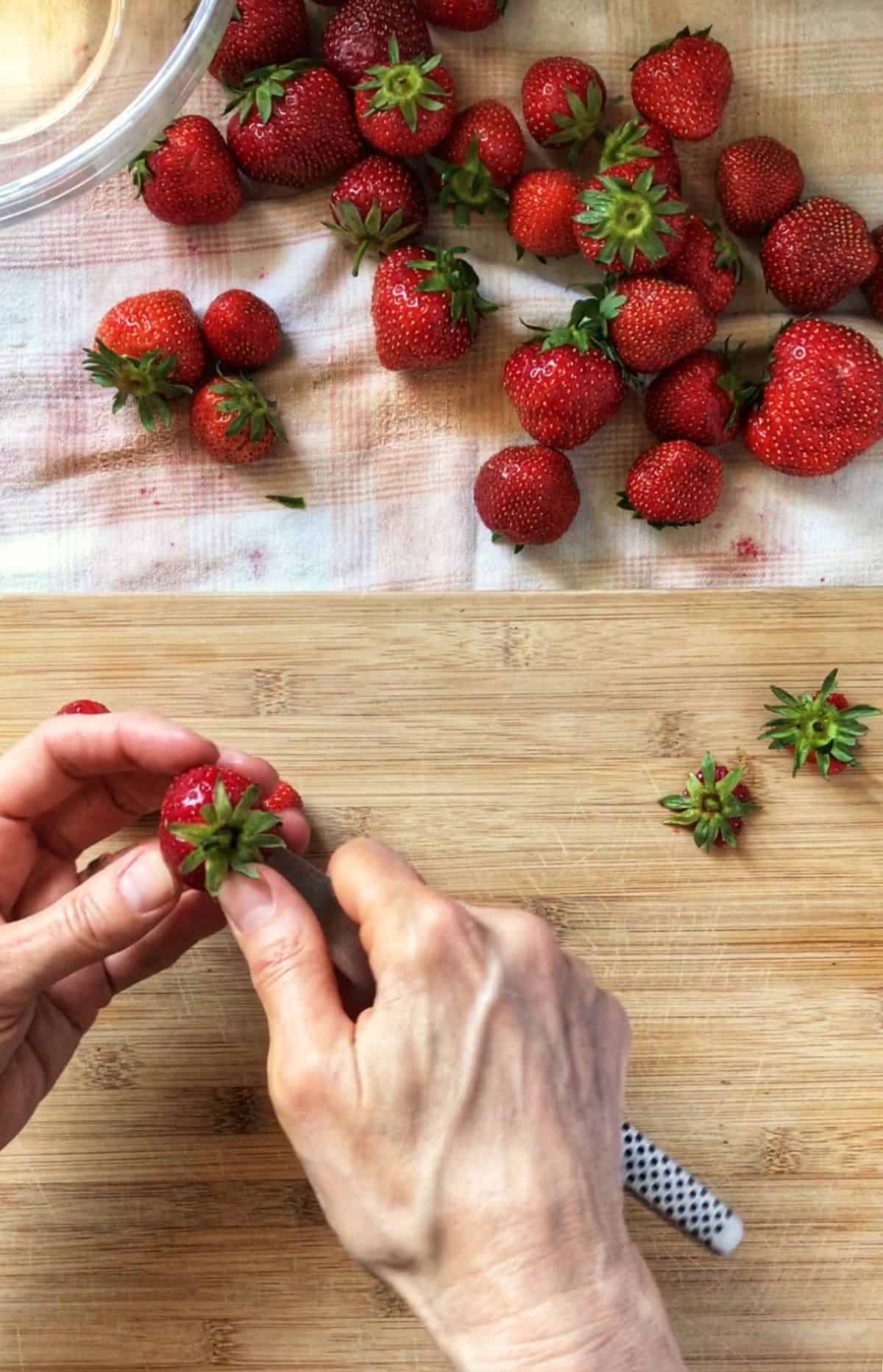
Hulling strawberries involves removing the green stems and leaves from the top of each berry. Follow these steps to hull strawberries properly:
- Hold the strawberry firmly in one hand; with the other, insert the tip of a paring knife or a strawberry huller just below the stem.
- Twist the knife or huller gently to remove the stem and leaves from the top of the berry.
- Repeat the process for each strawberry.
- Consider slicing the larger berries in half or quarters, and keep the smaller ones intact.
Step 4: Prepping for Freezing
To ensure optimal freezing and easy individual thawing, follow these steps:
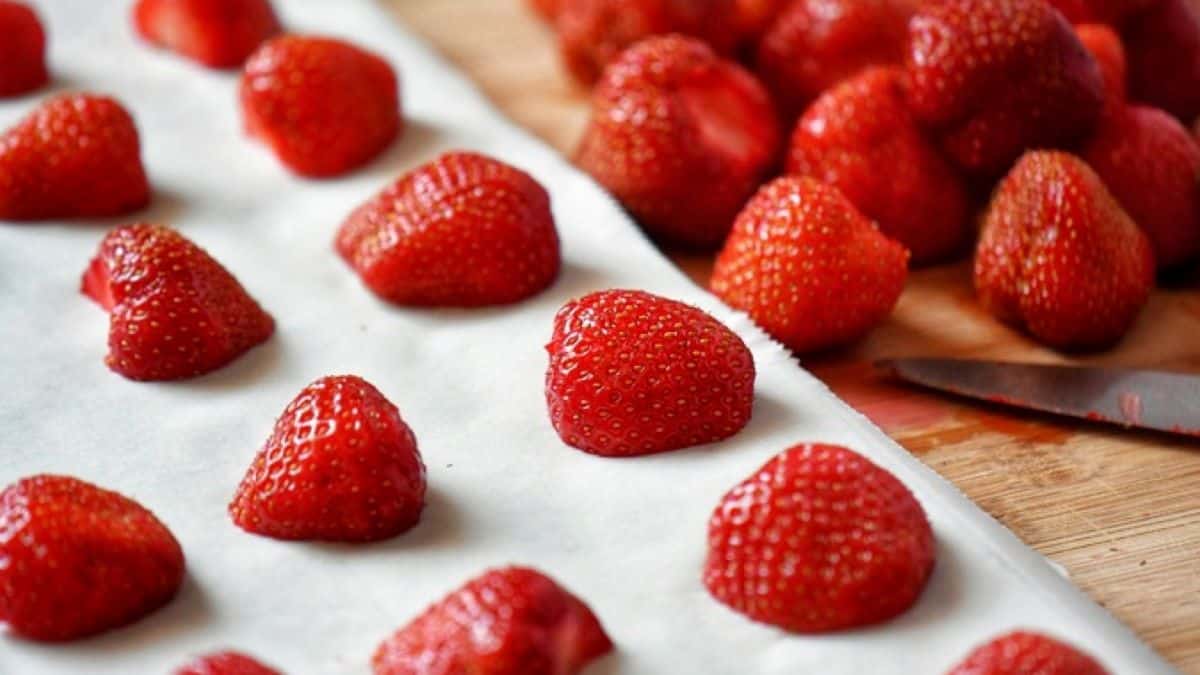
- Line a baking sheet with parchment paper. Choose a baking sheet that fits comfortably in your freezer.
- Place the hulled strawberries on the parchment paper, ensuring they do not touch each other. This prevents clumping and allows for individual freezing.
- If your baking sheet does not fit flat in your freezer, use two smaller sheets rather than crowding or overlapping the berries. Touching berries will freeze together in clumps.
Step 5: Freezing
After prepping the strawberries, it’s time to freeze them. Here’s how:
- Place the baking sheet of prepared strawberries in your freezer.
- Freeze for 2 to 3 hours, or until each berry is completely solid when pressed. Smaller berries may be done in 2 hours; larger whole berries may need the full 3.
Step 6: Transferring to a Freezer Bag
Once the strawberries are frozen, storing them properly for long-term preservation is important. Follow these steps for storing frozen strawberries:
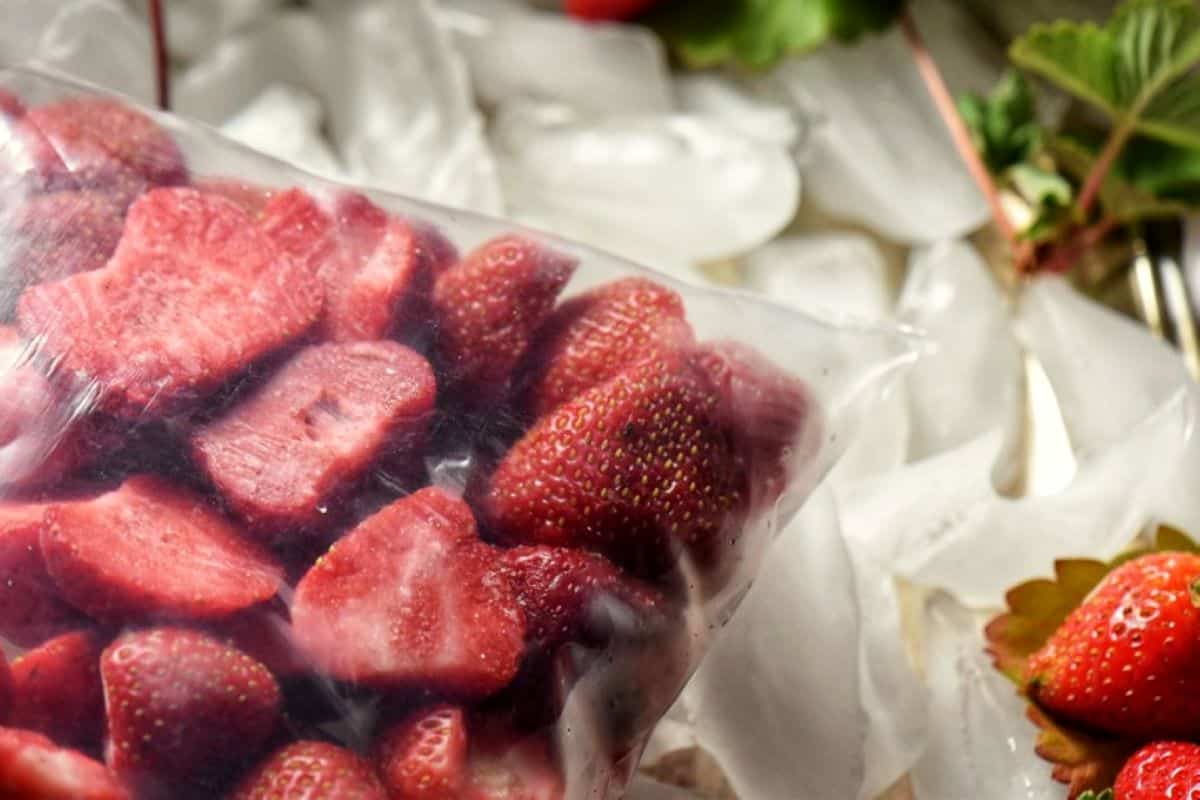
- Transfer the frozen strawberries from the baking sheet into a resealable freezer bag or an airtight container.
- Remove as much air as possible from the bag or container to minimize the formation of ice crystals. This can be done using a straw or a vacuum sealer, if available.
- Label the bag or container with the date of freezing for easy reference.
- Place the bag or container in the freezer.
You now have the versatility of using one strawberry at a time (if you want) to make some of your favorite strawberry treats.
FAQ
Hulling a strawberry means removing the green stem, leaves, and the small white core just beneath them. You can use a strawberry huller, a small paring knife, or even a metal drinking straw pressed down into the center of the stem to pop it out cleanly. Always hull after washing, not before, since water enters through the hull opening and makes the berry soggy.
Always wash before hulling. Once the hull is removed, water enters the berry through the opening, and it quickly absorbs it, softening and diluting its flavor. Wash first, dry thoroughly, then hull.
Yes, you can freeze strawberries whole. Simply skip the slicing step and freeze them as-is after washing, drying, and hulling. Keep in mind that whole berries take longer to thaw and are harder to blend from frozen. I recommend halving or quartering larger berries before freezing for more versatility later.
Properly frozen strawberries will keep in the freezer for up to one year. For the best flavor and texture, try to use them within 6 to 8 months. The longer they stay in the freezer, the more likely they are to develop freezer burn. If you have a chest freezer, use it. The lower, more consistent temperature produces better results than a standard refrigerator freezer.
The most common reason is insufficient drying before freezing. Even a small amount of surface moisture causes ice crystals to form around the berry, which, as they expand during freezing, break down the cell walls. The result is a soft, juice-releasing berry when thawed. The fix: dry the berries thoroughly with a tea towel, then let them air-dry for 30 to 60 minutes before placing them on the baking sheet. The second most common reason is skipping the single-layer baking-sheet step and going straight into a bag, which causes the berries to freeze in clumps and thaw unevenly.
Yes, and there are two ways to do it. The dry sugar pack method involves halving or slicing berries into a bowl, then adding about half a cup of sugar per quart of berries, stirring gently until the sugar dissolves. This produces sweeter berries ideal for desserts and jams. The sugar syrup method involves covering whole or sliced berries with a cold sugar syrup (1 cup sugar dissolved in 1 and a quarter cups water) before freezing. Both methods produce berries that are better for eating and desserts but not as versatile as unsweetened frozen berries for smoothies and baking.
Yes, but with one important tip: frozen strawberries release significantly more liquid than fresh strawberries do when thawed. Before adding them to a batter, toss the thawed berries in a light dusting of flour, about 1 tablespoon per cup of berries. This absorbs the excess juice and prevents your muffins, cakes, or loaves from becoming too wet or dense in the middle.
Three things prevent freezer burn: remove as much air as possible from the bag before sealing (use a straw to suck out the remaining air, or a vacuum sealer if you have one), double bag for extra protection, and store the bags flat so they freeze in a thin layer rather than a thick mound. Always label with the date and use within one year.
How to Defrost Frozen Strawberries
To defrost strawberries based on your preferred timeline, consider these methods:
Immediate use: Utilize the defrost setting on your microwave, checking at one-minute intervals until fully defrosted.
Quick defrost in 15 minutes: Place the strawberries in a leak-proof container within a larger bowl of cold water.
Gradual defrost in approximately 60 minutes: Allow the strawberries to thaw at room temperature by spreading them in a single layer on a large plate.
Slow defrost over 24 hours: Store the strawberries in a sealable container in the refrigerator.
Keep in mind that thawing frozen strawberries will naturally release juices, which is normal.
How to Use Frozen Strawberries
Once your freezer is stocked with beautiful frozen strawberries, the real fun begins. Here are some of my favorite ways to put them to work:
Making sauces and syrups
Frozen berries are perfect for making sauces and syrups.
Thaw and then blend them in a food processor or blender until smooth. You can strain the puree through a fine-mesh sieve to remove any seeds or pulp.
Sweeten to taste with your preferred sweetener, and use the sauce as a topping for ice cream, ricotta cheesecake, buttermilk waffles, or yogurt. You can also add a dollop of it to this Italian sponge cake.
Using in smoothies and drinks
Frozen strawberries are a great addition to smoothies and milkshakes. Blend frozen strawberries with your favorite liquid (milk, yogurt, or juice) and other fruits or vegetables.
They are also convenient when making summer drinks. Dawn at Girl Heart Food shares her frozen strawberry mango margarita recipe. Doesn’t it look good?
Baking with frozen strawberries
Frozen strawberries can be used in baking, but they usually release more liquid than fresh strawberries. One trick is tossing the thawed strawberries with a light dusting of flour before adding them to your batter.
This will help absorb the excess liquid and prevent your baked goods from becoming too wet. One of my favorite recipes is banana strawberry muffins.
More Strawberry Desserts
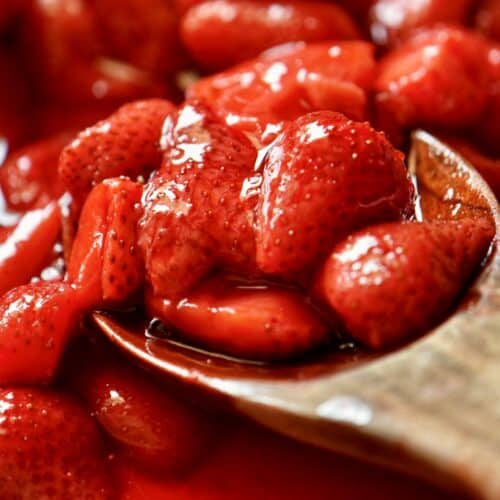
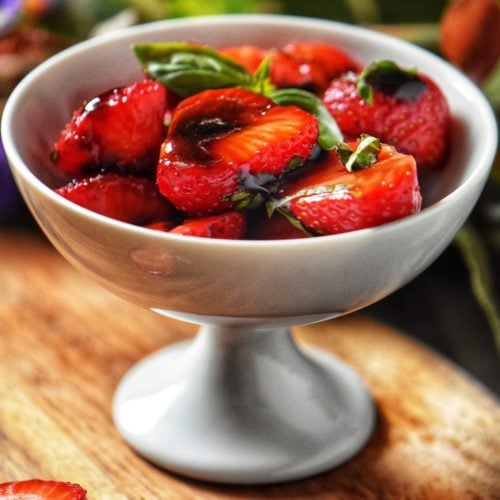
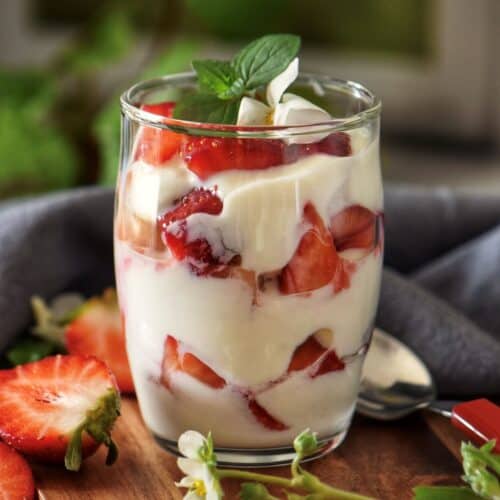
Indulge in the delightful world of strawberry desserts with these mouthwatering recipes that make the most of these juicy red gems.

Conclusion
Freezing strawberries is an excellent way to preserve their color, quality, and flavor.
It allows you to enjoy your favorite strawberry desserts all year round by simply thawing out the exact amount you need.
So, the next time you go strawberry picking and end up with more than you can consume, don’t let them go to waste!
Freeze them and enjoy the taste of summer anytime you want.
I would love to hear how you plan to use your frozen strawberries!
THANKS SO MUCH for following and being part of the She Loves Biscotti community, where you will find Simple & Tasty Family-Friendly Recipes with an Italian Twist.
Ciao for now,
Maria
★★★★★ If you have used this method to freeze strawberries, I would love to hear about it in the comments below and be sure to rate the recipe!
Recipe

How to Freeze Fresh Strawberries (No Sugar, No Mushy Berries)
WANT TO SAVE THIS RECIPE?
Ingredients
- 1 cup strawberries
- water
Instructions
- Place the strawberries in a colander and rinse under cold running water.
- Remove excess moisture.
- Remove the hulls from each strawberry by pinching out the little green stem. You can use a knife or one of those gadgets to facilitate this process. It is important to remove the hulls after you have rinsed the strawberries otherwise you risk getting soggy strawberries.
- Place the strawberries on a baking sheet that's been lined with parchment paper.
- Place the baking sheet of strawberries in your freezer for about 2-3 hours.
- Transfer the individual partially frozen strawberries in resealable freezer bags.
- Use a straw or a sealer to remove as much as the air as possible as this will reduce the formation of ice crystals.
- Properly label your bags by indicating the date and place your bag in the freezer.
Video
Notes
Nutrition
This post was originally published on June 29, 2018 and republished on June 11, 2019 and again on June 10, 2026, with updated content.
Tim Motley
Thanks for sharing your recipe it was so easy
Maria
My pleasure Tim! Thanks for stopping by!
Mrs. Westbrook
I never knew that you could freeze these. Actually a friend brought me 16 containers today. I had no idea up until now what I would do with all of them! This was very helpful! Thank you!
Maria
How wonderful for you! Enjoy!
Jess
When these thaw – do they get mushy? Im hoping to freeze & thaw for kids school lunches. Would this be suitable?
Maria
Unfortunately, strawberries have a high water content making them mushy when they thaw. They are better suited to make smoothies or incorporate them in yogurts and breakfast bowls. Thanks for stopping by Jess
Val
Perfect timing! I just went strawberry picking and I picked way to many strawberries! Thanks again Maria!
Maria
That happens to me all the time Val! Have fun freezing strawberries!!! Thanks for stopping by, appreciate it!
Lorraine Lanzelotti
As usual Maria you know just what to do and I never knew strawberries could be frozen. Thank you so much!
Maria
My pleasure Lorraine. Although the texture changes, they can still be used in so many ways! Thanks so much for taking the time to comment, appreciate it.
MDIVADOMESTICA
Wow! That is a lot of fresh strawberries. Thanks for sharing your tips on freezer storage. Summer can be really busy to use up all those the fresh ones.
Maria
What can I say, we just love our local strawberries;) Thank goodness strawberries are so versatile and freeze so well! Thanks so much for stopping by 🙂
Denise from Urb'n'Spice
This is a great post, Maria! Preserving strawberries at their peak is essential and you have nailed it! Thanks for sharing both your DIY method and recipes to use them. 🙂
Maria
Can’t go wrong with fresh strawberries. Thanks so much for stopping by Denise, appreciate your comment 🙂
Elaine Nessman
I grow my own strawberries and I also buy organic berries when they’re in season and freeze, freeze, freeze! Can you ever have too many strawberries? I think not. 🙂 Wonderful post with lots of ideas to use these berries! Thanks Maria!
Maria
I agree, strawberries are great year round and it is fun to have a secret stash, so to speak 🙂 Appreciate your comment Elaine, thanks for stopping by ♥
Nicoletta @sugarlovespices
I don’t buy strawberries year round, they are too big, too “pumped” with something, and they lack in flavor. So I only buy them at their peak season. l have never frozen them, but now I have the perfect how-to guide! Thank you!
Maria
I agree Nicoletta! Whenever possible, local and organic is the way to go with strawberries.Thanks for stopping by 🙂
Paula Barbarito Levitt
Maria, this is an excellent guide to preserving summer strawberries to enjoy in a few months. I often pine for the delicious berries in September or October but refrain from buying as they are simply without any flavor.
Maria
Thanks Paula. This is my preferred method… sometimes I will preserve them in a simple syrup but you are limited as to what you can do with them once they are thawed. Hope you are keeping well my friend ♥ Thanks so much or stopping by 🙂
Marcellina
I love to freeze strawberries! Strangely, here in North Queensland strawberries are cheapest in our late winter early spring so I like to stock up and freeze as many as I can. I usually use them to make jam or strawberry sauce fir icecream or over yogurt.
Maria
It truly is a wonderful berry to have on had for wonderful “last minute” treats. Thanks for stopping by Marcellina. Have a great week-end ♥