

Blueberry jam without pectin is simpler than you think. Just three ingredients, one saucepan, and 30 minutes on the stovetop. No additives, no fuss, and better than anything from a store. A retired dietitian’s tested small batch recipe.
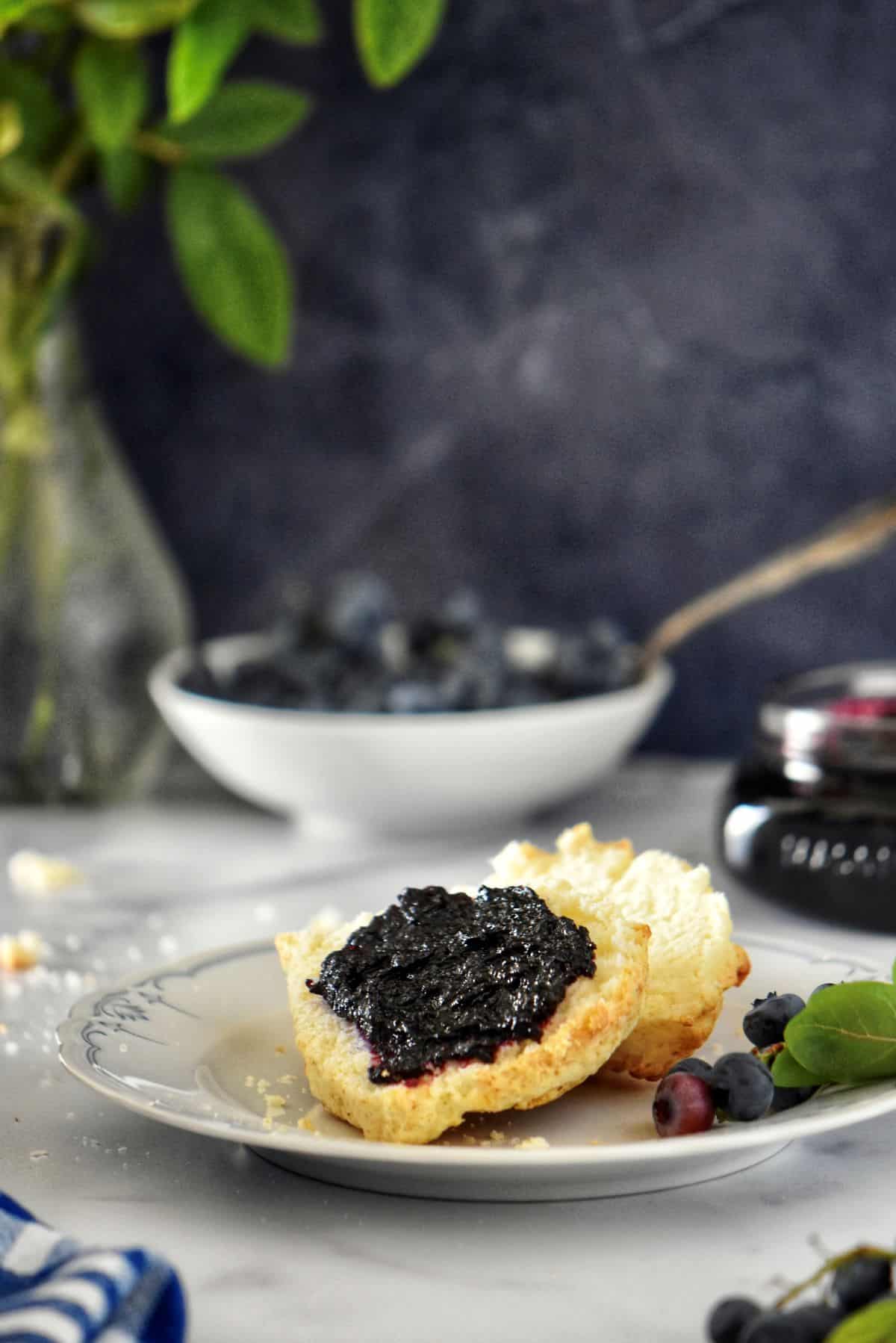
Blueberry jam without pectin is one of those recipes that surprises people every time.
I developed this small-batch version when my backyard blueberry bushes produced more fruit than my freezer could handle, and, as a retired dietitian, I wanted something with no additives or artificial ingredients.
Fresh blueberries, sugar, and lemon juice are all you need. One saucepan, 30 minutes, and a jar of something that tastes like pure summer.
Let’s make it together!
Jump to:
Quick Overview
- Prep Time: 5 minutes
- Cook Time: 25 minutes
- Total Time: 30 minutes
- Yield: 2 cups (approximately 32 tablespoons)
- Special Touch: No commercial pectin needed. Fresh lemon juice activates the natural pectin already present in the blueberries, creating a perfectly set jam with just three ingredients and no additives.
- Dietary Note: Vegan and gluten-free as written.
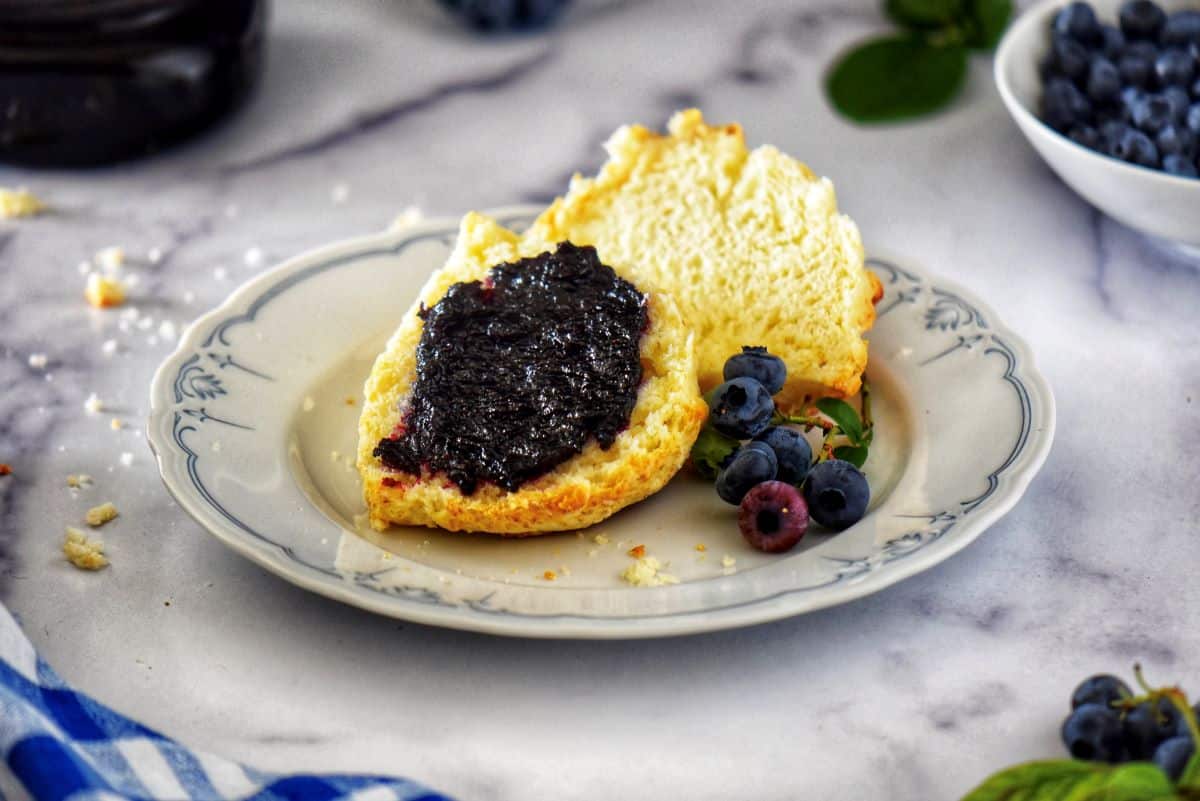
- Serving Suggestions: Spread on buttermilk biscuits, crepes, or buttermilk waffles.
What You’ll Need
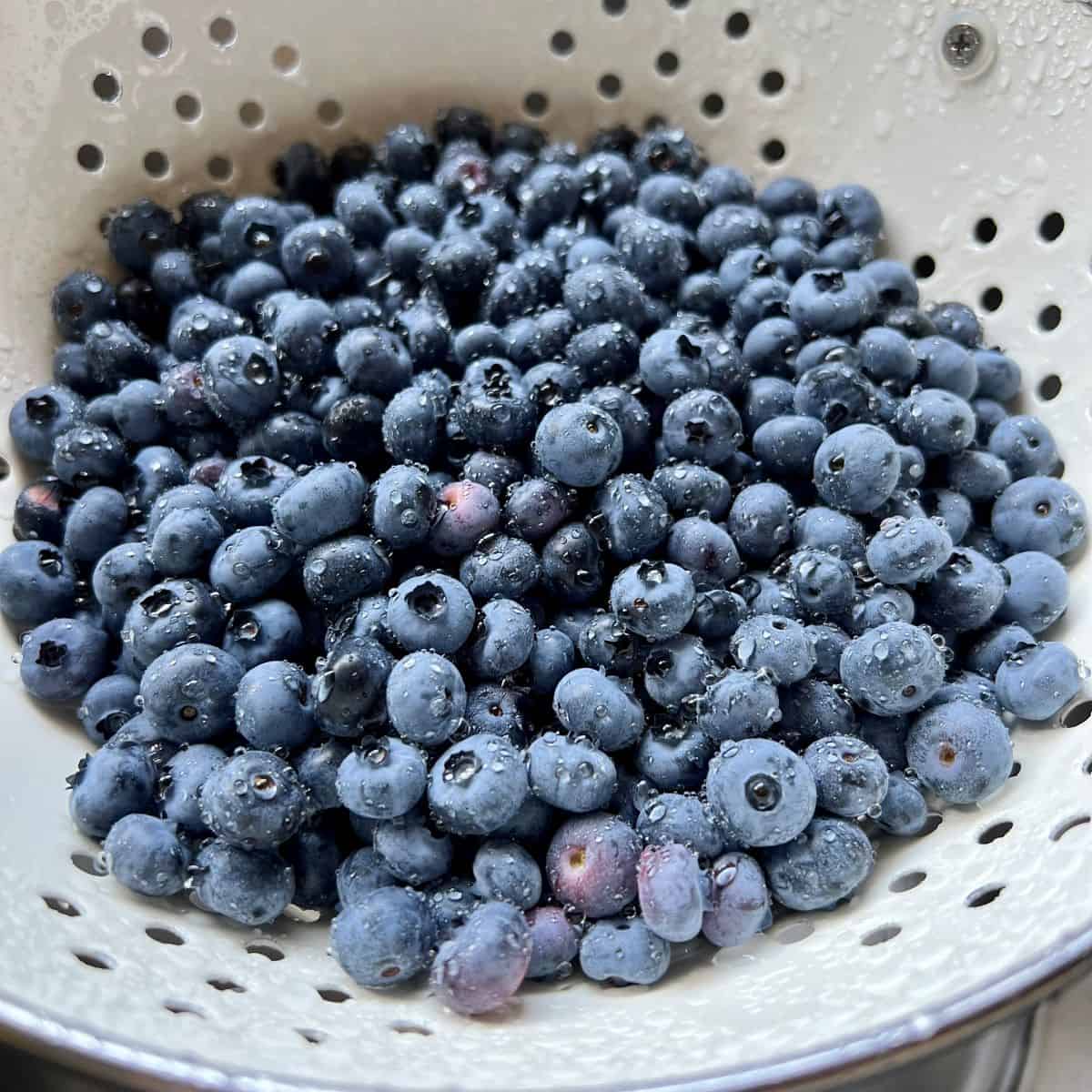
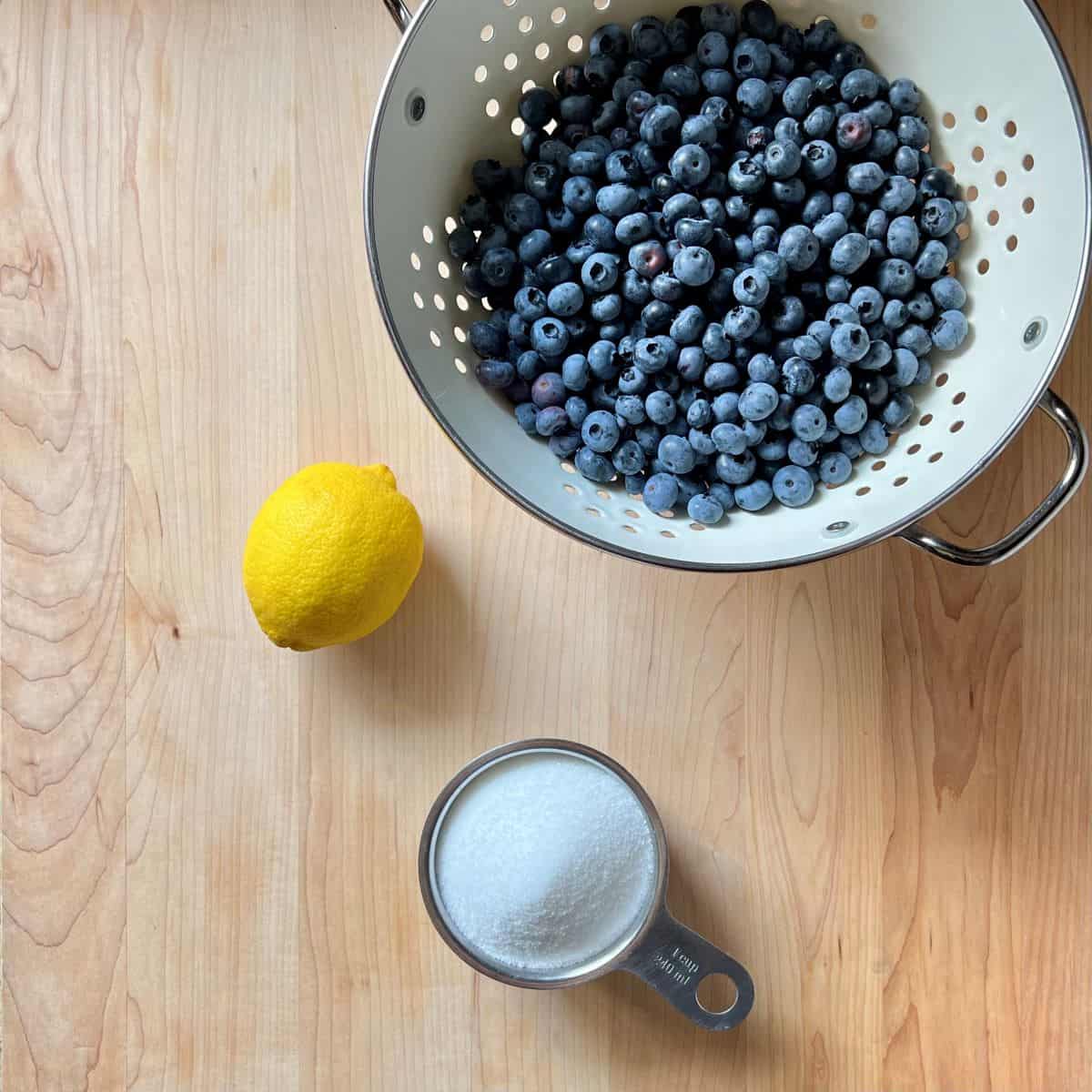
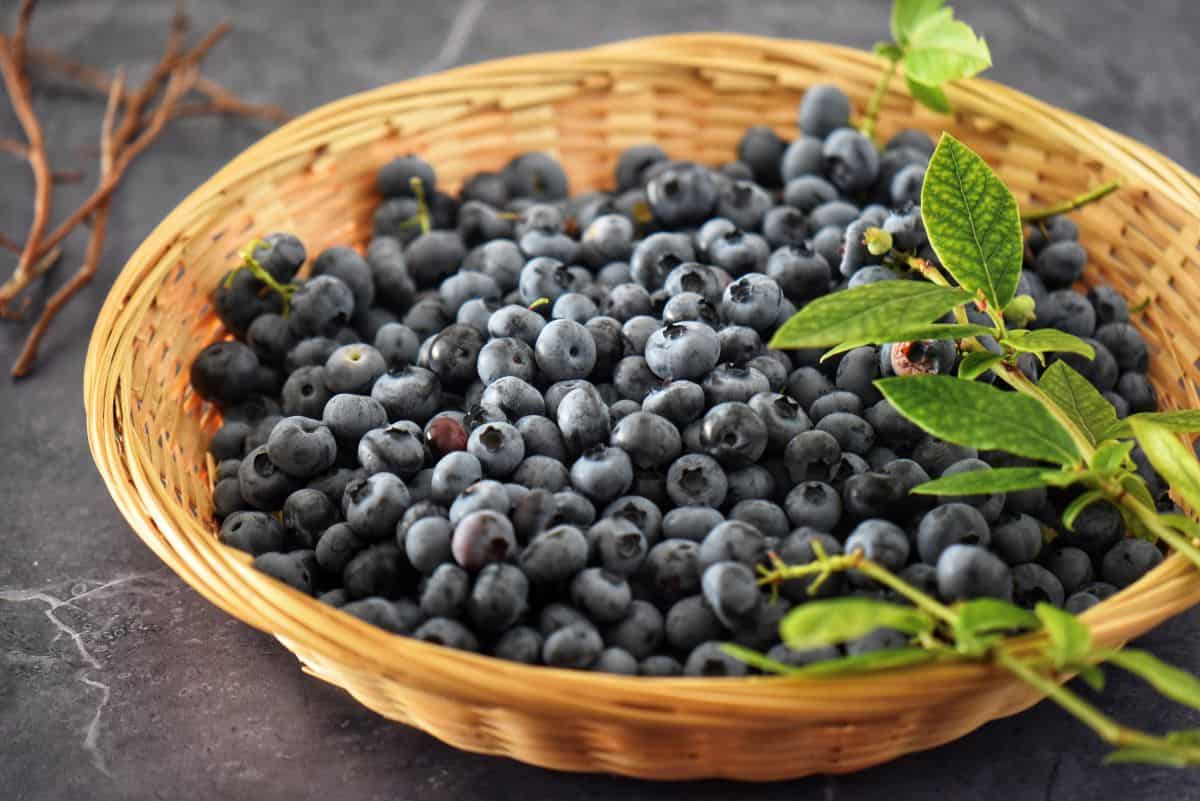
- Blueberries. This is the star ingredient and the one worth paying a little extra attention to. Look for berries that are firm, fully ripe, and deeply blue all the way through, with no red or green spots. If your backyard bushes are producing, use them the same day for the best flavor. Frozen blueberries work beautifully too, so you can make this any time of year. Just thaw them completely and keep all those juices, as they are essential to the jam.
- Granulated sugar. When you combine sugar with the blueberries, it draws out their natural juices and helps the jam set by working with the pectin already in the fruit. Try not to reduce the sugar too much, as less sugar will give you a softer set and a shorter shelf life.
- Fresh lemon juice. This is what makes a no-pectin jam possible. The acidity helps activate the natural pectin in the blueberries so the jam thickens properly. It also balances the sweetness and keeps the color bright and vibrant. Fresh or bottled both work well here.
- Lemon zest (optional). About half a teaspoon of finely grated zest adds a lovely citrus note that really lifts the flavor. I like to include it whenever I have a fresh lemon on hand.
Let’s Make Pectin-free Blueberry Jam From Scratch
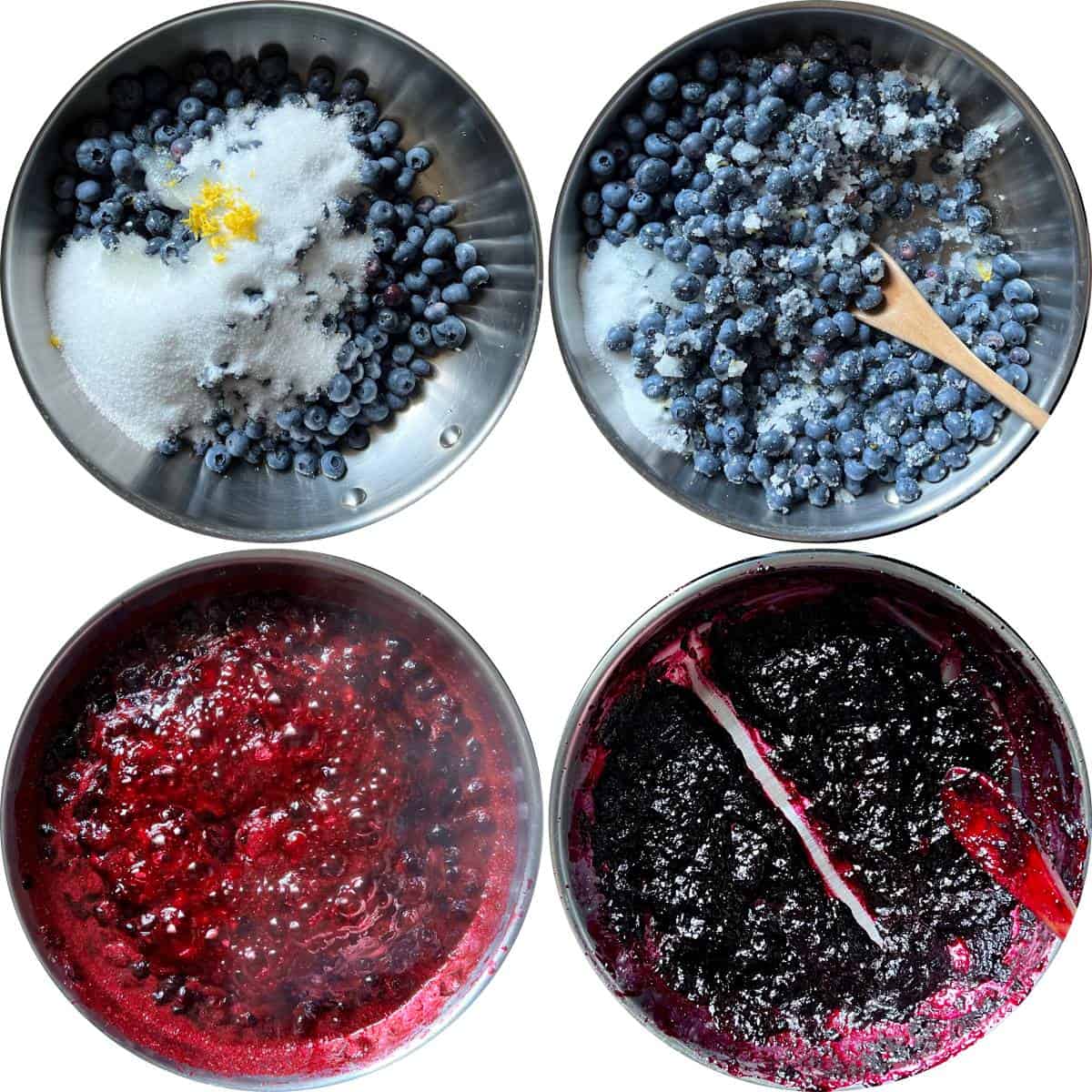
Transfer the 4 cups (500 grams) of fresh rinsed blueberries to a heavy-bottomed, large pot. Add 1 cup of sugar and 1 tablespoon of lemon juice. Stir well to combine.
As an option, you can add ½ teaspoon of finely grated lemon zest for an extra burst of flavor.
Place the saucepan over medium heat and bring the mixture to a simmer, stirring frequently with a wooden spoon for about 5 minutes until the blueberries begin to burst.
Use the back of a spoon to gently mash about half of the berries. If you have one, you can also use a potato masher. This will help release their juices and pectin.
Increase the heat to medium-high and bring the mixture to a full rolling boil. As the jam cooks, it will thicken, and the sugar will dissolve completely.
Stir the mixture consistently to ensure even cooking and to prevent the sugar from burning on the bottom of the pan. Cook until the mixture separates when drawing a line in the pot, which should take about 15- 20 minutes or until it reaches your desired consistency.
You can also check the jam’s readiness by using a candy thermometer and cooking until it reaches a temperature of 220°F (104°C) or until it coats the back of a spoon.
Once the jam reaches your preferred consistency, remove the saucepan from the heat and let it cool for a few minutes.
Carefully ladle the jam into clean, sterilized jars or containers. Cool to room temperature, cover and refrigerate.
Enjoy your delicious, homemade jam without the need for commercial pectin!
Tips
- Use fresh or frozen blueberries: Fresh is ideal during blueberry season. Use frozen blueberries as a convenient year-round option.
- Don’t skip the lemon juice: Lemon juice not only adds a bright tanginess to the jam but also helps to trigger the natural pectin in the fruit and create a thick, spreadable consistency. [source]
- Mash the blueberries: Gently mashing them with a potato masher or the back of a spoon during cooking helps them break down and release their juices, which thickens the jam naturally.
- Constant stirring: Once the mixture starts boiling, it’s important to stir it regularly and keep a close eye on it to prevent burning.
- The final consistency: Once removed from the heat, the jam will continue to thicken as it cools down, so don’t worry if it seems a bit runny while still hot.
Variations
Consider incorporating spices to add an extra layer of flavor when making this recipe for a small batch of homemade blueberry jam.
When adding spices, start with a small amount and taste the jam as it cooks to ensure the flavor isn’t overpowering. You can always add more, but removing or toning a strong spice flavor is difficult.
- Lemon ginger blueberry jam: For a spicy, citrusy twist, add freshly grated ginger and lemon zest to the blueberry mixture.
- Vanilla blueberry jam: Add a splash of vanilla extract for a subtle, sweet flavor.
- Lavender blueberry jam: Infuse the blueberry mixture with dried lavender flowers for a fragrant and floral twist.
- Balsamic blueberry jam: Add a splash of balsamic vinegar for a tangy flavor.
- Cinnamon blueberry jam: Add a dash of cinnamon for a warm and comforting flavor.
Have some fun and get creative by experimenting with different flavor combinations. If using ginger or lavender, start with small amounts and taste as you go to find the perfect balance, as they can overpower the delicate flavor of the berries.
You can also experiment with herb-infused flavors by adding a couple of sprigs of fresh thyme or rosemary to the jam mixture while it’s simmering. Make sure to remove any herbs before refrigerating the jam.
FAQ
The most common reason is insufficient cooking time. Without added pectin, the jam thickens entirely from the natural pectin in the blueberries activated by the lemon juice and heat. Cook until the mixture reaches 220F (104C) on a candy thermometer, or until it holds a clear line when you drag a spoon through it. If it still seems loose, give it another 5 minutes and test again. Remember the jam will continue to thicken as it cools.
You can use frozen blueberries instead of fresh ones when making jam without pectin. Allow them to defrost fully before using them in the recipe. Remember that frozen blueberries might have a higher water content than fresh ones, which could require slightly longer cooking time to achieve the desired jam consistency.
Transfer the hot jam to sterilized, clean jars while it’s hot for short-term storage. Allow it to cool completely before sealing it with a lid. Store the jam in the refrigerator. If left unopened, it can last for up to one month. Once opened, consume within 7-10 days.
If freezing, consume within one year for best results. Be sure to leave enough room for expansion in the Mason jars or freezer bags before placing them in the freezer.
Reducing the sugar in a blueberry jam without pectin is possible but may affect the overall taste and consistency. Sugar helps thicken and preserve the jam, so using less sugar might require added cooking time.
Remember that overly reducing sugar could result in a less stable jam with a shorter shelf life. When it comes to replacing sugar, natural sweeteners like honey or maple syrup can be used, but be aware it may alter the final flavor of the jam.
A firm blueberry jam is denser and less spreadable, whereas a soft jam is more fluid and spreadable.
To make a firm jam, you need to cook it for a longer period to allow the natural pectin present in the fresh fruit to thicken the jam. Alternatively, you can add some pectin or incorporate high-pectin fruits such as apples to assist in the jam’s setting process.
Conversely, for a softer jam, you must cook it for a shorter time to obtain a more fluid texture. You can add some liquid, such as water or fresh lemon juice, to keep the texture of the jam soft.
This recipe yields approximately 2 cups of blueberry jam.
You can adjust the recipe to make more or less jam by scaling the ingredients accordingly. Keep in mind that the cooking time may also need to be adjusted.
Yes! This small-batch refrigerator jam works beautifully as a cake filling, particularly for a classic Italian pan di spagna (sponge cake). The soft, spreadable consistency is ideal between cake layers. Use it at room temperature for the easiest spreading.
Serving Suggestions
This small-batch blueberry jam is more versatile than you might expect. Beyond the classic toast and biscuit pairing, try it as:
- A filling for pan di spagna (Italian sponge cake)
- A topping for crepes or ricotta pancakes
- A glaze for grilled chicken
- Stirred into plain yogurt for a simple breakfast
- Spoon over homemade ricotta as a quick dessert
Easy Blueberry Recipes
If you love this blueberry jam, here are a few more ways to celebrate blueberry season
Recipe Origins
Growing up, my mom always made prune butter with her bumper crop of Italian prunes, and I always looked forward to that sweet, tangy spread on my morning toast.
When my own backyard blueberry bushes started producing more fruit than my freezer could handle, I knew I wanted to create a similar tradition with my family.
As a retired dietitian, I wanted something with no additives and no commercial pectin - just pure fruit, sugar, and lemon juice. After experimenting with different ratios I landed on this small-batch refrigerator jam, and my family has been spreading it on everything ever since.
I hope you’ll enjoy making and savoring this delicious recipe as much as I did!
★★★★★ If you have made this easy refrigerator blueberry jam, I would love to hear about it in the comments below and be sure to rate the recipe!
Toast Toppings
Recipe
Blueberry Jam Without Pectin
WANT TO SAVE THIS RECIPE?
Ingredients
- 4 cups blueberries 500 grams, fresh or frozen
- 1 cup sugar 200 grams
- 1 tablespoon lemon juice
- ½ teaspoon lemon zest optional
Instructions
- If using fresh berries, use a colander to rinse them quickly and thoroughly. Remove any stems or debris. Discard any bruised, mushy, or moldy berries. There is no need to dry them.
- If using frozen berries, thaw before using. Place them directly in the saucepan. Remember not to discard the liquid; it is essential in creating the perfect jam from frozen berries.
- Combine all the ingredients in a medium saucepan.
- Place the saucepan over medium heat and bring the mixture to a simmer, stirring frequently for about 5 minutes until the blueberries begin to burst.
- Use the back of a spoon to gently mash about half of the berries. This will help release their juices and pectin.
- Increase the heat to medium-high and bring the mixture to a rolling boil. As the jam cooks, it will thicken, and the sugar will dissolve completely.
- Stir the mixture consistently to ensure even cooking and to prevent the sugar from burning on the bottom of the pan. Cook until the mixture separates when drawing a line in the pot, which should take about 15- 20 minutes or until it reaches your desired consistency.
- You can also check the jam's readiness by using a candy thermometer and cooking until it reaches a temperature of 220°F (104°C) or until it coats the back of a spoon.
- Once the jam reaches your preferred consistency, remove the saucepan from the heat and let it cool for a few minutes.
- Carefully ladle the jam into clean, sterilized jars or containers. Cool to room temperature, cover and refrigerate.
- Enjoy your delicious, homemade blueberry jam without the need for pectin!
Video
Notes
- Use fresh or frozen blueberries: Fresh blueberries are ideal when in season. Use frozen blueberries as a convenient year-round option.
- Don’t skip the lemon juice: Lemon juice not only adds a bright tanginess to the jam but also helps to trigger the natural pectin in the fruit and create a thick, spreadable consistency. [source]
- Mash the blueberries: Gently mashing them with a potato masher or the back of a spoon during cooking helps them break down and release their juices, which thickens the jam naturally.
- Constant stirring: Once the mixture starts boiling, it’s important to stir it regularly and keep a close eye on it to prevent burning.
- The final consistency: Once removed from the heat, the jam will continue to thicken as it cools down, so don’t worry if it seems a bit runny while still hot.
Nutrition
I originally published this post on May 18, 2023, and republished it on April 16, 2024, and again on June 15, 2026, with updated content. Thanks for sharing.
Theresa
I just finished making this jam, it came out delicious. I cut the recipe in 1/2 as I didn’t want to use all my blueberries. Great on pancakes. Now I’m onto making strawberry jam. I also use it on toast with peanut butter.
Maria
I am so happy to read this! Thanks for sharing Theresa!
valerie
Can we use another kind of fruit instead? Not a blueberry fan but love the idea of homemade jam.
Maria
Thanks for your interest Valerie. Great question. Yes, any small fruit like strawberry, raspberry, blackberry, etc will work. You may have to adjust the level of sweetness based on the fruit you are using. Have fun!
Fay
Thank you for the fabulous no pectin blueberry jam. Absolutely love it. My husband and myself really appreciate the fact You are Canadian Yeah. We’re fom Kamloops BC, I love being able to access Canedian bakers etc. Thank you Look forward to further goodie Fay &Stefan
Maria
Thanks so much Fay and Stefan! My daughter actually moved to Nanaimo a few years ago. BC is such a beautiful province! Hope you get a chance to try it with all the wonderful berries you have access to, enjoy!