


Beans and greens (scarola e fagioli) gets its deeper flavor from a proper soffritto of onion, celery, and garlic, a step most versions skip. Ready in 30 minutes, perfect for fare la scarpetta with crusty bread.
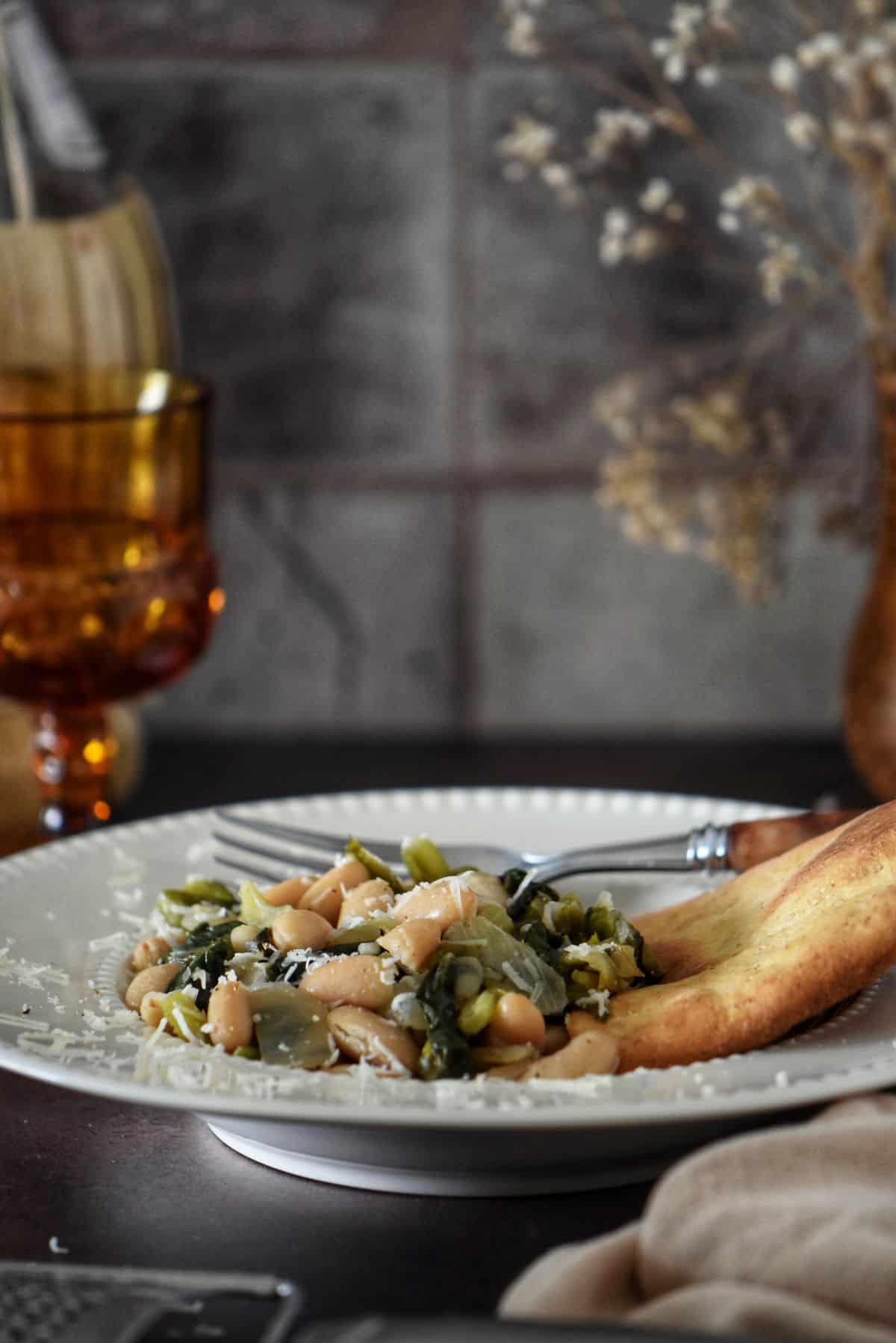
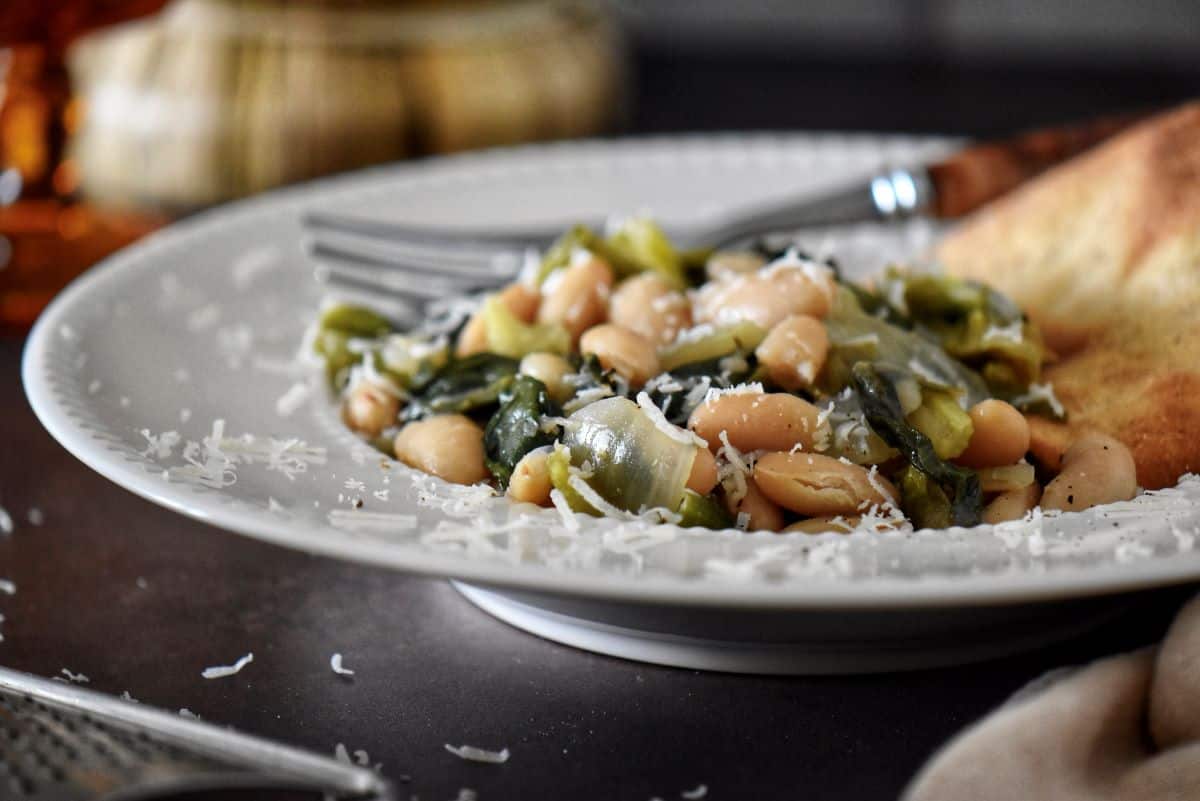
Beans and greens, known in Italian as scarola e fagioli, is a classic one-pot dish that pairs tender escarole with creamy cannellini beans in a garlicky broth.
What sets my family’s version apart is the soffritto-style base, sautéed onion, celery, and garlic. It builds a deeper flavor than the simpler onion-and-garlic versions you’ll find elsewhere.
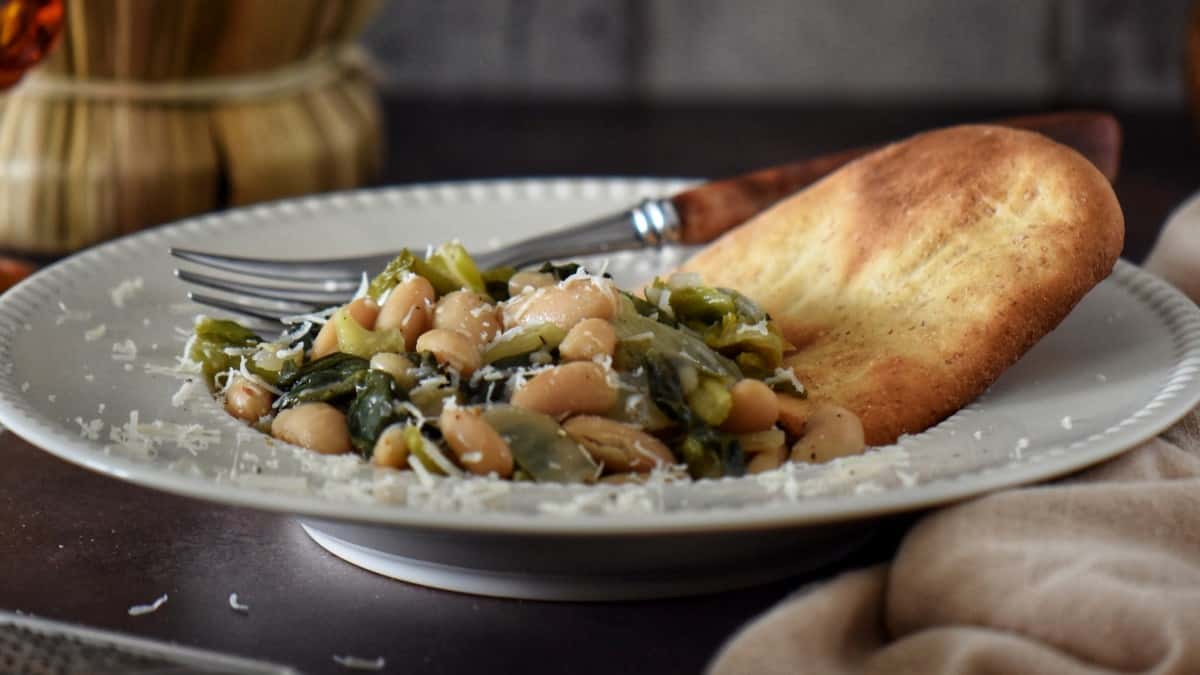
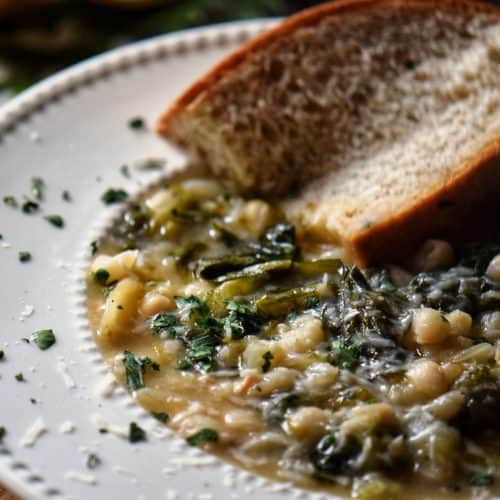
Ready in less than 30 minutes, it’s hearty enough as a main course or comforting as a side, and it is exactly the kind of dish that calls for fare la scarpetta, tearing off a piece of crusty pagnotta bread to mop up every last drop of broth.
This humble dish traces back to southern Italy, where both of my parents were born, and they continued making it long after immigrating to North America. My mom used fresh escarole from our backyard garden, and for anyone who grew up Italian, this dish brings back that exact memory.
Jump to:
Quick Overview
- Prep Time: 10 minutes
- Cook Time: 20 minutes
- Total Time: 30 minutes
- Yield: 6 servings
- Special Touch: A soffritto-style base of sautéed onion, celery, and garlic adds deeper flavor than simpler versions of this dish, which often skip the celery entirely.
- Dietary Note: Vegetarian as written (use vegetable broth); easily made vegan by omitting the cheese.
- Serving Suggestions: Serve with crusty pagnotta bread or focaccia for fare la scarpetta, ladled over creamy polenta, or for a heartier main course, try the pasta version in this white bean pasta with escarole.
Canned vs. Dried Beans
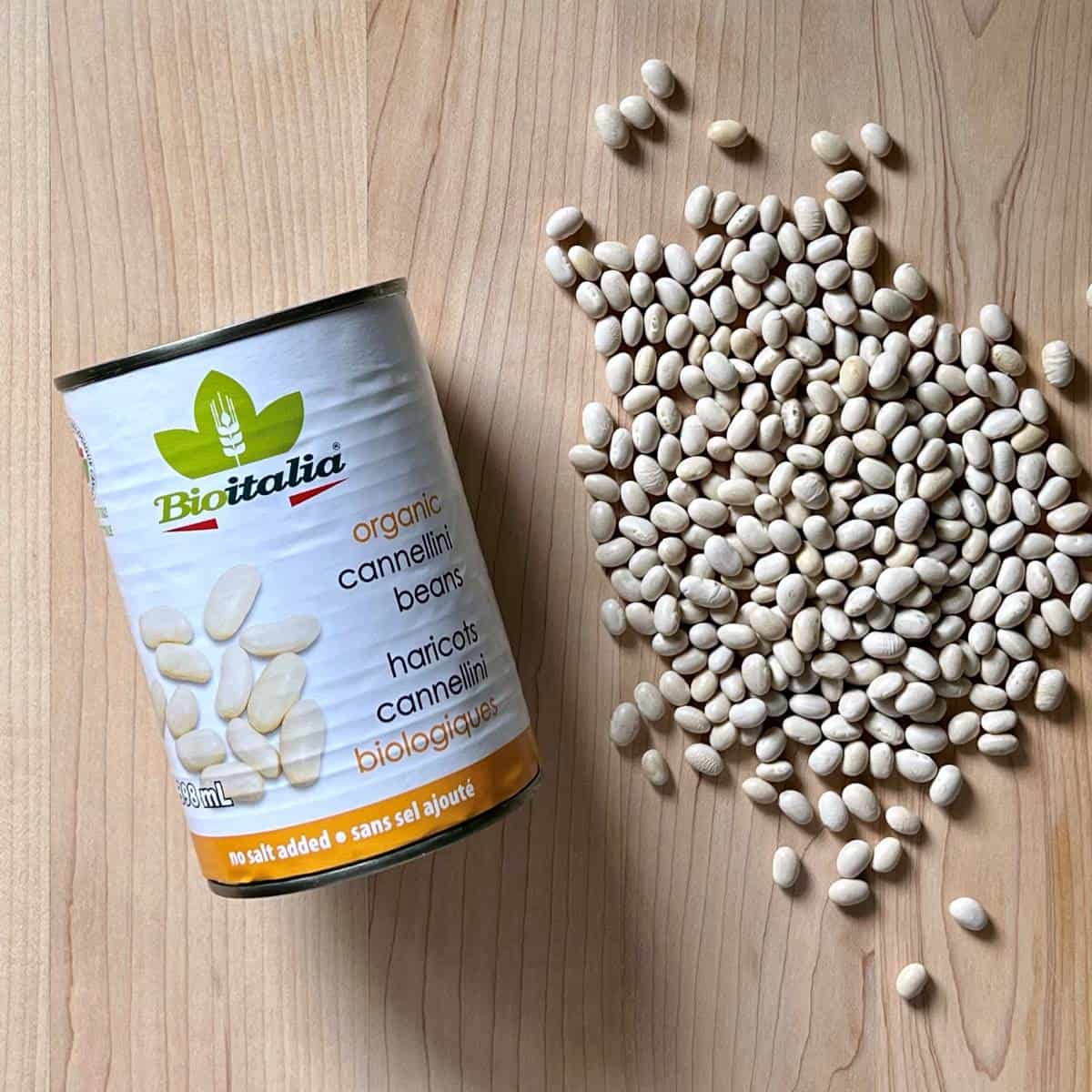
When it comes to making beans and greens, you can use canned or dried white beans. Canned beans are convenient and require less prep time, but may contain added sodium and lack the texture of cooked dried beans.
It is worth noting that if you use canned beans without salt, you can add as much canning liquid as you prefer to achieve your desired “brothiness.”
On the other hand, dried beans require soaking and longer cooking time but have a firmer texture and can be seasoned to your liking.
Ultimately, the choice between canned and dried beans depends on your preferences and the time you have available for preparation.
Check out this recipe post on escarole and bean soup to learn how to prepare dried white beans.
Whether you prefer canned or dried beans for making beans and greens, each has its advantages and drawbacks. Ultimately, it comes down to your personal preferences and the time you can devote to preparation.
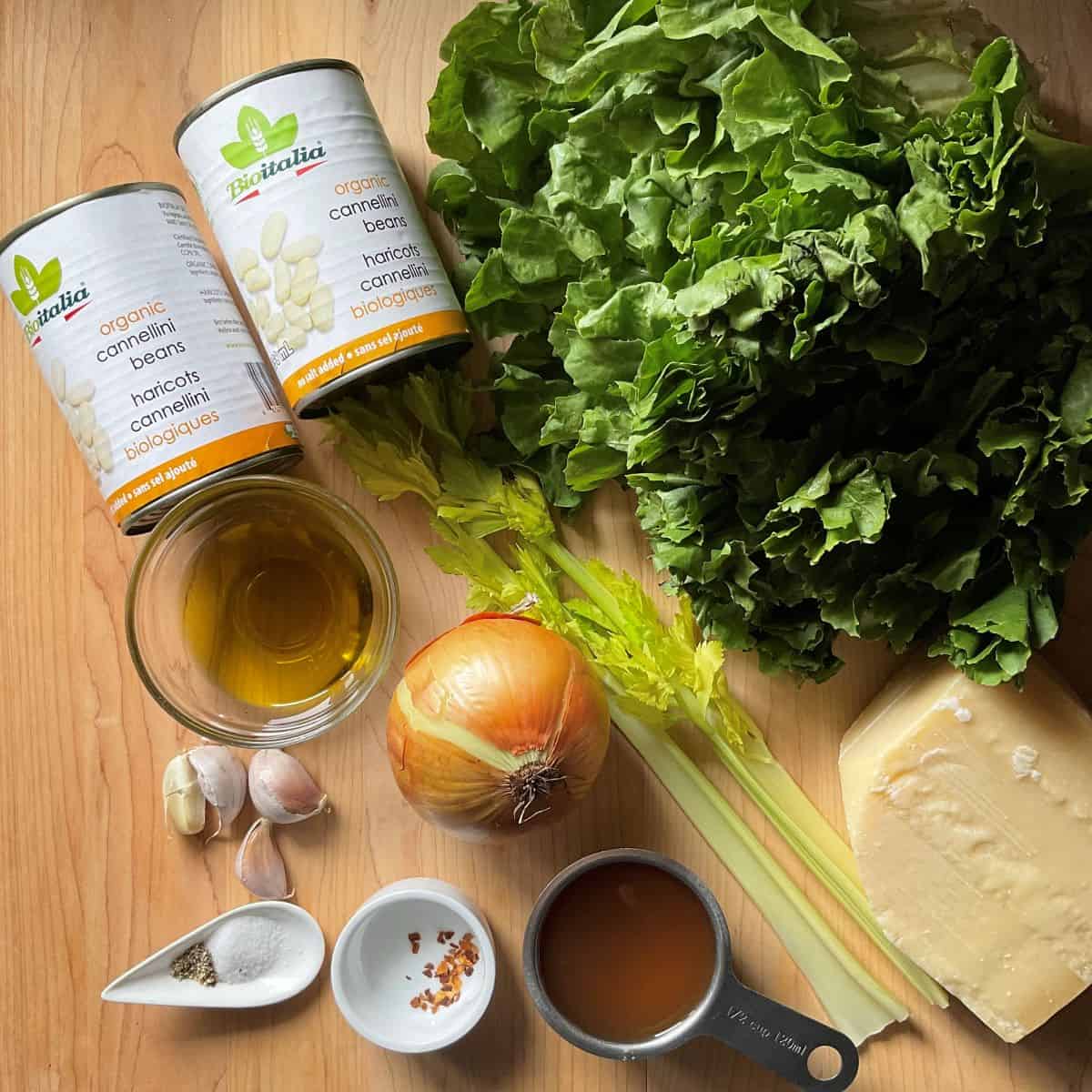
What You’ll Need
Let’s properly prep the fresh produce to ensure the right textures for this recipe.
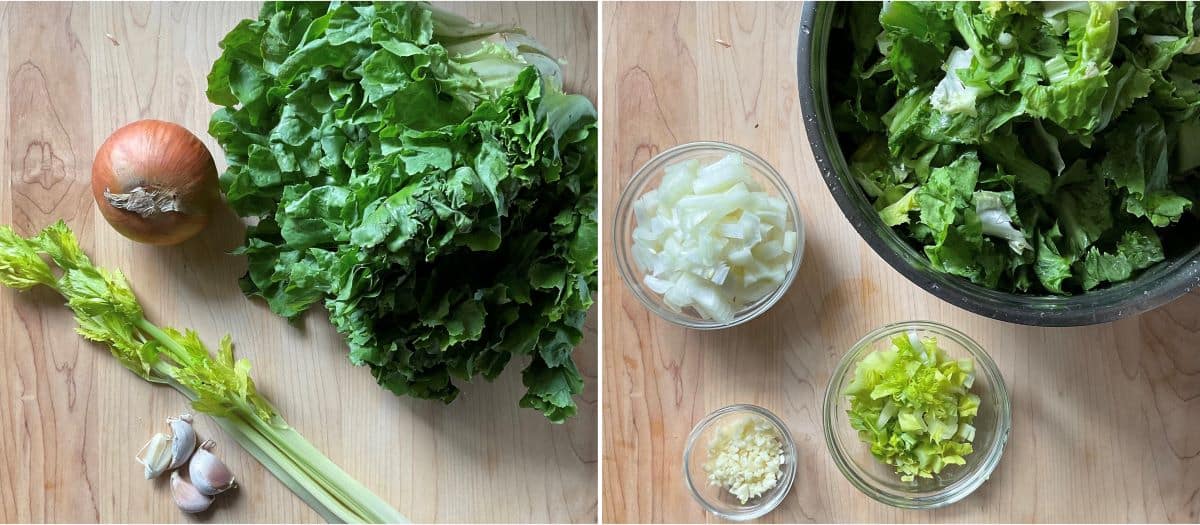
Prepping the aromatics: onion, celery, and garlic
Chopping the onions: Cut off both ends of one onion and remove the outer skin. Then, slice it in half. Take each half and lay it flat on your cutting board. Next, cut the onion into thin slices and then dice the slices into small, half-inch pieces.
Prepping the garlic: Begin by breaking the head of garlic into individual cloves. Once you have separated the cloves, take the flat side of your knife and crush each clove. Cut off the tips, remove the skin from each clove, and finely mince the garlic. You need six cloves for this recipe.
Chopping the celery: Start by washing 2 celery ribs with the leaves. Trim off the ends. Then, slice it in half lengthwise (if using a large rib) and chop it into small pieces.
This trio, onion, celery, and garlic, forms a soffritto-style flavor base. Many simpler versions of this dish skip the celery, but including it builds a noticeably deeper, more rounded flavor.
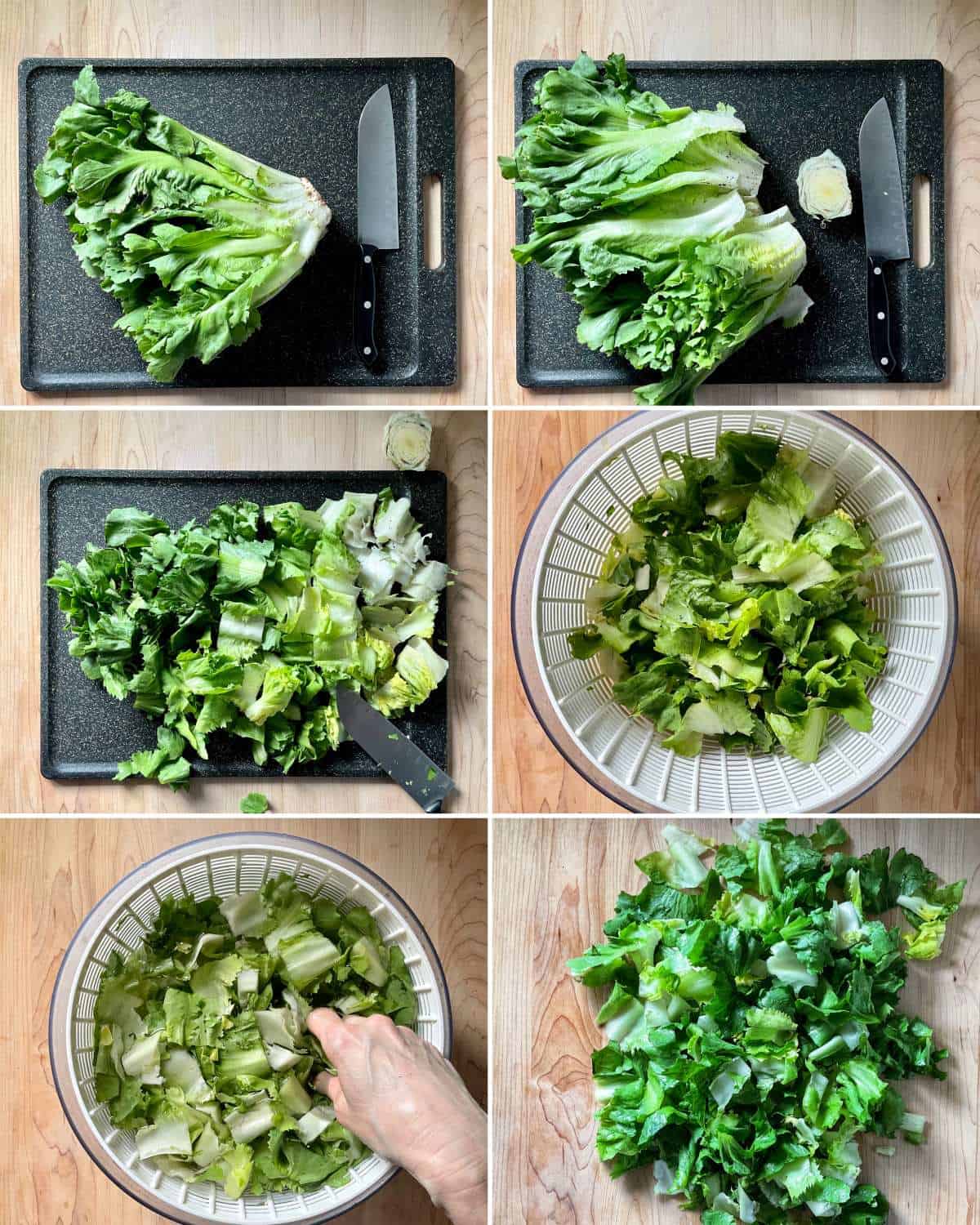
Cleaning and chopping the escarole
- Cut off the bottoms of two heads of the escarole, weighing about one pound each, with a sharp knife. Discard it along with any wilted or damaged outer leaves.
- Gently separate the leaves from the core of the escarole. Check the inner leaves of the escarole for any dirt or bugs that may be hiding inside.
- Chop the escarole into 1-inch pieces, cutting through the leaves in two directions.
- Fill a large bowl or basin with cold water.
- Add the chopped escarole and swish the greens to loosen any dirt or sediment. Let the escarole sit in the water for a minute or two.
- Use a salad spinner basket to scoop up the escarole pieces from the water, making sure to leave any dirt or sediment behind.
- Repeat this process until the water runs clear and there is no more dirt or debris.
- Once the escarole is clean, spin it in the salad spinner to remove any excess water.
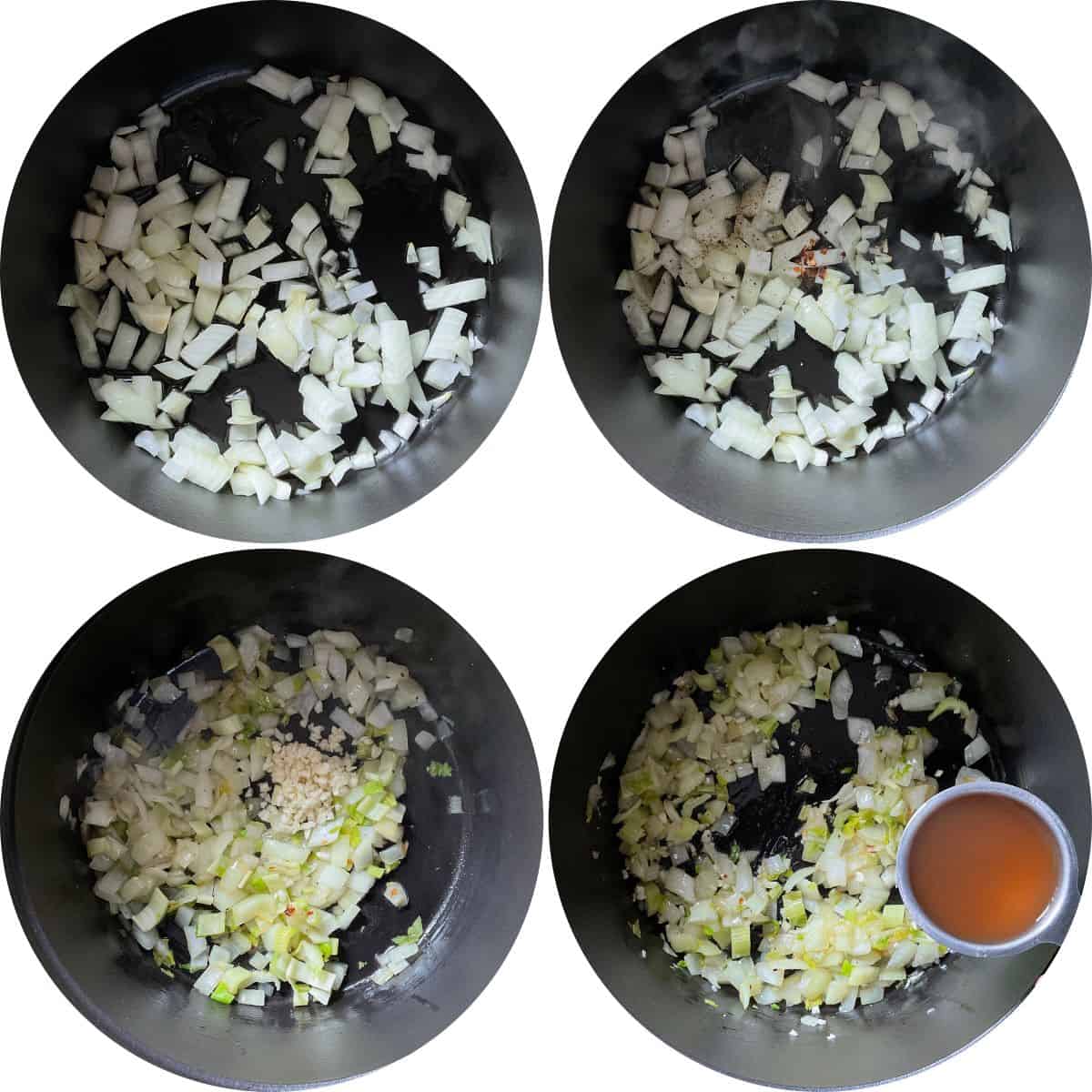
How to Make Beans and Greens
Heat 3 tablespoons of extra virgin olive oil in a Dutch oven or large skillet over medium heat. Add 1 medium diced onion, a pinch or two of chili flakes, ½ teaspoon of Kosher salt, and ¼ teaspoon of black pepper, and cook until softened about 5 to 7 minutes.
Stir in 2 sliced celery ribs and 6 minced garlic cloves. Cook for 1-2 minutes or until the garlic becomes fragrant.
Add ½ cup of vegetable broth and bring to a simmer.
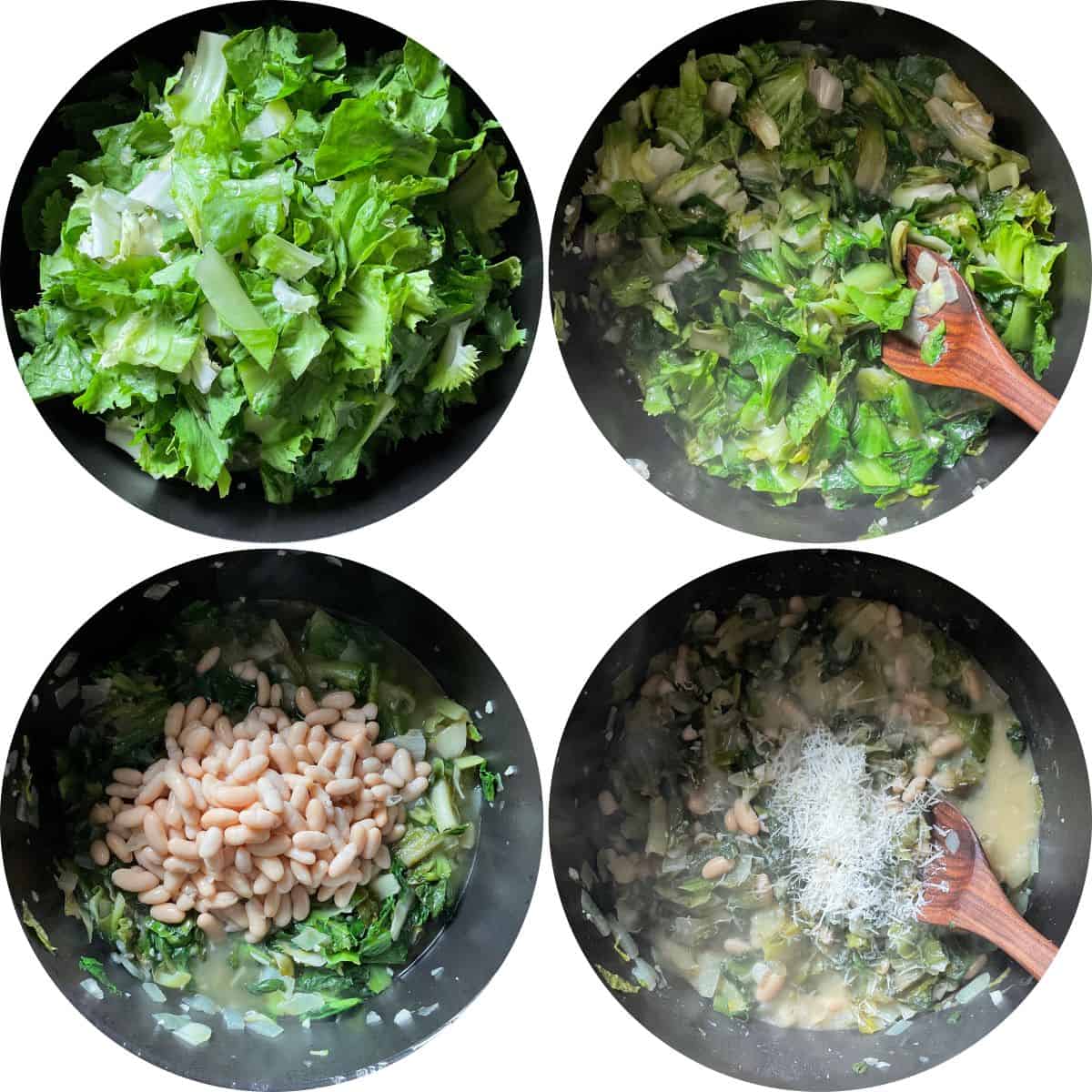
Then lower the heat to medium-low, add the chopped escarole (2 pounds), cover, and cook, stirring occasionally, for approximately 7-10 minutes until the escarole is wilted and tender.
Remove the cover, add two 15-ounce cans of drained but unrinsed cannellini beans and cook for an additional 7-10 minutes while leaving the pot uncovered.
Turn off the heat and stir in ½ cup of freshly grated Parmesan or Pecorino Romano cheese.
Taste and adjust for seasonings.
Serving Suggestions
This dish is versatile enough to serve as a main course or a side. Ladle it into a bowl and finish with a squeeze of lemon juice or a drizzle of olive oil for brightness.
Beyond the bread pairings in the Quick Overview above, ciabatta, a simple flour and water flatbread, or piadina all work beautifully for scooping up the broth.
Tips
- Start with high-quality ingredients such as fresh produce and canned beans with natural ingredients.
- Chopping the escarole into 1-inch-sized pieces prevents it from clumping together when cooked.
- Removing dirt and sediment from chopped escarole is easier than whole leaves.
- Drying the washed escarole is unnecessary as it will be braised.
- Start with a large pot (e.g., a Dutch oven) to accommodate the chopped green escarole.
- Creating a modified soffritto with aromatics like diced onion, chopped celery, and minced garlic creates a great flavor base.
- If you do not have a homemade vegetable broth, using a commercial brand such as Better than Bouillon adds a flavorful backbone to the dish.
- A squeeze of lemon before serving brings the flavors together and brightens the overall taste.
FAQ
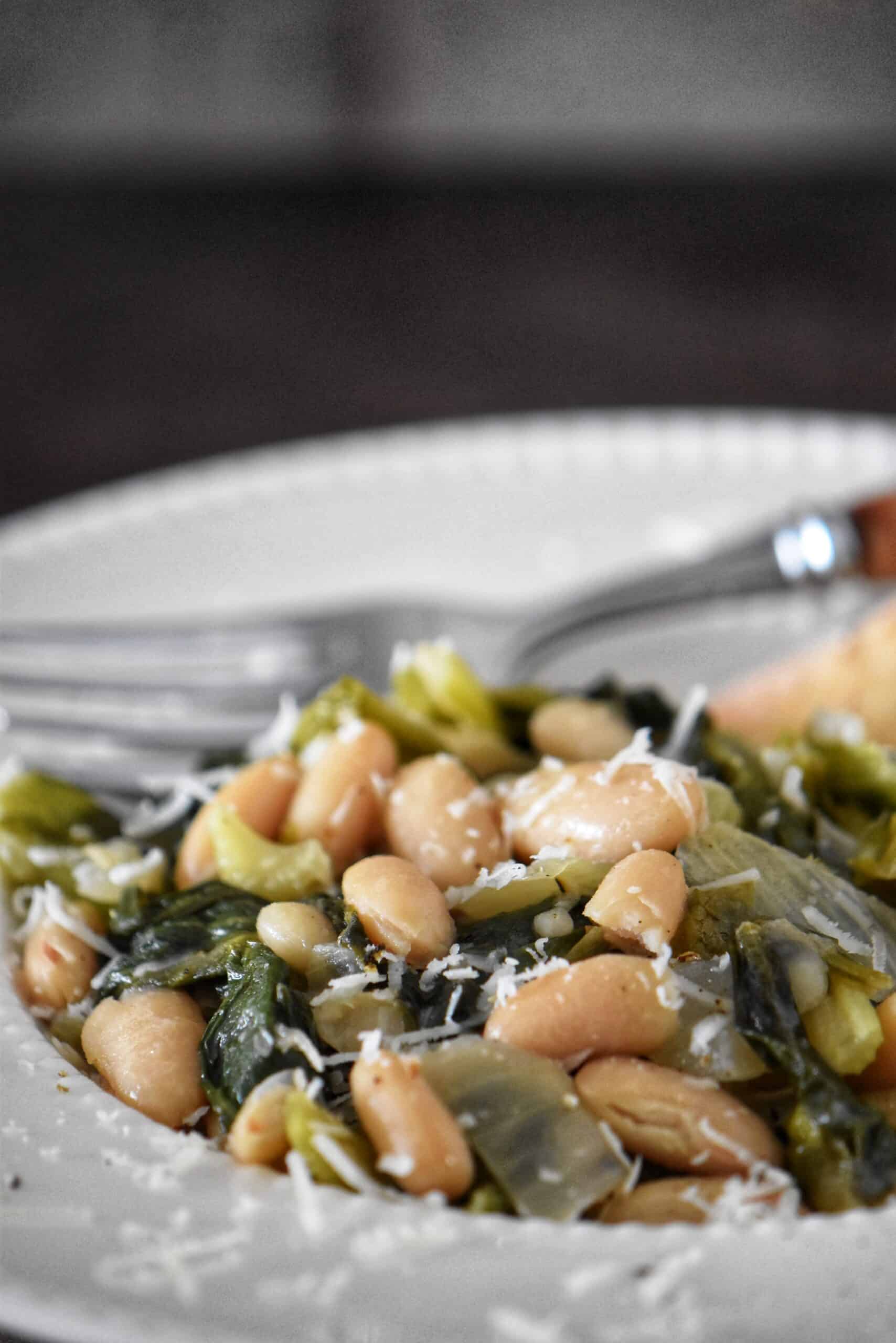
The cannellini bean is the most commonly used for making Italian beans and escarole. These beans are creamy, mild in flavor, and hold their shape well during cooking. You can also use navy beans, great northern beans, or even chickpeas.
Escarole is a leafy green vegetable in the chicory family. It has broad, curly leaves ranging from dark green on the outside to pale yellowish-white on the inside, with a slightly bitter taste that mellows considerably once cooked.
Readers have asked this exact question, and the answer is yes, any leafy green works well. Kale, Swiss chard, spinach, and collard greens are all great substitutes. If using spinach, use the same 2 pounds called for in the recipe, since it wilts down significantly once cooked.
This classic Italian recipe is naturally flavorful thanks to sautéed onion, celery, garlic, and chili flakes. If you want to increase the flavor further, try adding fresh herbs like rosemary, thyme, or oregano. A splash of vinegar or a squeeze of lemon juice can also brighten the dish.
Yes! Simply let it cool completely before transferring it to a freezer-safe container. Use within 3 months for optimal flavor.
Yes, chicken broth works just as well if you are not making this dish vegetarian, and a reader confirmed it turns out just as delicious. If you don’t have homemade broth on hand, a commercial brand such as Better than Bouillon adds a flavorful backbone to the dish.
Fare la scarpetta, which translates to “making the little shoe,” is the beloved Italian tradition of using a piece of crusty bread to soak up the last bit of sauce or broth left on the plate. This dish, with its flavorful garlicky broth, is practically made for it.
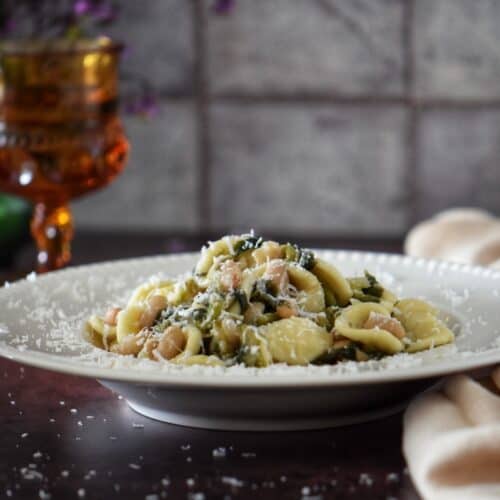
Beans and greens (scarola e fagioli) is a brothy bean and greens dish, while pasta e fagioli specifically includes pasta as a central ingredient. If you’d like the heartier, more substantial version with pasta included, try this white bean pasta with escarole, which uses the same soffritto and beans but adds orecchiette for a complete main course.
This usually means too much broth was added relative to the beans and greens, or the dish was not left uncovered long enough at the end to reduce slightly. Removing the cover for the final 7 to 10 minutes, as the recipe instructs, allows excess liquid to cook off and concentrate the flavor.
Not quite in the strictest sense. A classic Italian soffritto typically includes carrot alongside the onion and celery. My family’s version swaps in garlic instead of carrot, which suits the flavor profile of this particular dish better, but it borrows the same technique of slowly building a flavor base from sautéed aromatics.
More Authentic Italian Recipes
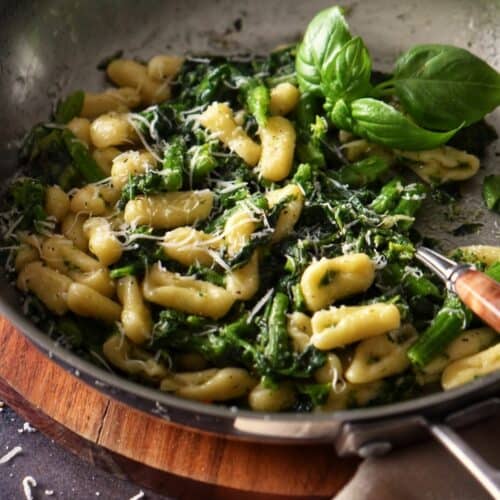
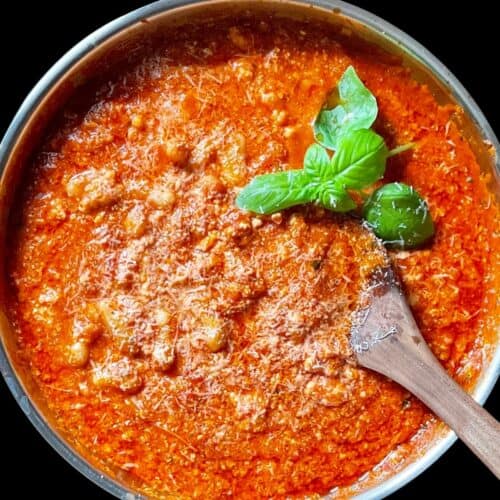
If you enjoyed this dish, here are a few more simple, authentic Italian recipes worth trying:

Recipe Origins
The humble dish known as beans and greens can be traced back to the southern regions of Italy, where it originated out of necessity. This area is where both of my parents were born, and as a result, they continued to make this dish even after immigrating to North America.
My mom would use fresh escarole from our backyard garden. For those of us who grew up Italian with parents like mine, this dish brings us back to our childhood.
Beans and greens are a crucial part of Italian cuisine, reflecting the culture’s emphasis on using fresh and simple ingredients. This dish is a prime example of how healthy eating can also be tasty.
You can create a nourishing, satisfying, and nutritious meal with the right combination of flavors and ingredients.
Combining nutrient-rich greens and affordable beans makes for a delicious and healthy meal. Today, beans and greens remain a beloved Italian classic that evokes memories of home and tradition.
In conclusion, if you enjoy simple yet delicious food, you must try my family recipe for beans and greens. It is a healthy side dish that is pure comfort food.
THANKS SO MUCH for following and being part of the She Loves Biscotti community, where you will find Simple & Tasty Family-Friendly Recipes with an Italian Twist.
Ciao for now,
Maria
★★★★★ If you have made this Italian beans and greens, I would love to hear about it in the comments below and be sure to rate the recipe!
Escarole Recipes
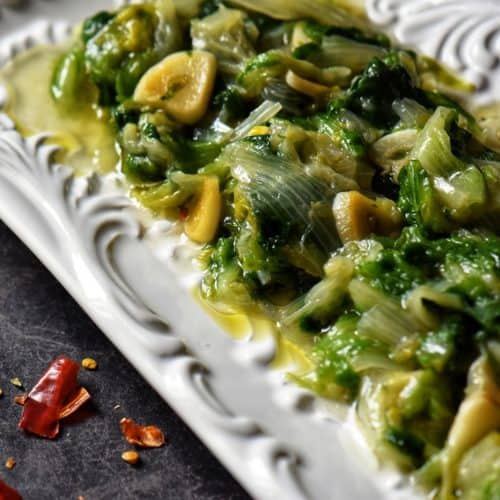
Have extra escarole on hand? Here are a few more ways to put it to good use:

Recipe
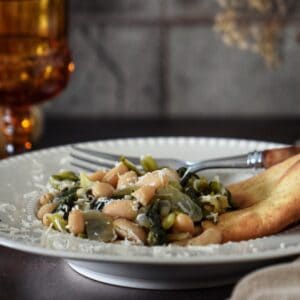
Italian Beans and Greens
WANT TO SAVE THIS RECIPE?
Ingredients
- 3 tablespoons olive oil extra virgin
- 1 medium onion medium, diced
- 1-2 pinches chili flakes optional
- ½ teaspoon Kosher salt
- ¼ teaspoon black pepper
- 2 stalks celery sliced
- 6 cloves garlic minced or grated
- ½ cup vegetable stock homemade or commercial
- 2 heads escarole rinsed and chopped into ½-inch pieces, about 2 pounds
- 2 15 ounce canned white cannellini beans drained not rinsed
- ¼-½ cup grated Pecorino Romano or Parmigiano Reggiano cheese. optional, according to taste
To Garnish:
- grated cheese optional
- 1-2 tablespoons lemon juice freshly squeezed, optional
- drizzle extra virgin olive oil optional
Instructions
- Heat 3 tablespoons of extra virgin olive oil in a Dutch oven or large skillet over medium heat.
- Add the diced onion, a pinch or two of chili flakes, Kosher salt, and black pepper, and cook until softened about 5 to 7 minutes.
- Stir in the sliced celery ribs and the minced garlic cloves. Cook for 1-2 minutes or until the garlic becomes fragrant.
- Add ½ cup of vegetable broth and simmer. Then lower the heat to medium-low, add the chopped escarole (2 pounds), cover, and cook, stirring occasionally, for approximately 7-10 minutes until the escarole is wilted and tender.
- Remove the cover, add the drained but unrinsed cannellini beans and cook for an additional 7-10 minutes while leaving the pot uncovered. It is worth noting that if you use canned beans without salt, you can add as much canning liquid as you prefer to achieve your desired "brothiness."
- Turn off the heat and stir in ½ cup of freshly grated Parmesan or Pecorino Romano cheese.
- Taste and adjust seasonings.
- Serve with a slice of Italian crusty bread. Garnish with freshly grated cheese, a drizzle of olive oil, or a squirt of lemon juice.
Video
Notes
- Start with high-quality ingredients such as fresh produce and canned beans with natural ingredients.
- Chopping the escarole into 1-inch-sized pieces prevents it from clumping together when cooked.
- Removing dirt and sediment from chopped escarole is easier than whole leaves.
- Drying the washed escarole is unnecessary as it will be braised.
- Start with a large pot (e.g., a Dutch oven) to accommodate the chopped green escarole.
- Creating a modified soffritto with aromatics like diced onion, chopped celery, and minced garlic creates a great flavor base.
- If you do not have a homemade vegetable broth, using a commercial brand such as Better than Bouillon adds a flavorful backbone to the dish.
- A squeeze of lemon before serving brings the flavors together and brightens the overall taste.
Nutrition
I originally published this post on May 3, 2023, and republished it on June 26, 2026, with updated content. Thanks for sharing.
cheryl
Fixed this recipe today and really enjoyed it. Very complex flavor for so few ingredients. Had never tried cannelloni beans or escarole but the combination was so nice. Will be making this again. Thank you for a wonderful recipe!
Cheryl
Maria
My pleasure Cheryl! So happy to read this; thanks so much for taking the time to comment.
Catherine Mamer
Had this as my main meal for dinner. First time and I didn’t change a thing…well, that’s not true. I didn’t have veggie stock so I used chicken stock. It was soooo easy and soooo delicious. I’ll be adding cannellini beans to my regular shopping list. Very fast, filling, and yummy side or meal.
Maria
So happy to read this Catherine! Thanks so much for taking the time to comment!
Ettore
Excellent one pot comfort meal. I can’t believe I had never prepared this before now. We really enjoyed this. I can see this with other possibilities, like pasta fazool, as you mentioned in your post.
Thank you, again Maria
Maria
So thrilled to read this! Thanks so much for sharing Ettore!
B Felix
Can another leafy vegetable be used in place of the escarole?
Thank you.
Maria
Thanks for your interest. Absolutely. Some popular options include kale, Swiss chard, spinach, and collard greens. Enjoy!
Nancy D Kilpatrick
Thank you!
Maria
My pleasure Nancy! Enjoy!
Lola
Hi Maria, if I was to use spinach instead of escarole, would I still use the 2 pounds that is called for? I always have fresh spinach on hand. Thank you, this recipe looks delicious! I love beans!!
Maria
Thanks for your interest Lola. Great question. Although 2 pounds of spinach seems like a lot, it does wilt down to almost nothing. I would use 2 pounds of spinach.