


White bean pasta with escarole is a hearty Italian weeknight meal ready in 40 minutes. Orecchiette, cannellini beans, and tender escarole in a garlicky broth, finished with Pecorino Romano.
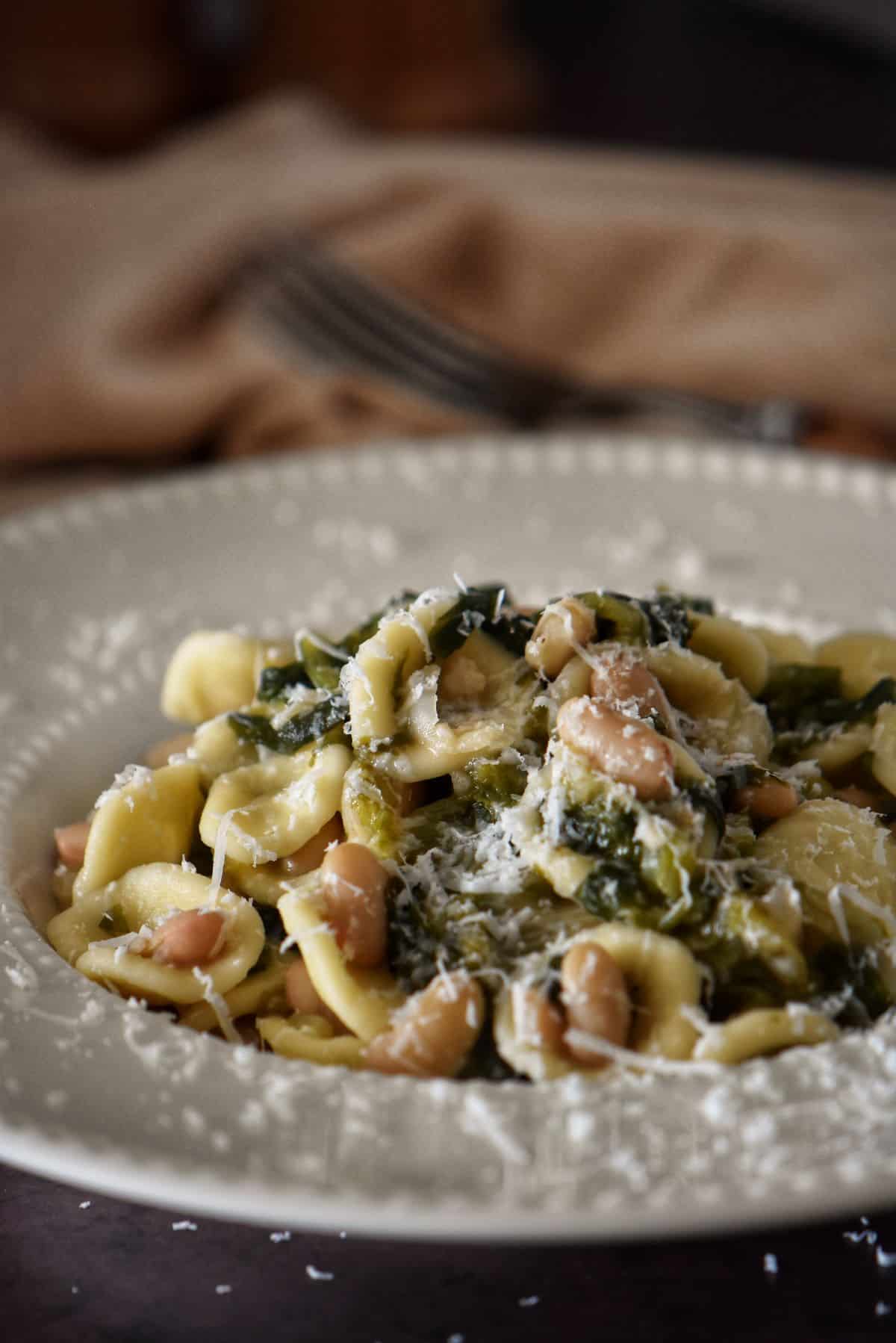
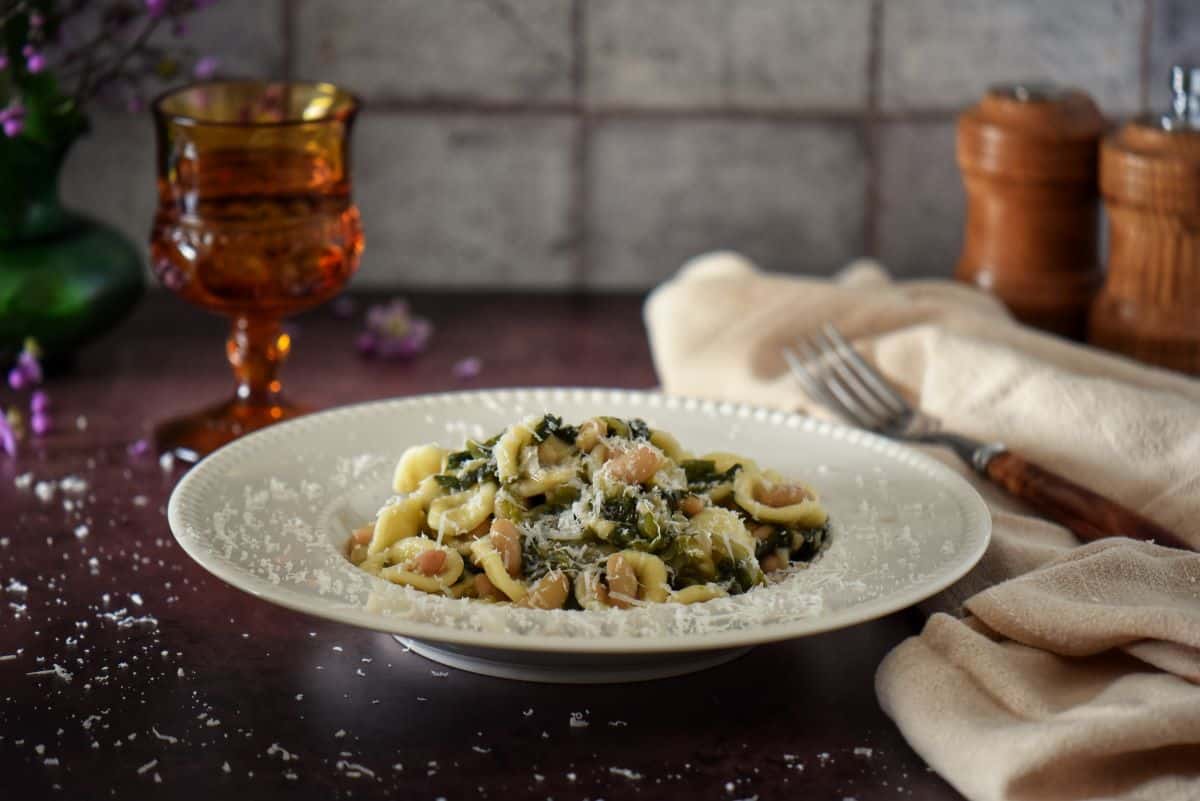
White bean pasta with escarole, known in Italian as pasta e fagioli con scarola, is the heartier, more substantial version of the classic beans and greens dish.
In our family, it was the weeknight dinner that made everyone happy, even those who claimed not to like escarole.
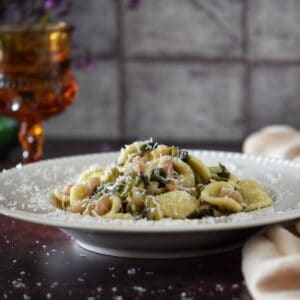
Orecchiette pasta, creamy cannellini beans, and tender wilted escarole come together in a garlicky, slightly brothy base built on a soffritto-style blend of onion, celery, and garlic.
The whole dish comes together in 40 minutes and is finished with freshly grated Pecorino Romano that melts into the broth for a richness that feels far more indulgent than it actually is.
If you are looking for a lighter version of this dish without the pasta, try my beans and greens (scarola e fagioli).
For the heartier pasta-forward main course, this is the recipe.
Jump to:
Quick Overview
- Prep Time: 10 minutes
- Cook Time: 30 minutes
- Total Time: 40 minutes
- Yield: 4 servings
- Special Touch: I use organic cannellini beans with no added salt or preservatives, so there’s no need to rinse them. Add them drained directly to the dish, and use as much of the canning liquid as you like to control the brothiness and add natural creaminess.
- Dietary Note: Vegetarian as written (use vegetable broth). Easily made vegan by omitting the cheese.
- Serving Suggestions: Serve with rustic Italian bread for soaking up the broth, alongside a simple Italian green salad, or follow with a light marinated tomato salad for a complete Italian weeknight dinner.
What You’ll Need
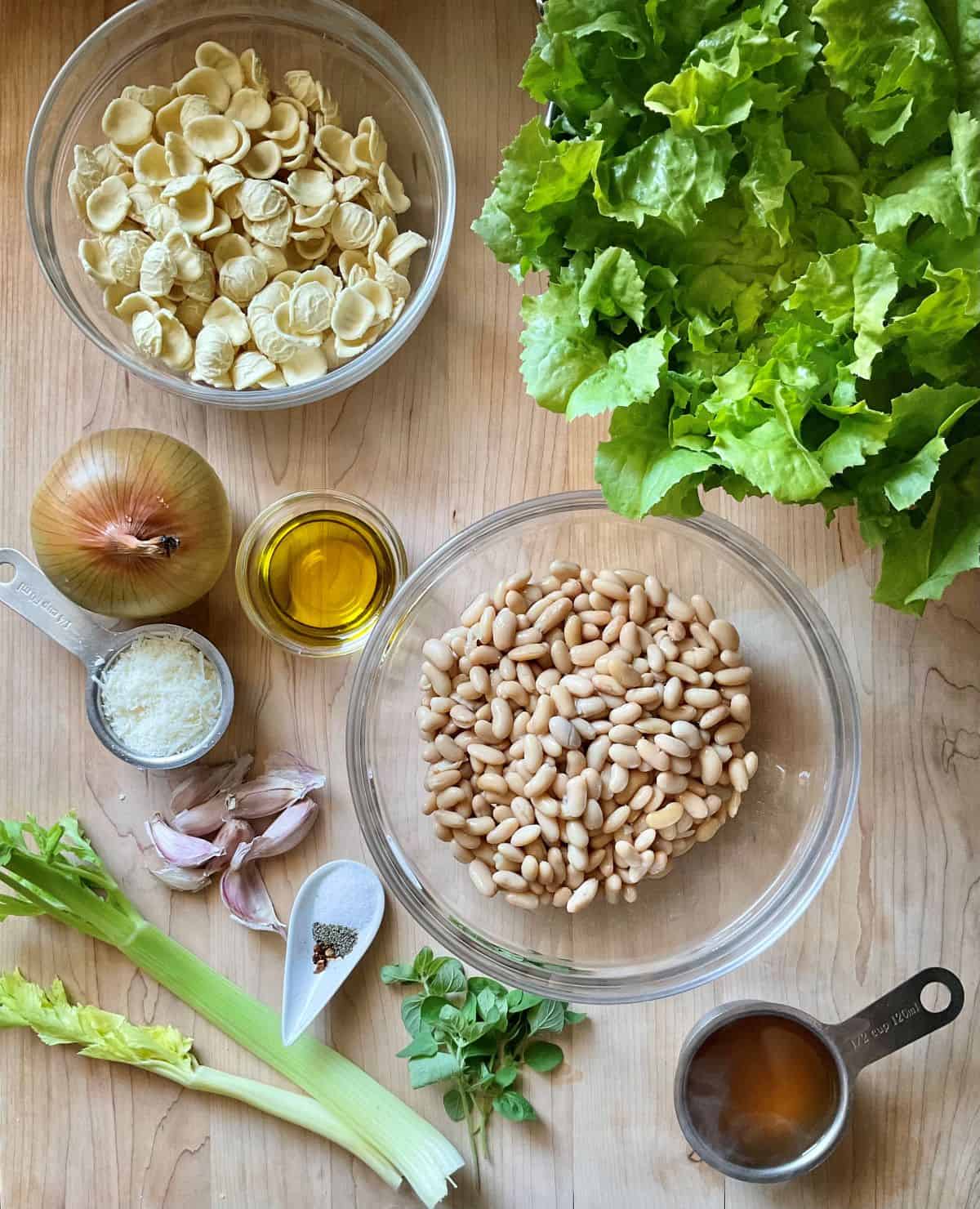
- Escarole (2 heads, about 2 pounds). When buying, look for heads with sturdy, unblemished leaves indicating freshness. As a member of the chicory family, escarole has a pleasantly bitter flavor that mellows considerably once wilted, and its resilient leaves hold their texture and structure beautifully in this brothy pasta dish. In a pinch, spinach, Swiss chard, or kale all work well as substitutes (see FAQ).
- Cannellini beans (organic, no added salt). I use organic cannellini beans with no added salt or preservatives, which means there’s no need to rinse them. Adding them drained directly keeps the natural starch and bean proteins in the dish, adding body and creaminess to the broth. If using regular canned beans with added salt, rinse them and season to taste instead. Navy beans or Great Northern beans are good alternatives.
- Orecchiette pasta. The small cup-shaped cavities of orecchiette are perfectly designed to catch the chunky beans and escarole in every bite. Short pasta shapes like cavatelli, penne, or fusilli also work beautifully. If you love cooking with orecchiette, try it in this equally satisfying orecchiette with sausage and broccoli rabe for a non-vegetarian weeknight option.
- Yellow onion, celery, and garlic. The soffritto-style base that gives this dish its depth of flavor. Most similar recipes use just onion and garlic - adding celery builds a noticeably more rounded, complex flavor base.
- Vegetable stock. Added while cooking the escarole for depth of flavor and a brothy consistency. Homemade stock makes a beautiful difference, but a good commercial brand works well too.
- Extra virgin olive oil. Used for sautéing the aromatics and finishing the dish with a drizzle. Use your best bottle for the finishing drizzle since the flavor comes through directly.
- Pecorino Romano or Parmigiano Reggiano (freshly grated). Stirred in at the end, it melts into the broth and adds a nutty, savory richness that ties everything together. Always grate fresh; pre-packaged grated cheese will not melt properly into the broth.
- Chili flakes (optional). A pinch adds warmth without heat and is a classic addition to Italian greens and bean dishes. Leave out if making this for children.
How to Prepare Your Ingredients
Making good meals takes preparation. Let’s dive in!
Prepping the aromatics
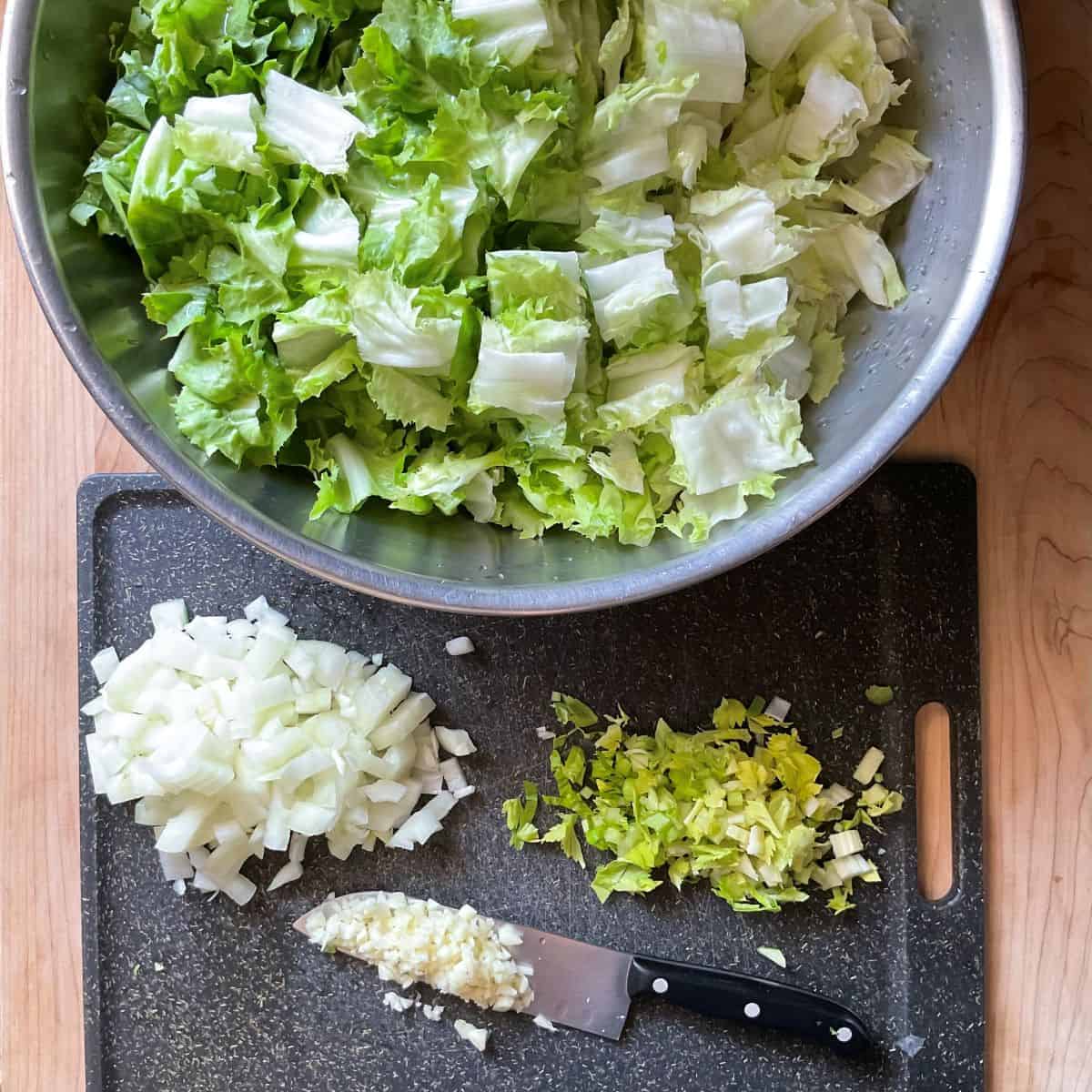
Chopping the onions: Cut off both ends of one onion and remove the outer skin. Then, slice it in half. Take each half and lay it flat on your cutting board. Next, cut the onion into thin slices and then dice the slices into small, half-inch pieces.
Prepping the garlic: Begin by breaking the head of garlic into individual cloves. Once you have separated the cloves, take the flat side of your knife and crush each clove. Cut off the tips, remove the skin from each clove, and finely mince the garlic. You need six cloves for this recipe.
Chopping the celery: Start by washing 2 celery ribs with the leaves. Trim off the ends. Then, slice it in half lengthwise (if using a large rib) and dice it.
Preparing the escarole
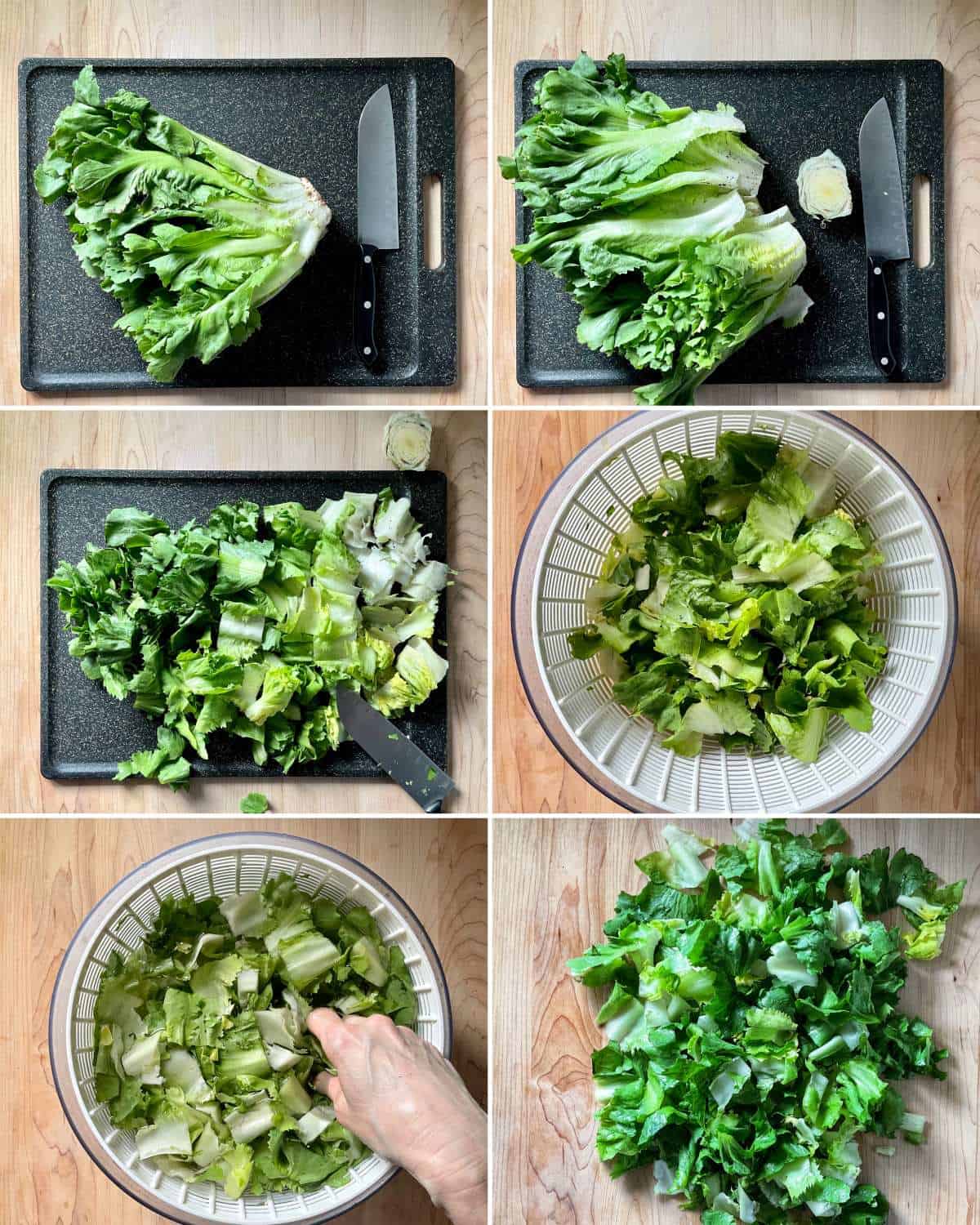
- Start by preparing two heads of escarole, each weighing about one pound. Cut off the bottom of each head using a sharp knife and discard along with any outer leaves that are wilted or damaged.
- Then, gently separate the leaves from the core of the escarole and give it a quick rinse. Check for any dirt or bugs hiding inside.
- Chop the escarole into 1-inch pieces by cutting through the leaves in two directions. Next, fill a large bowl or basin with cold water. You can also use a salad spinner.
- Add the chopped escarole. Swish the greens to loosen any dirt or sediment. Let them sit in the water for a minute or two. Use a salad spinner basket to scoop up the escarole pieces from the water, making sure to leave any dirt or sediment behind.
- Repeat this process until the water runs clear and there is no more dirt or debris.
- Finally, spin the escarole in the salad spinner to remove any excess water.
How to Make White Bean Pasta
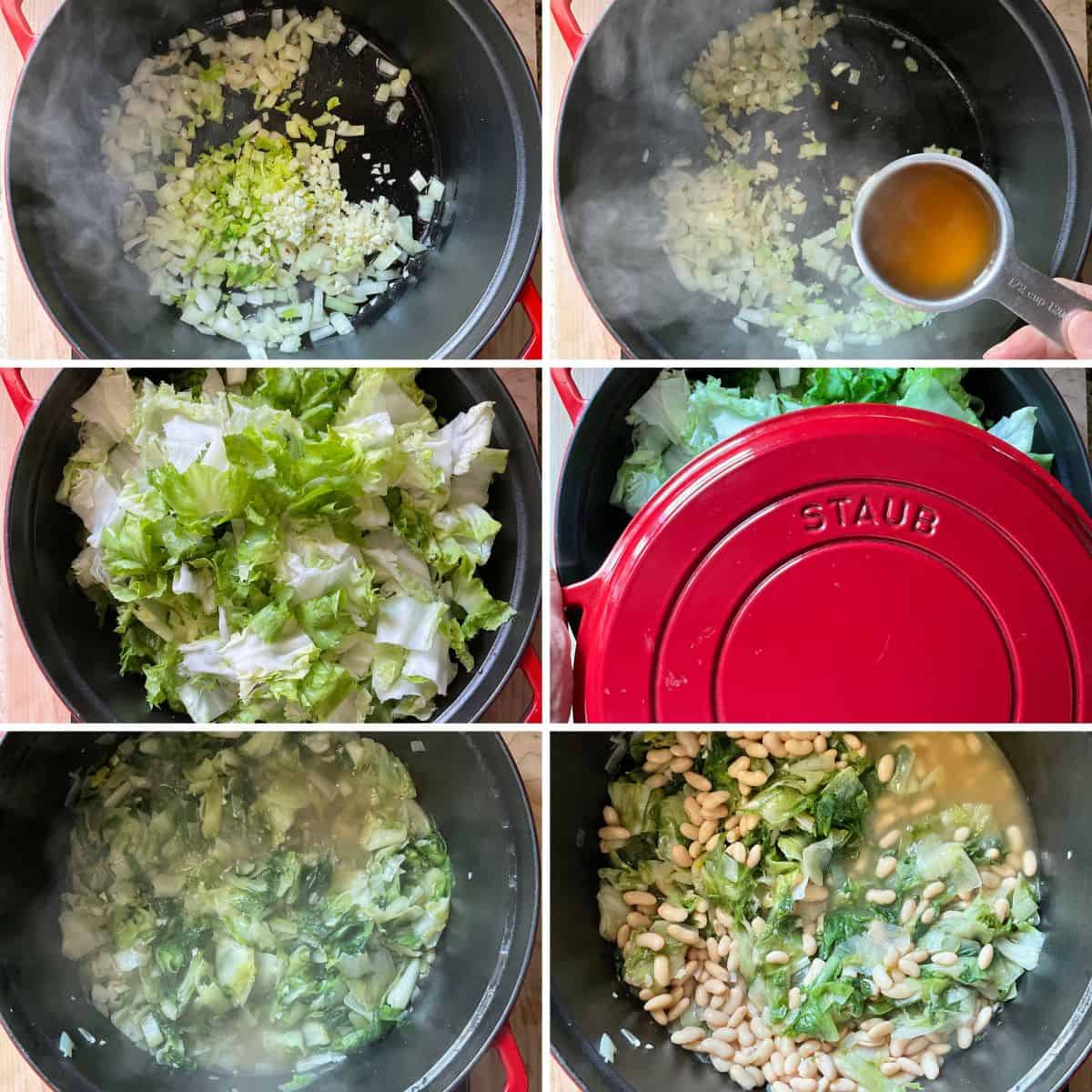
- Heat 3 tablespoons of extra virgin olive oil in a Dutch oven or large skillet over medium heat. Add 1 medium diced onion, a pinch or two of chili flakes, ½ teaspoon of Kosher salt, and ¼ teaspoon of black pepper, and cook until softened about 5 to 7 minutes.
- Stir in 2 sliced celery ribs and 6 minced garlic cloves. Cook for 1-2 minutes or until the garlic becomes fragrant.
- Add ½ cup of vegetable broth and bring to a simmer.
- Then lower the heat to medium-low. Add, add the chopped escarole (2 pounds), cover, and cook, stirring occasionally, for approximately 7-10 minutes until the escarole is wilted and tender.
- Remove the cover, add two 15-ounce cans of drained but unrinsed cannellini beans, and cook for 7-10 minutes while leaving the pot uncovered.
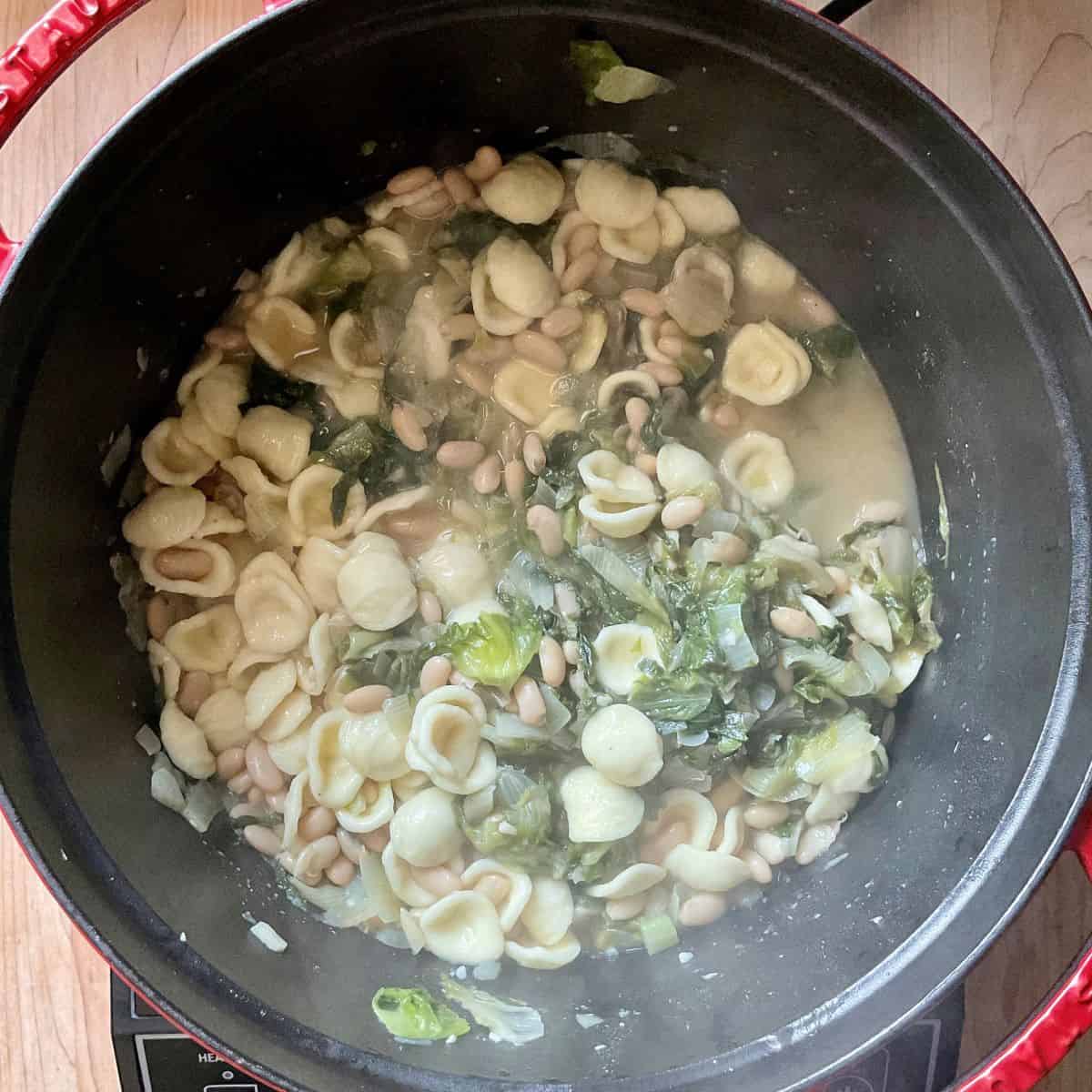
- While the cannellini beans are cooking, add about half a pound of orecchiette, or your favorite short pasta, to a large pot of salted boiling water and cook according to the package instructions minus 2 minutes.
- The pasta should almost be at the "al dente" stage. This means there is still a little resistance when chewing it as we will finish cooking it with the escarole and beans.
- Reserve 2-3 cups of the pasta water before draining it. Add the cooked, drained pasta to the escarole and beans. Stir to combine. Add the reserved pasta water if too dry.
- Turn off the heat and stir in ½ cup (or more according to personal taste) of freshly grated Pecorino Romano cheese.
- Taste and adjust for seasonings.
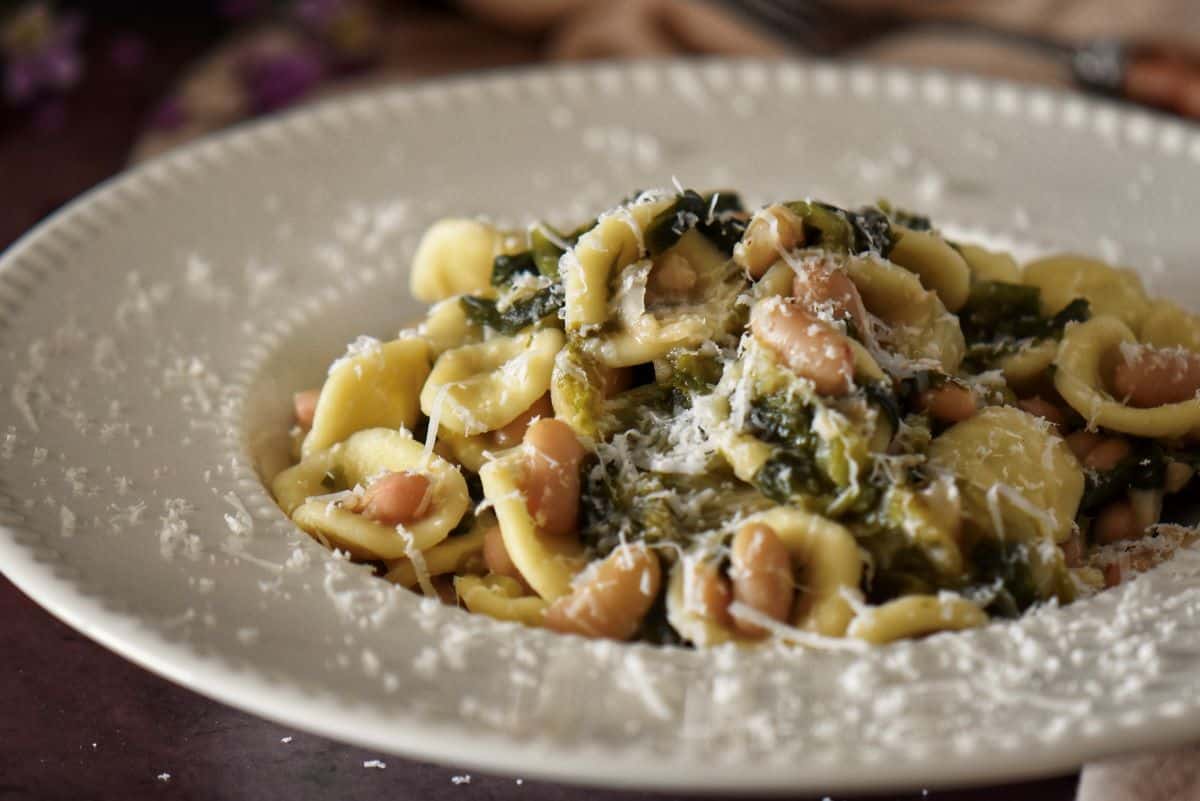
For the final touch, garnish with freshly grated cheese, a drizzle of extra-virgin olive oil, or a sprinkle of crushed red pepper flakes.
Tips
- Cook pasta al dente: Cook the pasta until almost al dente before combining it with the white beans and escarole since it will continue cooking in the pot. For more tips on optimal pasta cooking technique, see my complete guide on how to cook pasta.
- Save pasta water: Reserve 2 to 3 cups of pasta water before draining. This starchy water binds all the ingredients together and keeps the dish from becoming too dry when reheated.
- Experiment with herbs: Fresh Italian parsley, basil, or thyme added at the end brings a burst of freshness to the finished dish.
- Embrace seasonal variations: Feel free to swap escarole with kale, Swiss chard, or spinach. Just adjust the cooking time accordingly.
- Perfect leftovers: Reserve some of the starchy pasta water and add a splash when reheating the next day to restore the original texture and taste.
FAQ
Yes. Soak the dried beans overnight in cold water, drain, then simmer in fresh water for 45 to 60 minutes until tender before using in the recipe. Canned beans are more convenient and the results are excellent, but dried beans give a slightly more robust, earthy flavor. If using dried beans, reserve some of the cooking liquid as you would the canning liquid from canned beans.
Yes, and several readers have confirmed this works beautifully. Spinach is the most popular substitute since it wilts quickly and has a mild flavor. Swiss chard, kale, and rapini all work well, though they may need slightly different cooking times. If using spinach, add it in the last 2 to 3 minutes of cooking only, since it wilts much faster than escarole
Yes. Use vegetable broth instead of chicken broth and the dish is fully vegetarian as written. To make it vegan, simply omit the Pecorino Romano or Parmigiano Reggiano cheese at the end, or substitute with nutritional yeast for a similar savory, cheesy note.
Absolutely. Drain one cup of the canned cannellini beans and puree them in a food processor or with an immersion blender until smooth, adding a little pasta water if the consistency is too thick. Stir this into the dish at the end. The pureed beans create a naturally creamy, velvety sauce without any added dairy.
I use organic cannellini beans with no added salt or preservatives, which means there’s nothing to rinse away. Adding them drained but unrinsed keeps all the natural starch and bean proteins in the dish, which add body and creaminess to the broth. If you’re using regular canned beans with added salt, you may want to rinse them and season to taste, or look for unsalted organic beans for the same result.
Unfortunately, this dish does not freeze well due to the delicate nature of the escarole and the pasta, which absorbs liquid and becomes mushy when frozen. It is best enjoyed the day it is made or as leftovers within 1 to 2 days. When reheating, add a splash of water or vegetable broth and stir over low heat to restore the original consistency.
Orecchiette is the traditional choice since its small cup-shaped cavities catch the beans and escarole beautifully. Other short pasta shapes like cavatelli, penne, fusilli, ditalini, or conchiglie (shells) all work well. Avoid long pasta shapes like spaghetti or fettuccine, which do not hold the chunky ingredients as effectively.
Yes. Italian sausage (sweet or hot, removed from the casing and browned first) is the most common addition and makes the dish even heartier. Pancetta or guanciale, diced and rendered in the pan before adding the aromatics, adds a lovely savory depth. For a pescatarian option, a handful of cooked shrimp stirred in at the very end works beautifully too.
Escarole Recipes
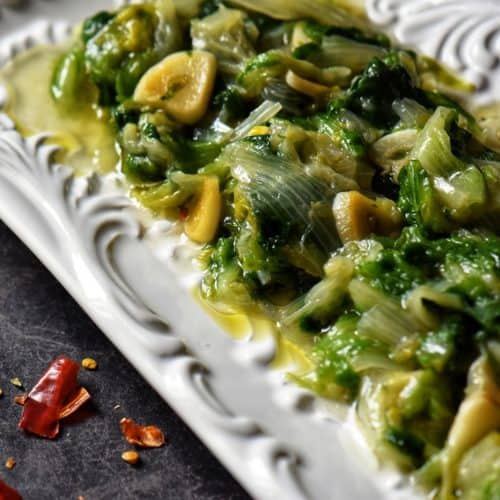
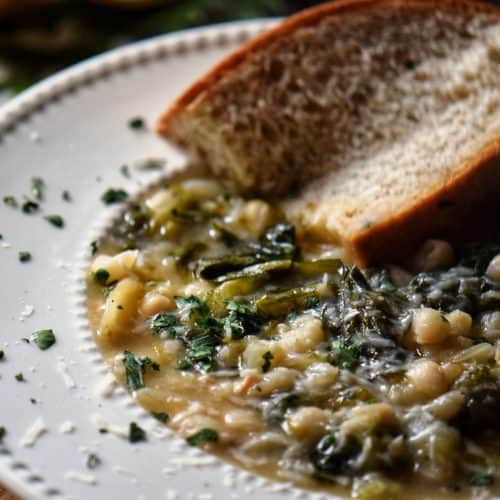
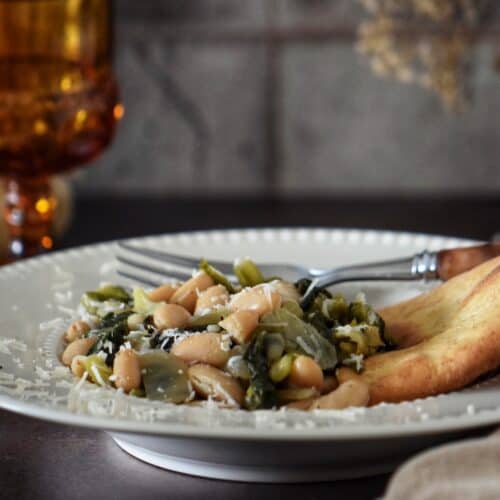
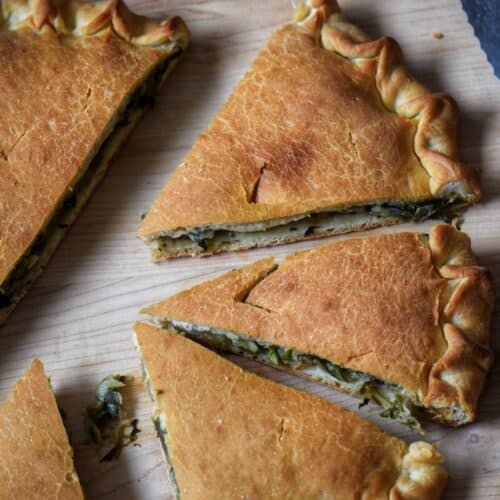
If you love cooking with escarole, here are a few more ways to enjoy this classic Italian green:
Recipe Origins
Like many Italian immigrants, my parents and grandparents cultivated a thriving backyard garden with fresh leafy greens, including escarole, mustard greens, rapini Swiss chard, and dandelion greens, aka cicoria.
If interested, I've shared a few pictures of the garden in the backyard of my parents’ house in this article on sauteed Swiss chard.
Unlike my immediate childhood favorites like homemade cavatelli and potato croquettes, I was less enthusiastic about this bean pasta with escarole. It was one of those meals often served during Lent.
As time passed and my palate evolved, I gradually began to appreciate the significance of this classic Italian recipe. Passed down through generations, the combination of white beans, escarole, and homemade pasta embodies the essence of comforting Italian cuisine.
The dish’s simplicity evokes memories of wholesome and nourishing meals my mom and Nonna prepared with love. As I share it with family and friends, I find joy in reminiscing about the vibrant garden and the flavors of my youth.
I hope that by trying this recipe, you not only experience the delicious flavors but also create cherished moments that evoke fond memories, especially for those who grew up with the rich heritage of Italian cuisine.
THANKS SO MUCH for following and being part of the She Loves Biscotti community, where you will find Simple & Tasty Family-Friendly Recipes with an Italian Twist.
Ciao for now,
Maria
★★★★★ If you have made this easy pasta recipe with white beans, I would love to hear about it in the comments below and be sure to rate the recipe!
Recipe
White Bean Pasta
WANT TO SAVE THIS RECIPE?
Ingredients
- 3 tablespoons olive oil extra virgin
- 1 medium onion medium, diced
- 1-2 pinches chili flakes optional
- ½ teaspoon salt Kosher
- ¼ teaspoon black pepper
- 2 stalks celery sliced
- 6 cloves garlic minced or grated
- ½ cup vegetable stock homemade or commercial
- 2 heads escarole rinsed and chopped into ½-inch pieces, about 2 pounds
- 2 15 ounce canned white cannellini beans drained not rinsed
- 8 ounces orecchiette or other short pasta
- ¼-½ cup grated Pecorino Romano or Parmigiano Reggiano cheese. optional, according to taste
To Garnish:
- grated cheese optional
- drizzle extra virgin olive oil optional
Instructions
- Heat 3 tablespoons of extra virgin olive oil in a Dutch oven or large skillet over medium heat.
- Add the diced onion, a pinch or two of chili flakes, Kosher salt, and black pepper, and cook until softened about 5 to 7 minutes.
- Stir in the sliced celery ribs and the minced garlic cloves. Cook for 1-2 minutes or until the garlic becomes fragrant.
- Add ½ cup of vegetable broth and simmer. Then lower the heat to medium-low, add the chopped escarole (2 pounds), cover, and cook, stirring occasionally, for approximately 7-10 minutes until the escarole is wilted and tender.
- Remove the cover, add the drained but unrinsed cannellini beans and cook for an additional 7-10 minutes while leaving the pot uncovered. It is worth noting that if you use canned beans without salt, you can add as much canning liquid as you prefer to achieve your desired "brothiness."
- While the cannellini beans are cooking, add about half a pound of orecchiette, or your favorite short pasta, to a large pot of salted boiling water and cook according to the package instructions minus 2 minutes. The pasta should almost be at the "al dente" stage. This means there is still a little resistance when chewing it as we will finish cooking it with the escarole and beans.
- Reserve 2-3 cups of the pasta water before draining it.
- Add the cooked, drained pasta to the escarole and beans. Stir to combine. Add the reserved pasta water if too dry.
- Turn off the heat and stir in ½ cup of freshly grated Parmesan or Pecorino Romano cheese.
- Taste and adjust seasonings.
- Serve with a slice of Italian crusty bread. Garnish with freshly grated cheese, a drizzle of olive oil, or a squirt of lemon juice.
Video
Notes
Nutrition
I originally published this post on July 28, 2023, and republished it on July 15, 2026, with updated content. Thanks for sharing.
Mike Licursi
Great recipe Maria
Maria
Thanks so much Mike!
Val
Perfect combination of flavors! Thanks Maria!
Maria
Great! Thanks for sharing Val!
Jude
I’m so glad I found your blog. I just made your buttermilk peach cake. I can’t wait to try it. It smells delicious! I just saw your escarole, beans and pasta. That’s the next thing I’m trying.
Maria
Thanks Jude! Enjoy!
Pat
My husband doesn’t like escarole. Would spinach work?
Maria
Thanks for your interest Pat. Yes, this soup will work will any dark green leafy vegetable. Enjoy!